After spending some time wandering around churches in La Rochelle we made our way to the Bunker of La Rochelle as it had now opened.
We’ll quite often visit World War II ruins or museums when we travel and this turned out to be a great one, but I will say that if you’re planning on visiting – if, like us, you’re visiting La Rochelle on a cruise, for instance – then try to get here early. We weren’t the first ones through the door but we were probably in the first five and by the time we left there was a small queue backed up trying to enter. It’s a former World War II bunker so it’s compact with thick concrete walls. It can get a little crowded in there if it’s popular, and if you should be visiting at the same time as inconsiderate people who won’t wait for others to leave a room before trying to get into them, or people who are oblivious to people trying to get past while they block entrances and narrow corridors, then you will need to engage Maximum Patience mode unless you fancy starting a potential international incident.
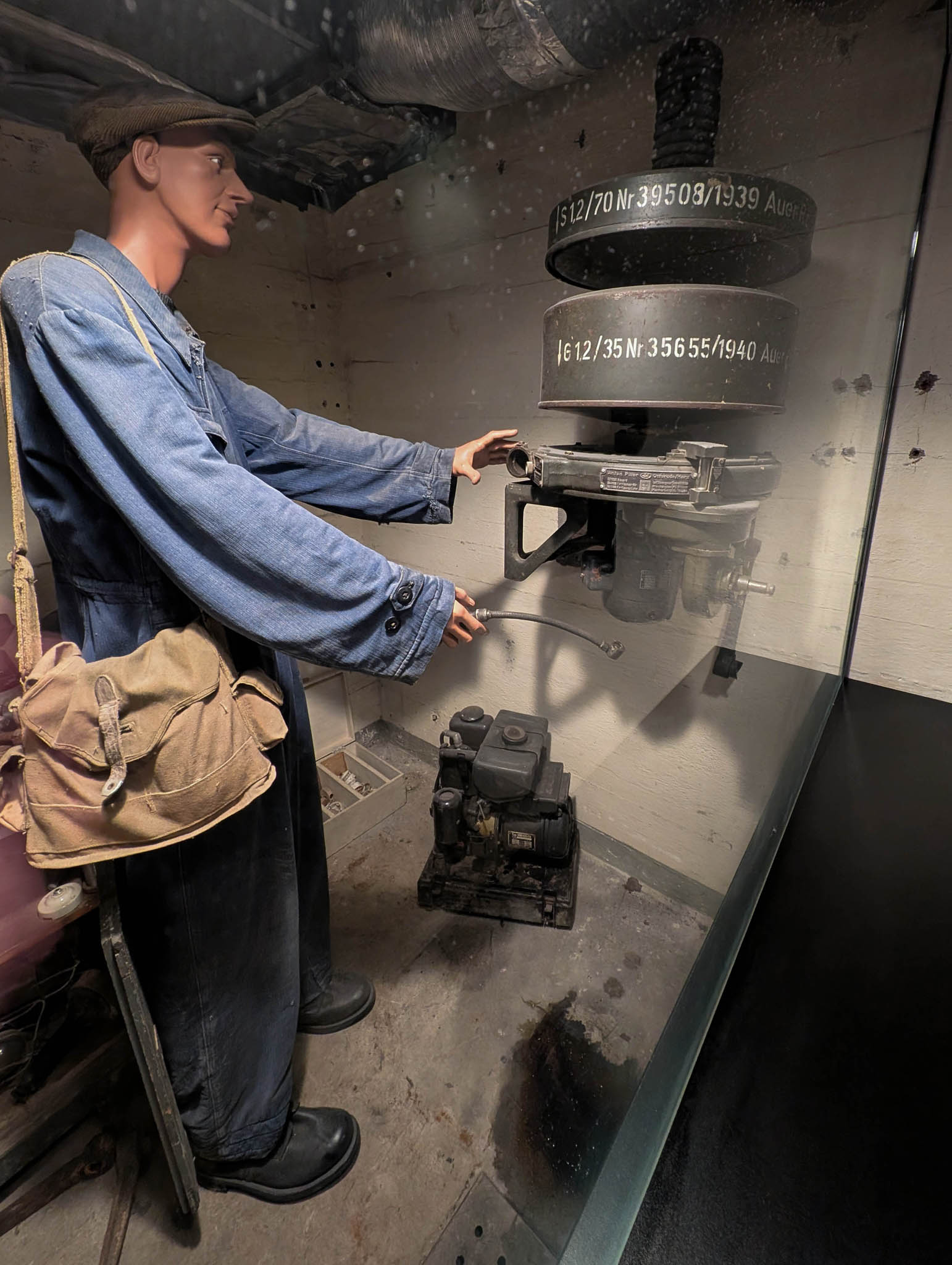
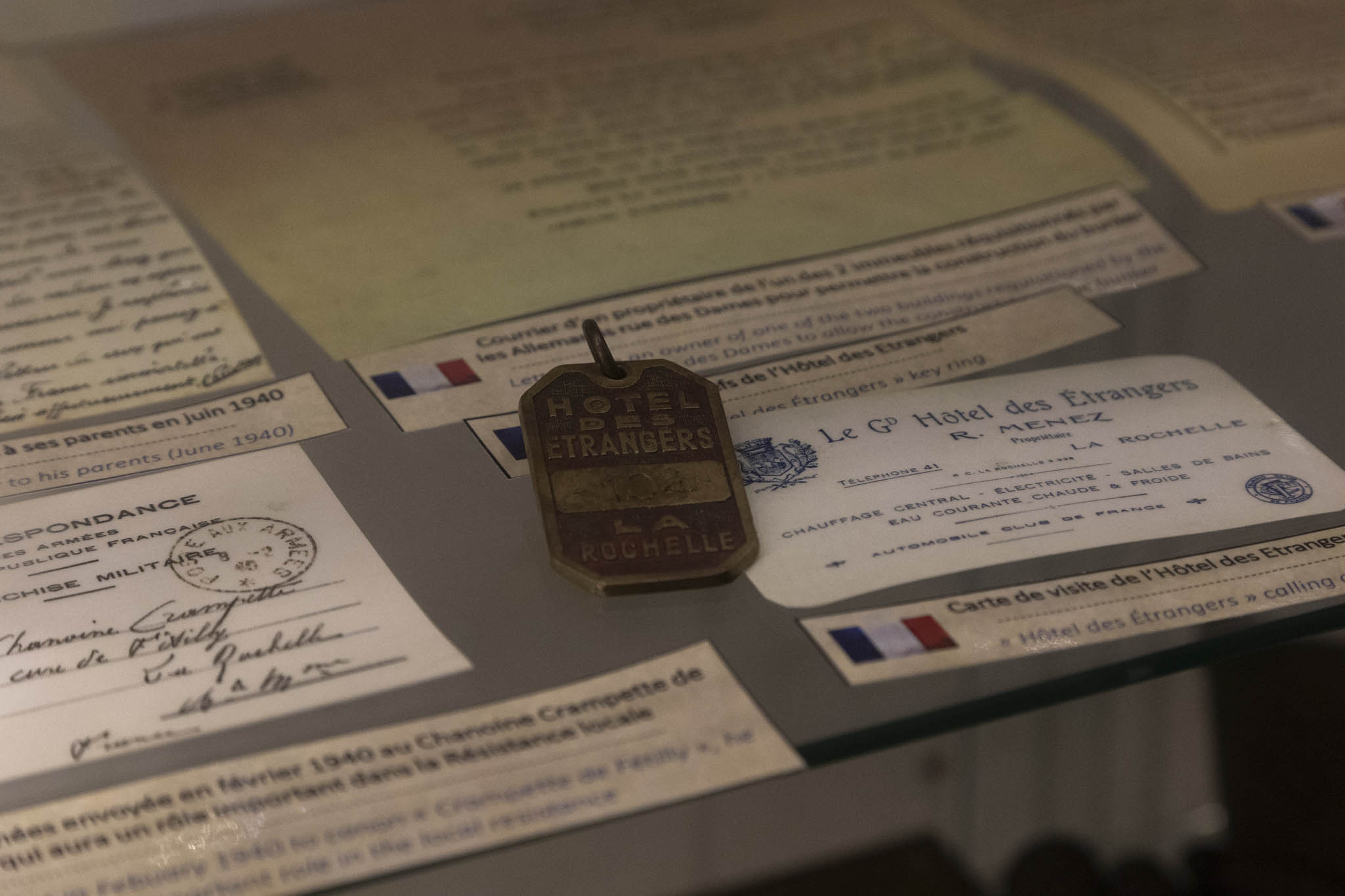
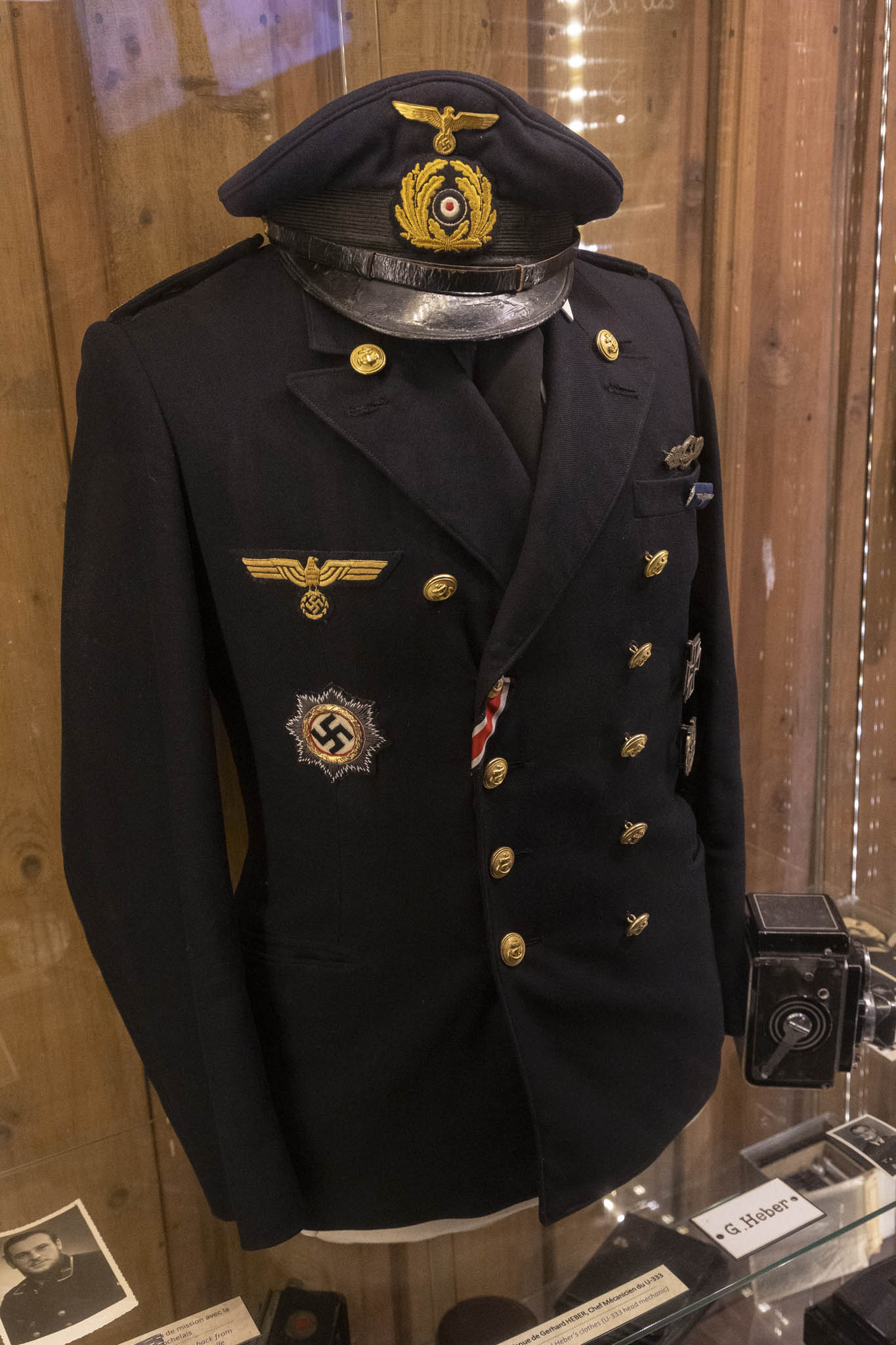
La Rochelle was occupied by German forces in 1940 and it wasn’t long before they’d set up a submarine base to attack allied forces and wanted some protection for their officers in case the allied forces felt like retaliating. To this end, a couple of buildings adjoining the Hôtel des Étrangers, which had already been commandeered for the German Navy, were demolished to make way for a bunker on top of which an extension of the hotel was rebuilt to conceal it. The bunker contained offices, rooms for admirals, a bar, and bunk space for 62 officers. Despite German fears, the bunker was not actually needed as allied bombing restricted itself to the submarine enclosures and the airfield, leaving the historic areas of La Rochelle alone. Which was nice of them, as it’s rather lovely.
Following the war, the bunker entrances were sealed up – there had only been access from within the hotel – and over time it was forgotten about, until, in 1982, a property developer purchased the hotel, discovered the labyrinth of concrete rooms, and made plans to use them as cellars for the private apartments being constructed above. Luckily for everyone involved, a local working with the tourist board heard about this and set about securing its purchase separately in order to house a museum of objects and information from World War II. A few changes of hands later, and now, since 2013, the museum has been opened to the public in its current form.
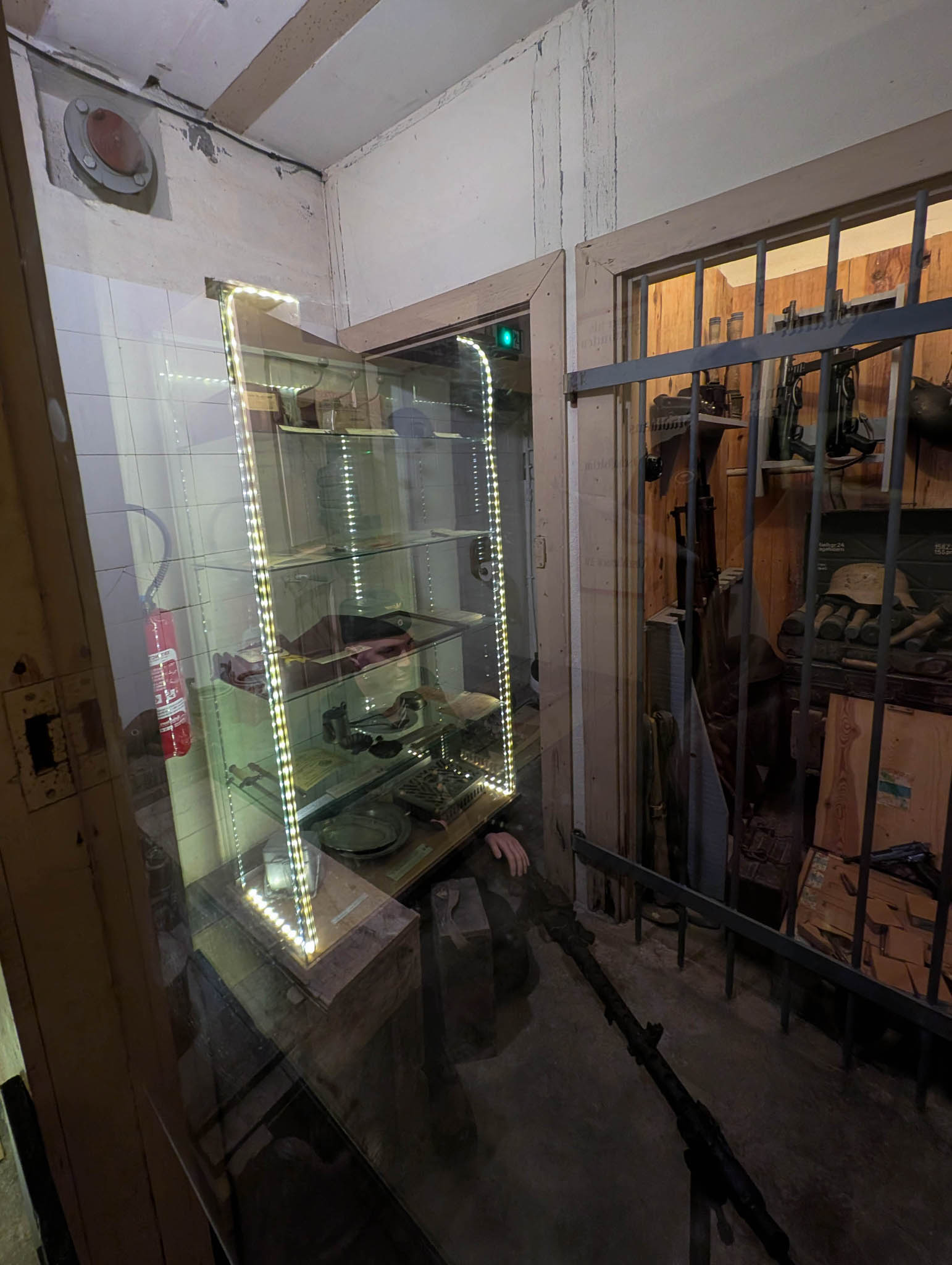
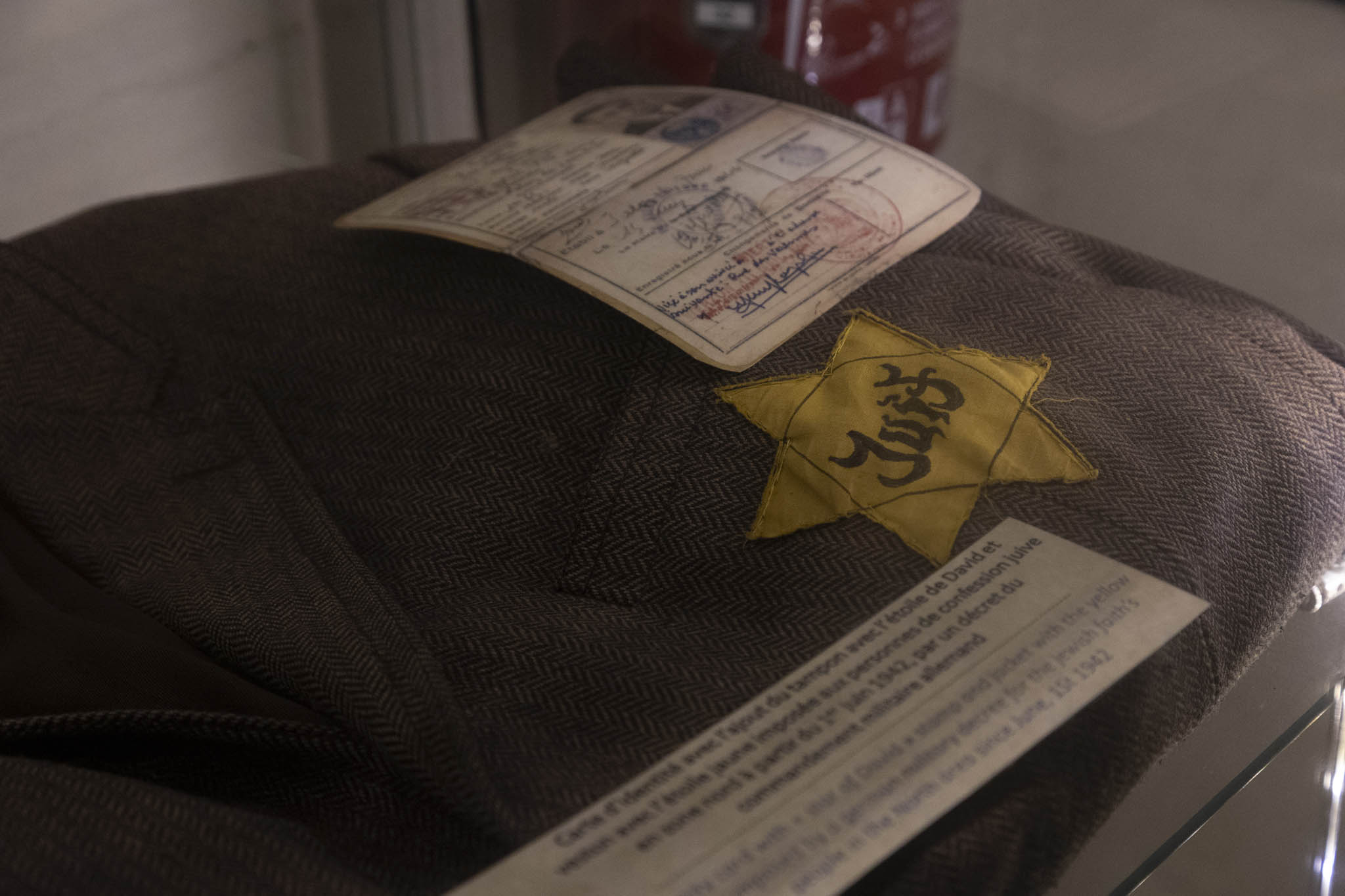
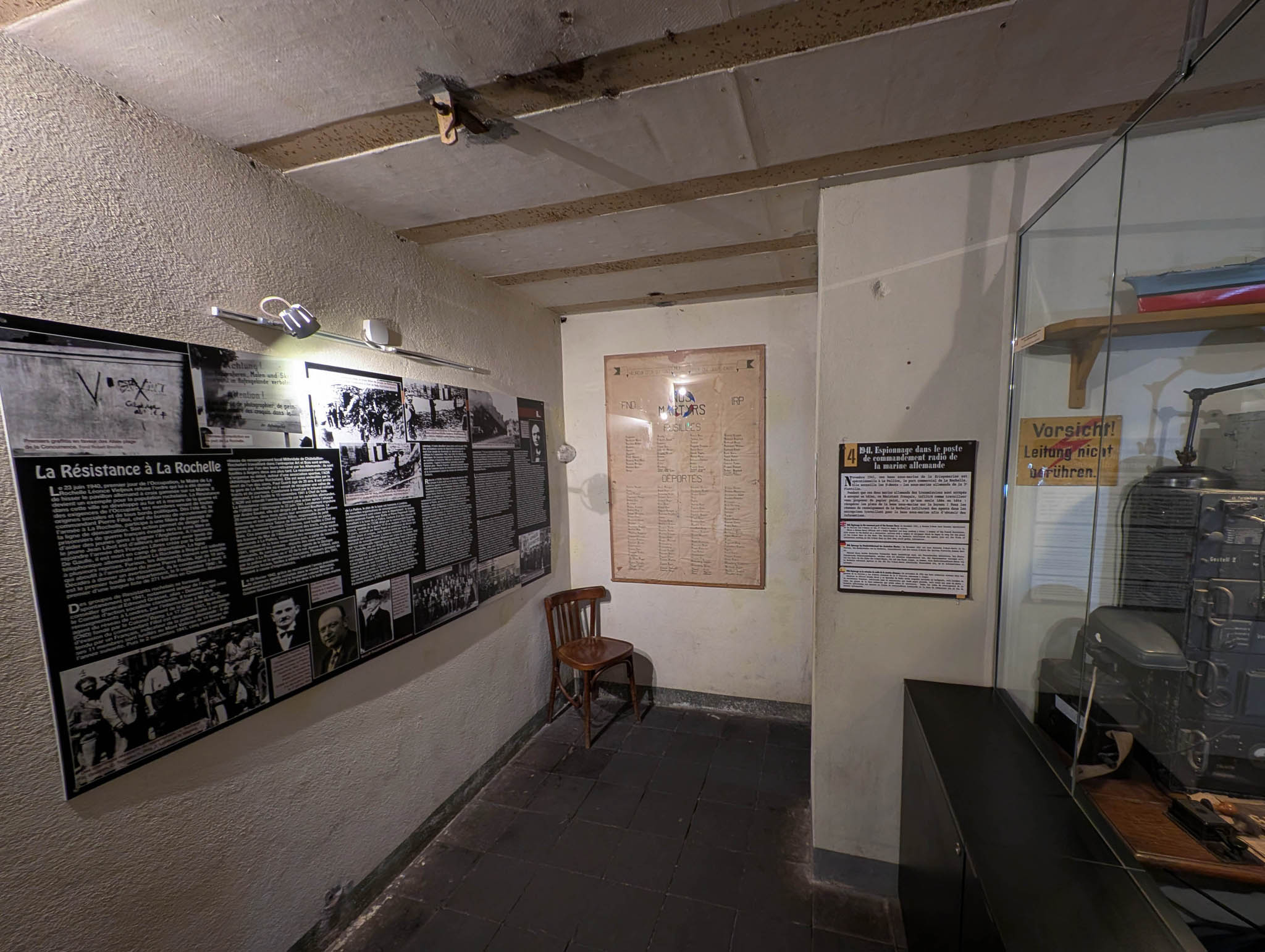
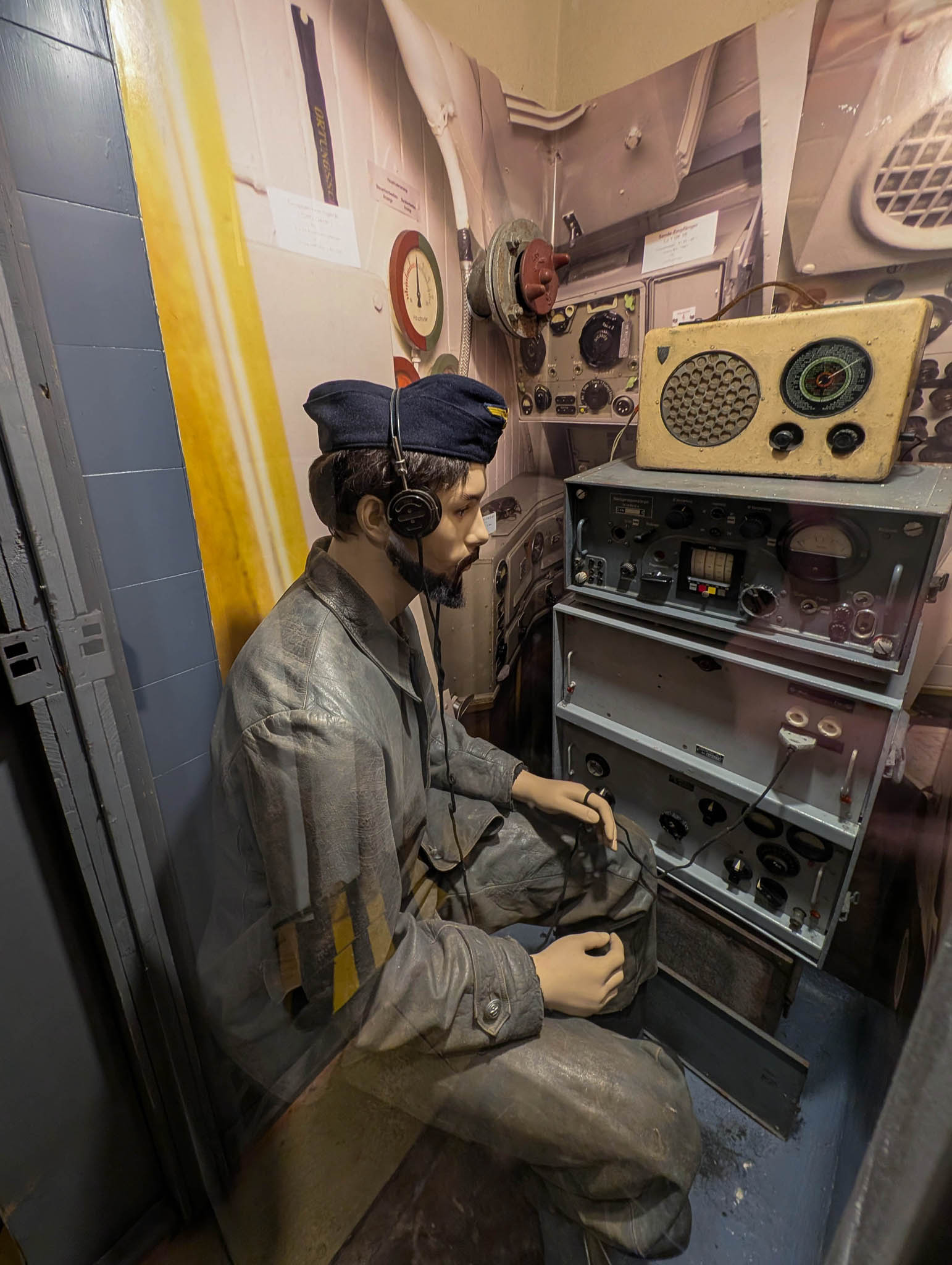
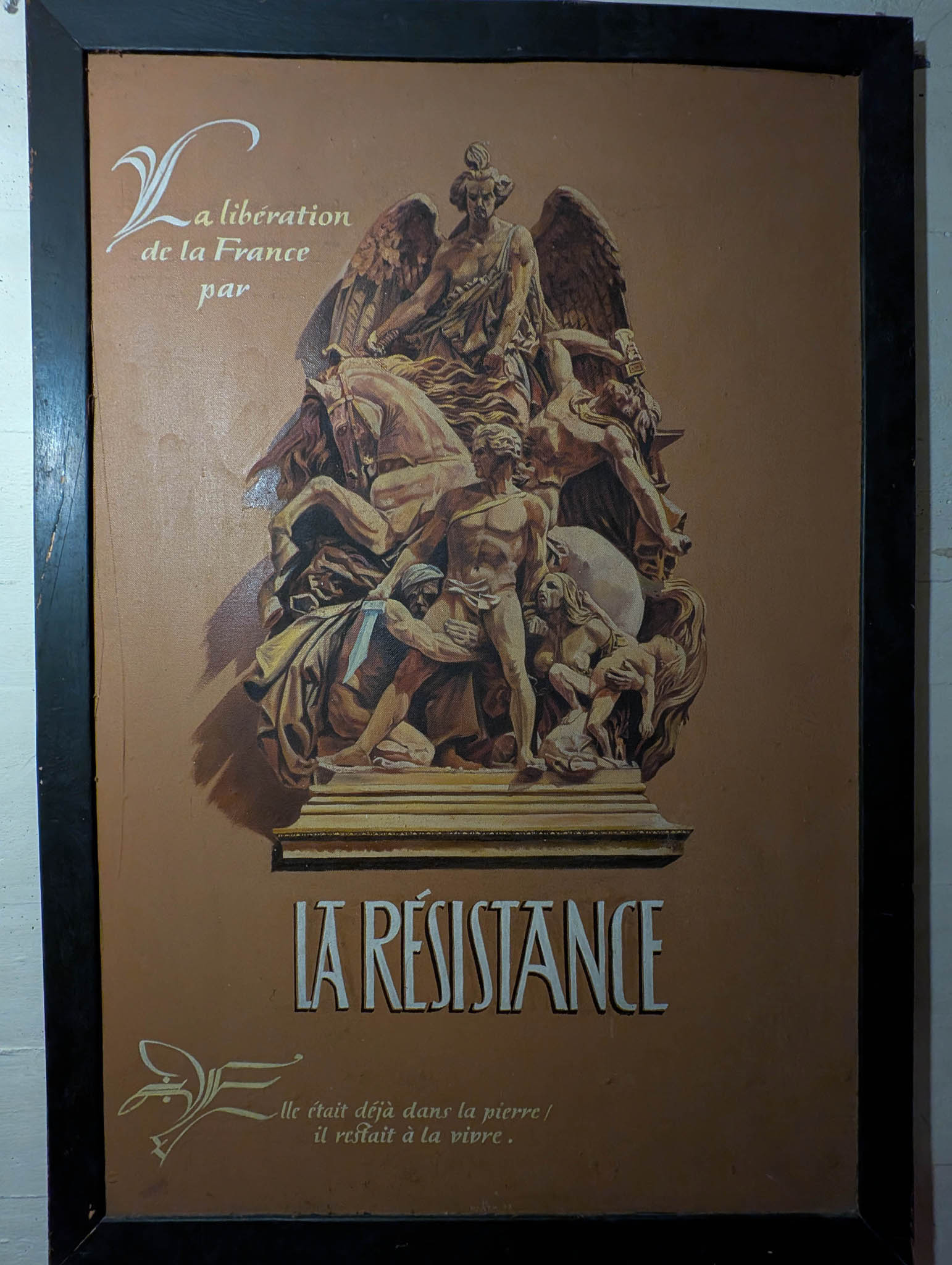
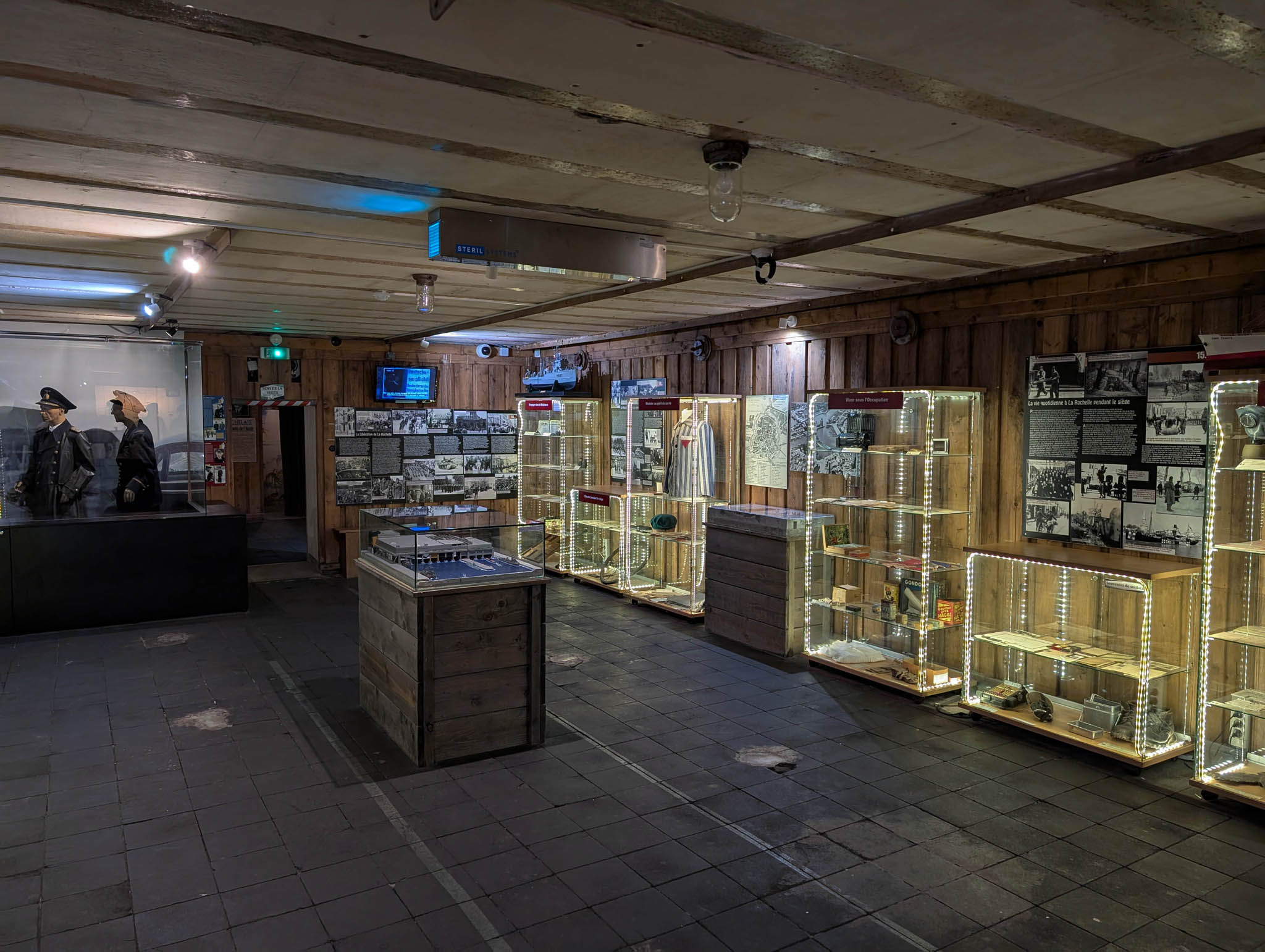
Today, if you visit the La Rochelle Bunker Museum then you’ll find steps leading down to narrow, concrete-walled corridors and rooms all filled with bits of history about the bunker while it was in use by the German Navy, and about local wartime resistance in La Rochelle, including a reasonable bit on Léonce Vieljeux, former army colonel who was mayor of La Rochelle early in the occupation and could certainly be said to be somewhat obstructionist in his dealings with the Germans, if not obviously resistant at first. He didn’t meet with a happy end, however.
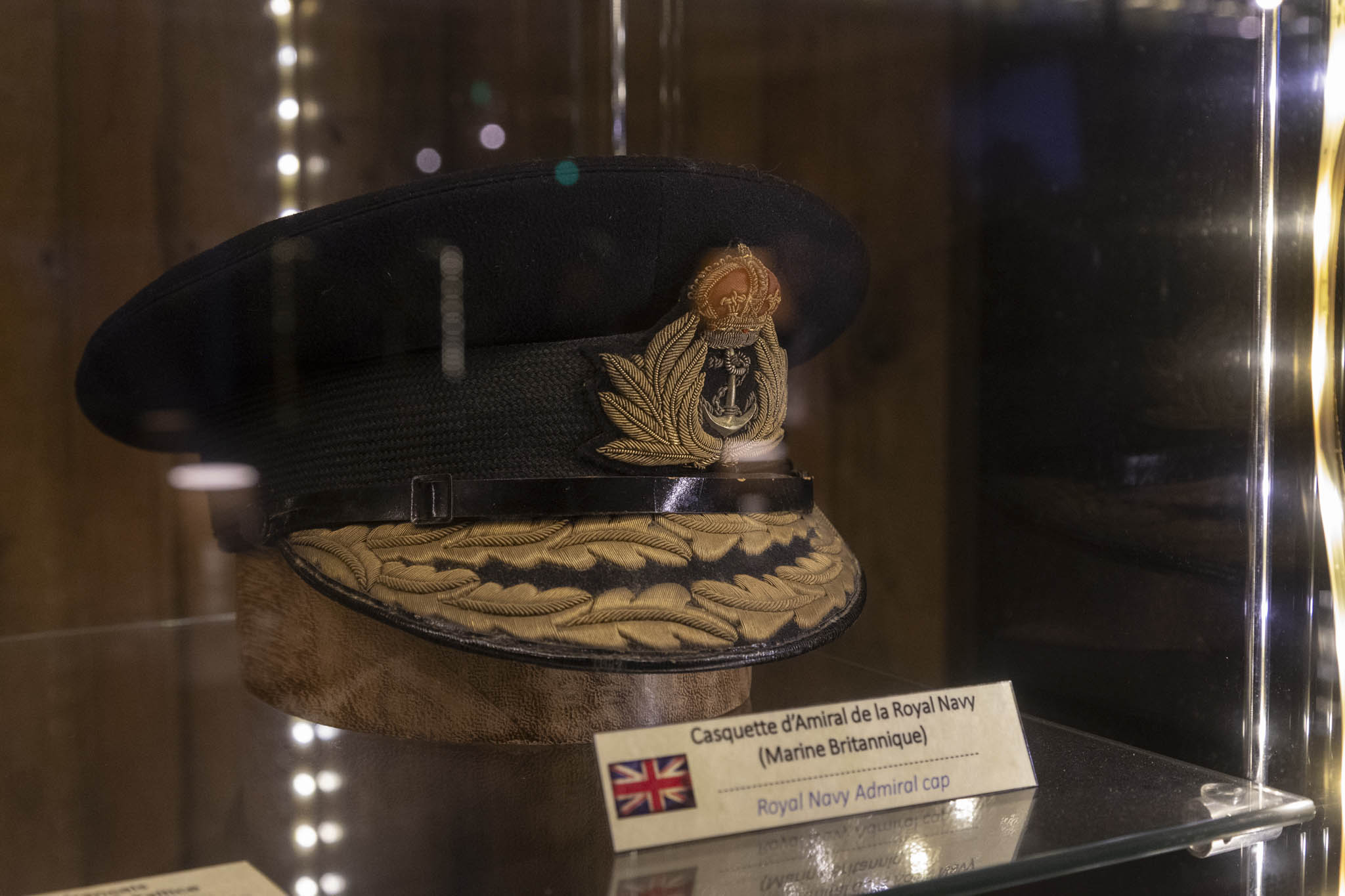
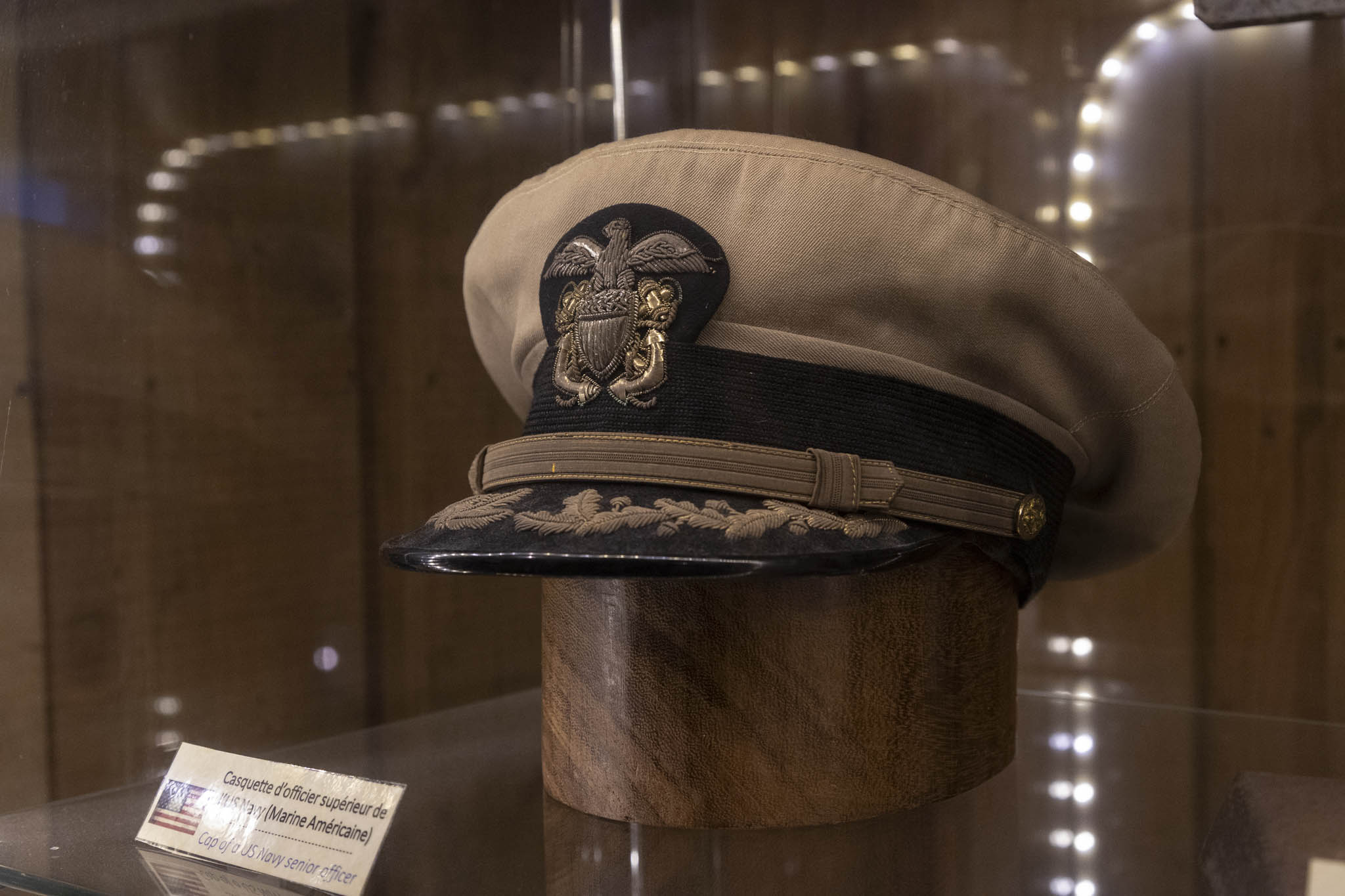
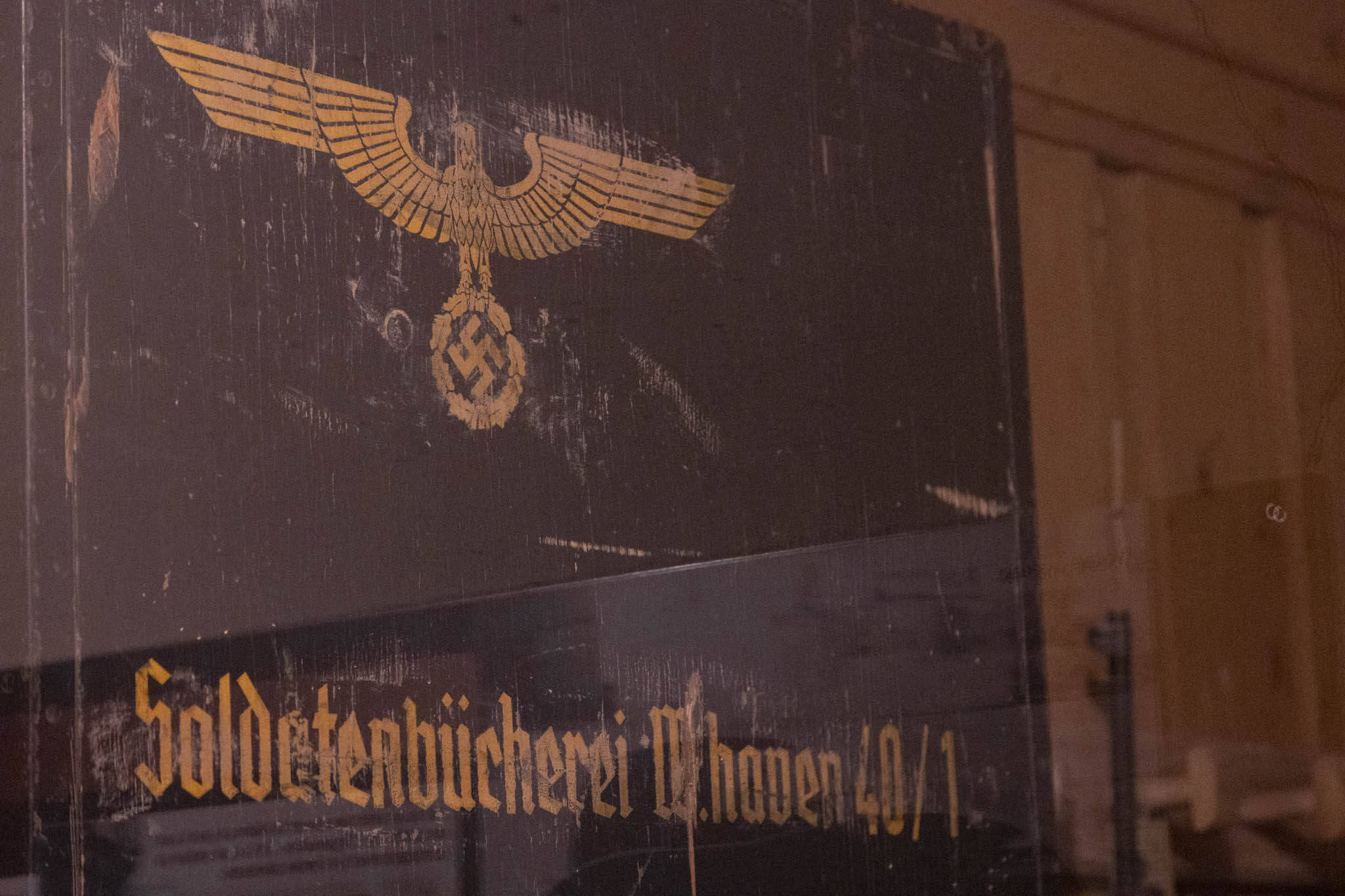
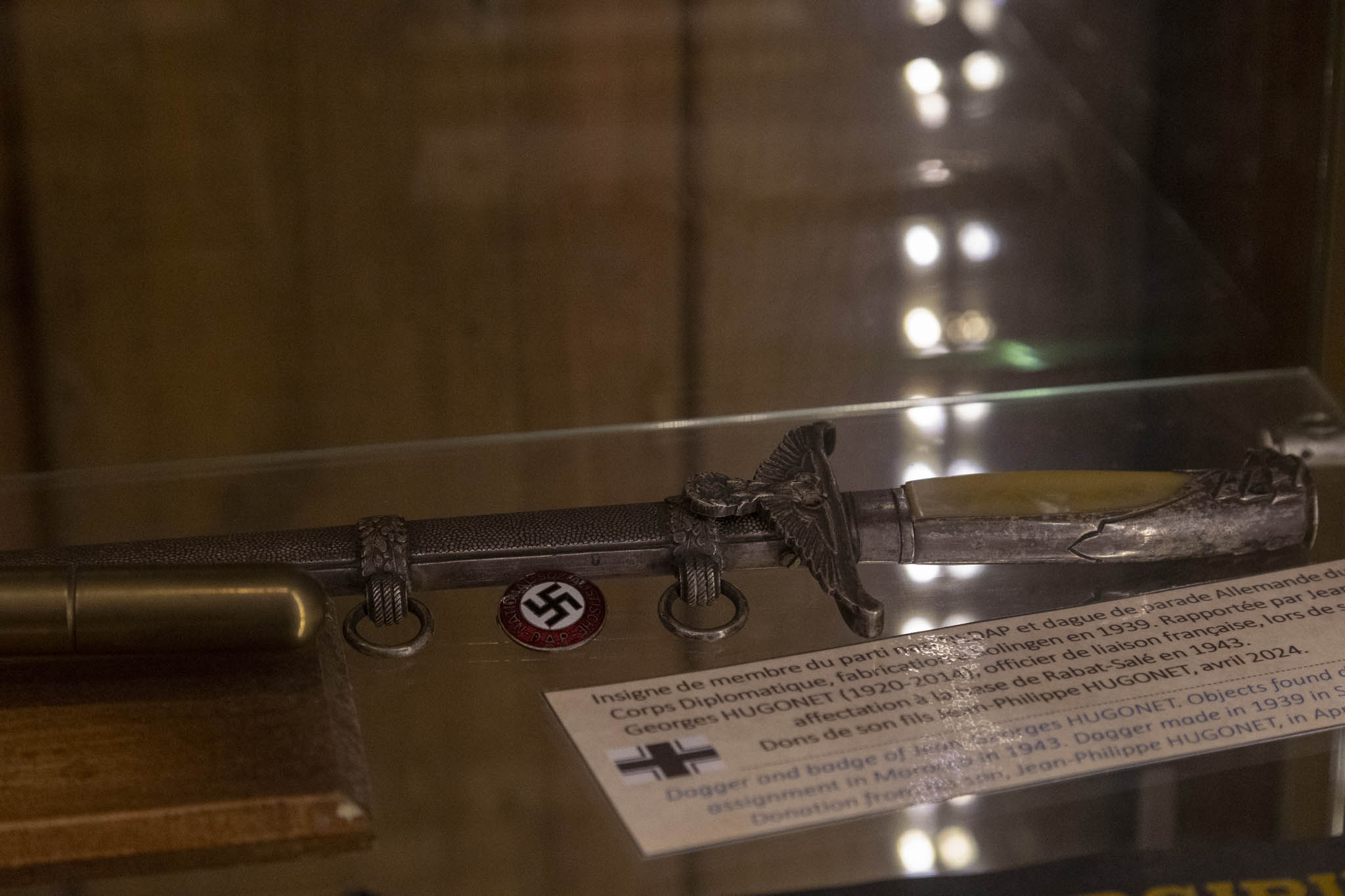
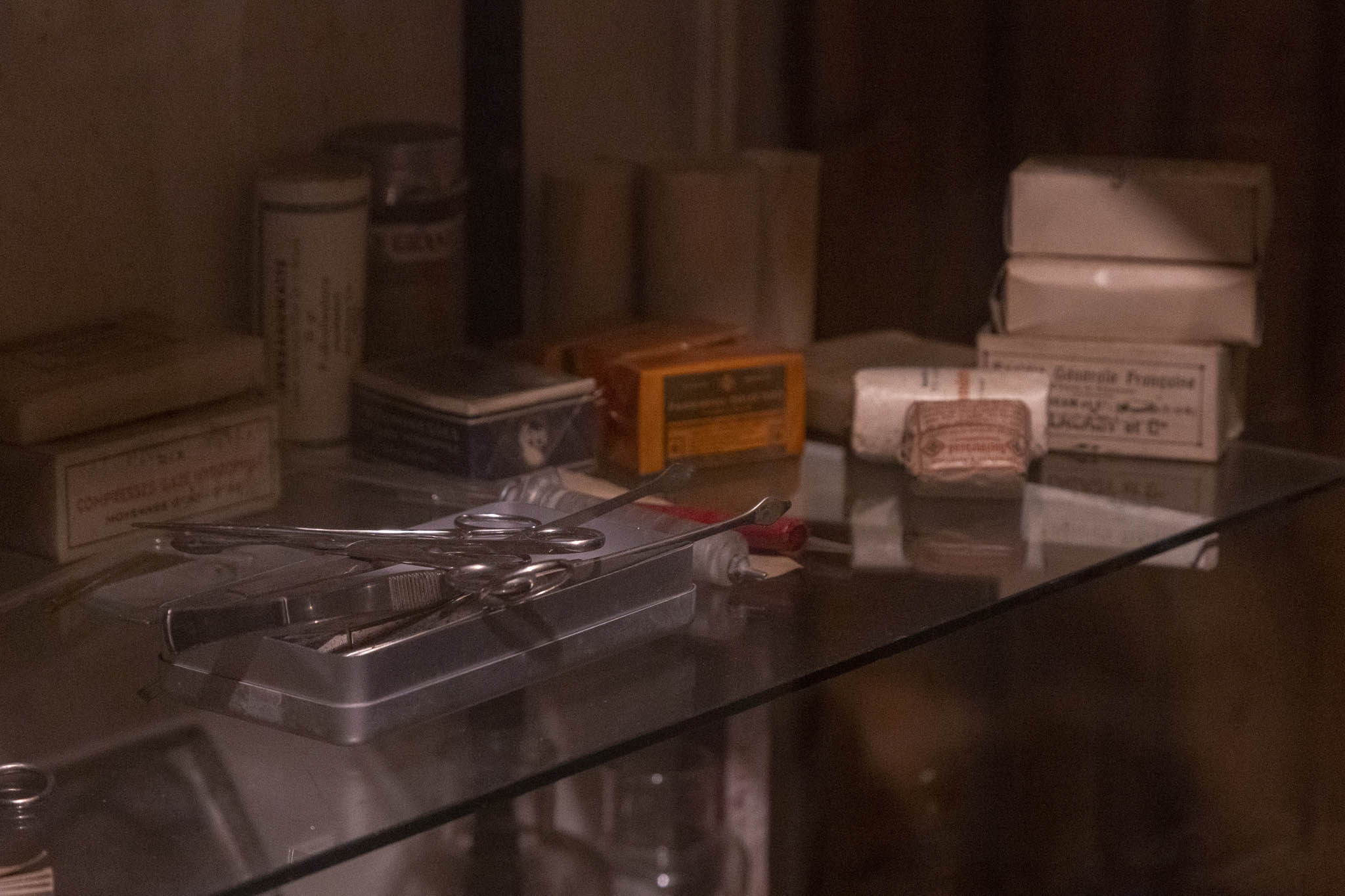
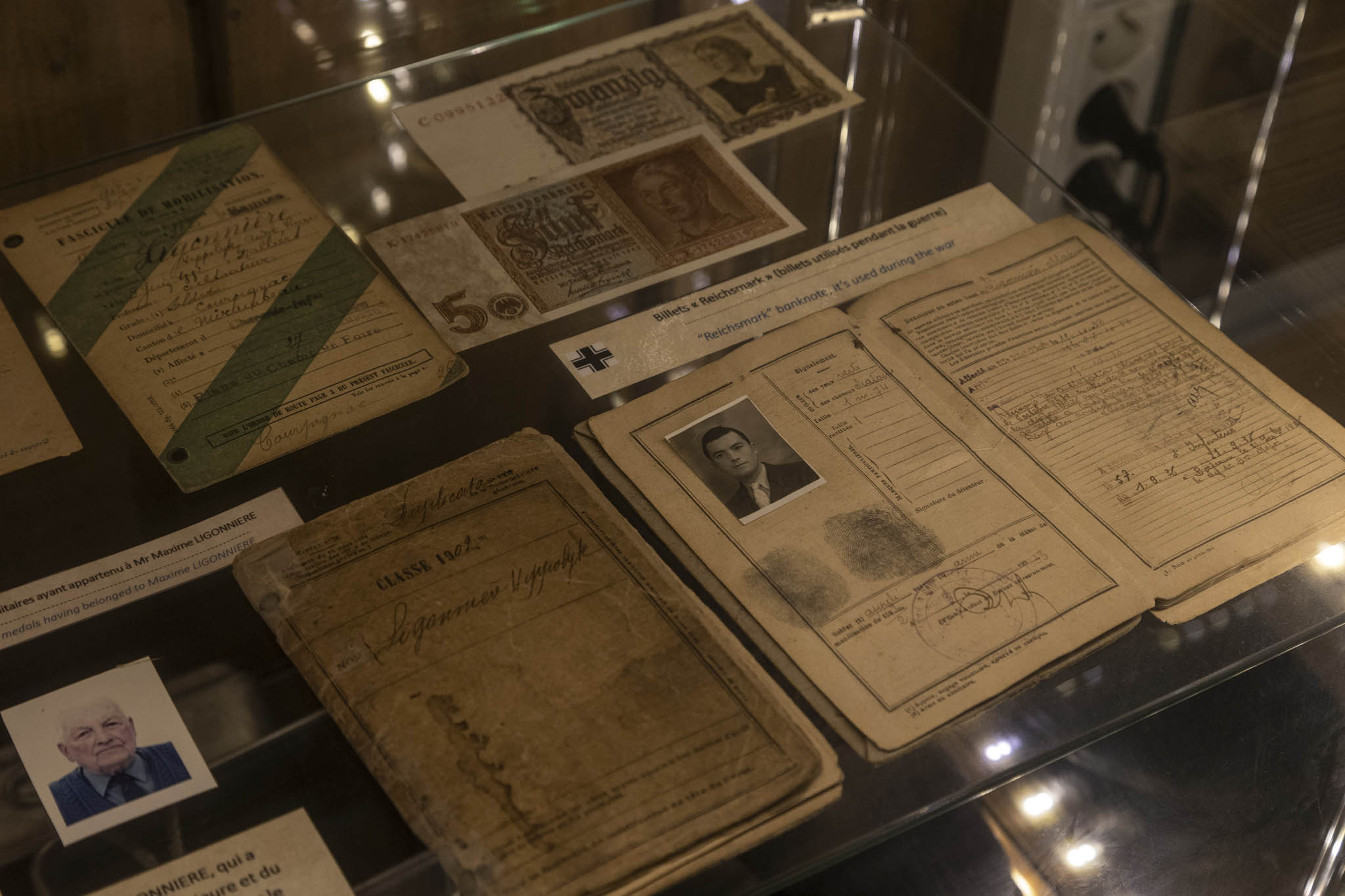
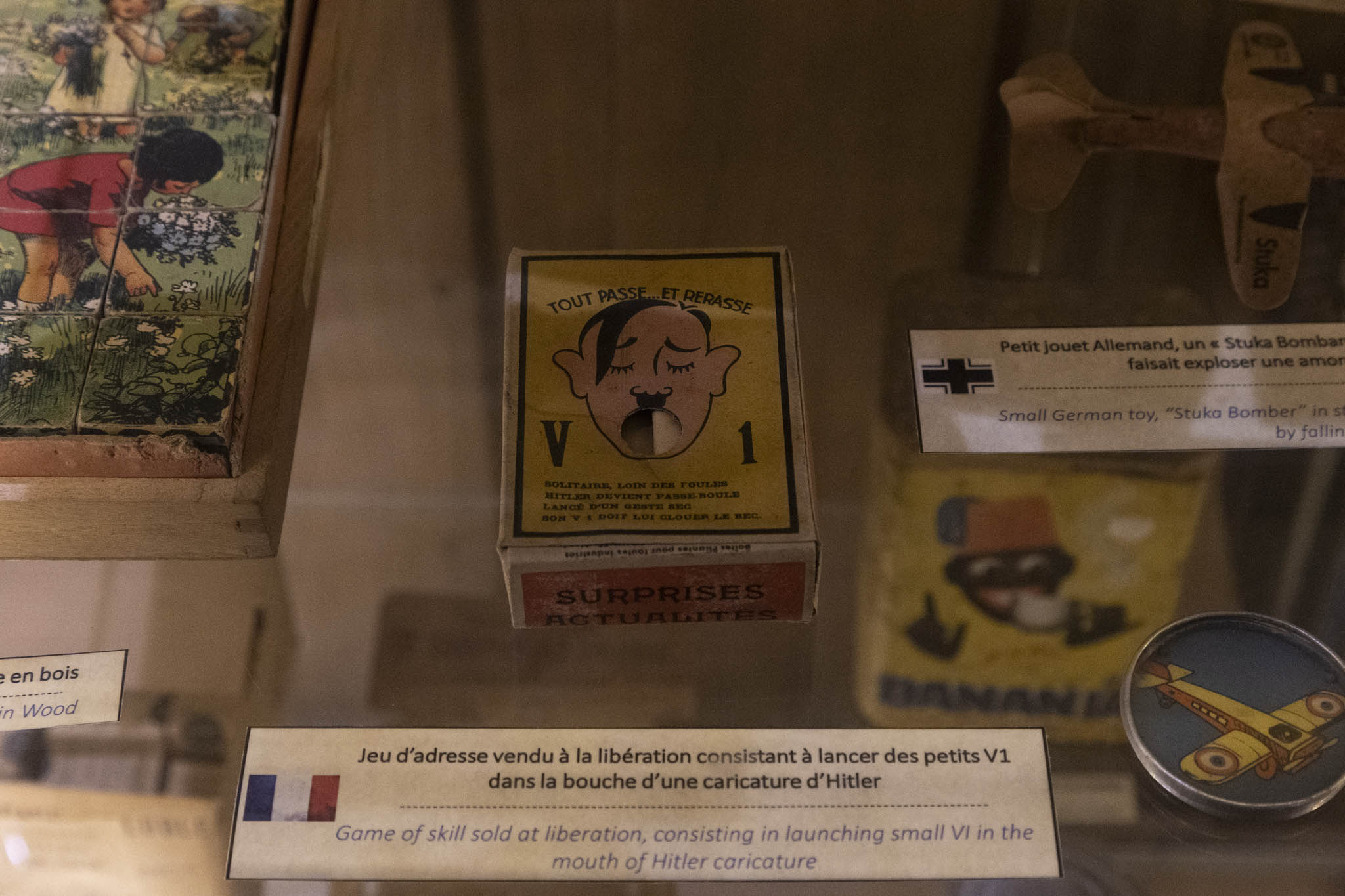
The remainder of this write-up will simply be a few of the many photos taken while visiting this excellent La Rochelle museum. It’s absolutely worth a visit if you’re in the city because there’s a wealth of information in pictures, notes, videos, and objects, all giving a good feel for what life was like in this part of France for both the locals and the occupiers. And it’s a delightfully quirky building too. Bonus.
In the next post in this 2025 MSC Virtuosa cruise series we engage in a little more exploration of La Rochelle’s waterfront area before making a return visit to La Belle Du Gabut after seven years.