Several years before this transatlantic cruise aboard Caribbean Princess we’d spent a couple of weeks on Ventura cruising to the Canary Islands, only that previous cruise was supposed to also include a visit to the autonomous Portuguese island of Madeira. That hadn’t happened, which you’ll know already if you’ve read that series of cruise travelogues and retained the information (unlikely) or if you’ve got basic English comprehension skills and had worked it out from the tenses used in the first sentence (possible). The reason for the removal of the port stop at Madeira had been due to a medical emergency on the ship for which the most expedient course of action had been diverting course to a different island rather than waiting for an air ambulance to arrive, and the knock-on effect of that was then not having enough time to visit Madeira at all. A pain, but it happens, you’ve just got to accept that, move on, and be thankful it’s not you needing urgent assistance.
We were therefore very pleased to make the port and capital of Funchal on Madeira for this second attempt at cruising to it, although the weather forecast was not great. We actually woke to rain which had thankfully, seemingly, passed by the time we’d had breakfast and gathered our wandering equipment for the day, so the city had a damp sheen to reflect the brightness of the day as we stepped ashore.
You may already know that when a ship first visits a port it’s traditional for there to be a small ceremony where a plaque (or similar) is given by the port to the ship so that the ship can display it aboard. If you ever cruise on a vessel that’s travelled widely then it’s fun sometimes to find these plaques, see where the ship’s been, see if you’ve been there too, and get a feel for the ports based on the quality or size of the plaques. There’s a lot of variation there.
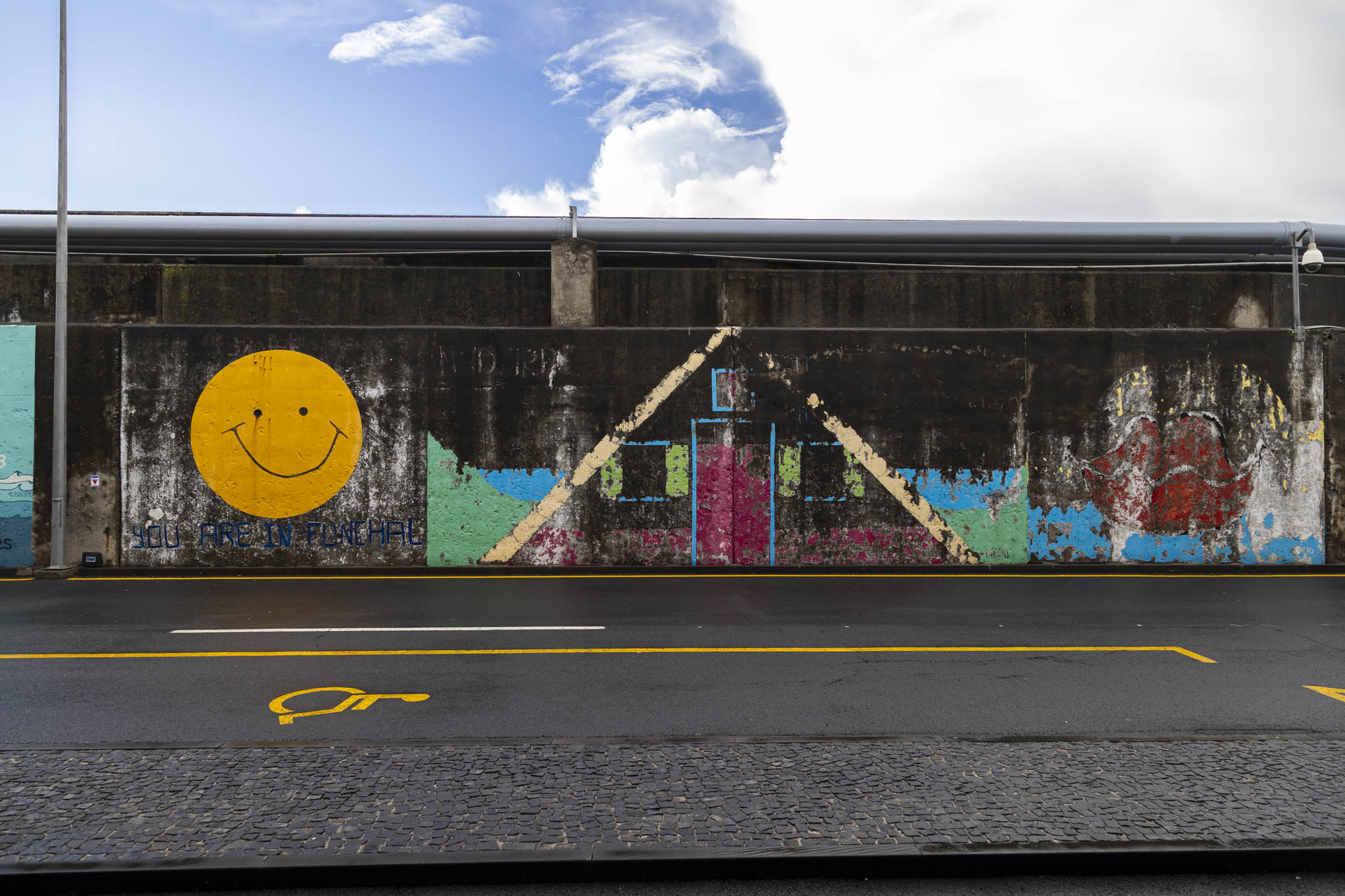
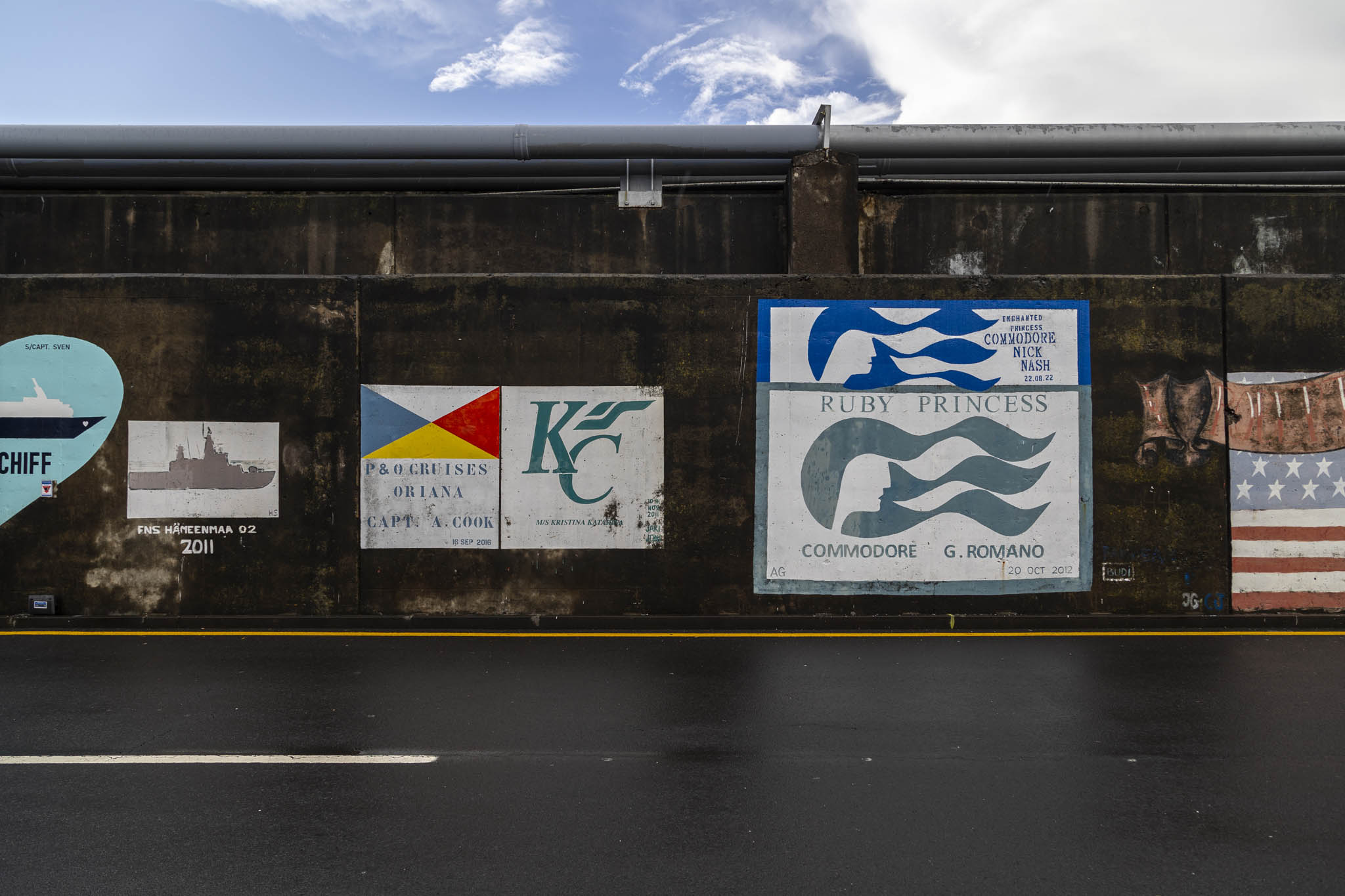
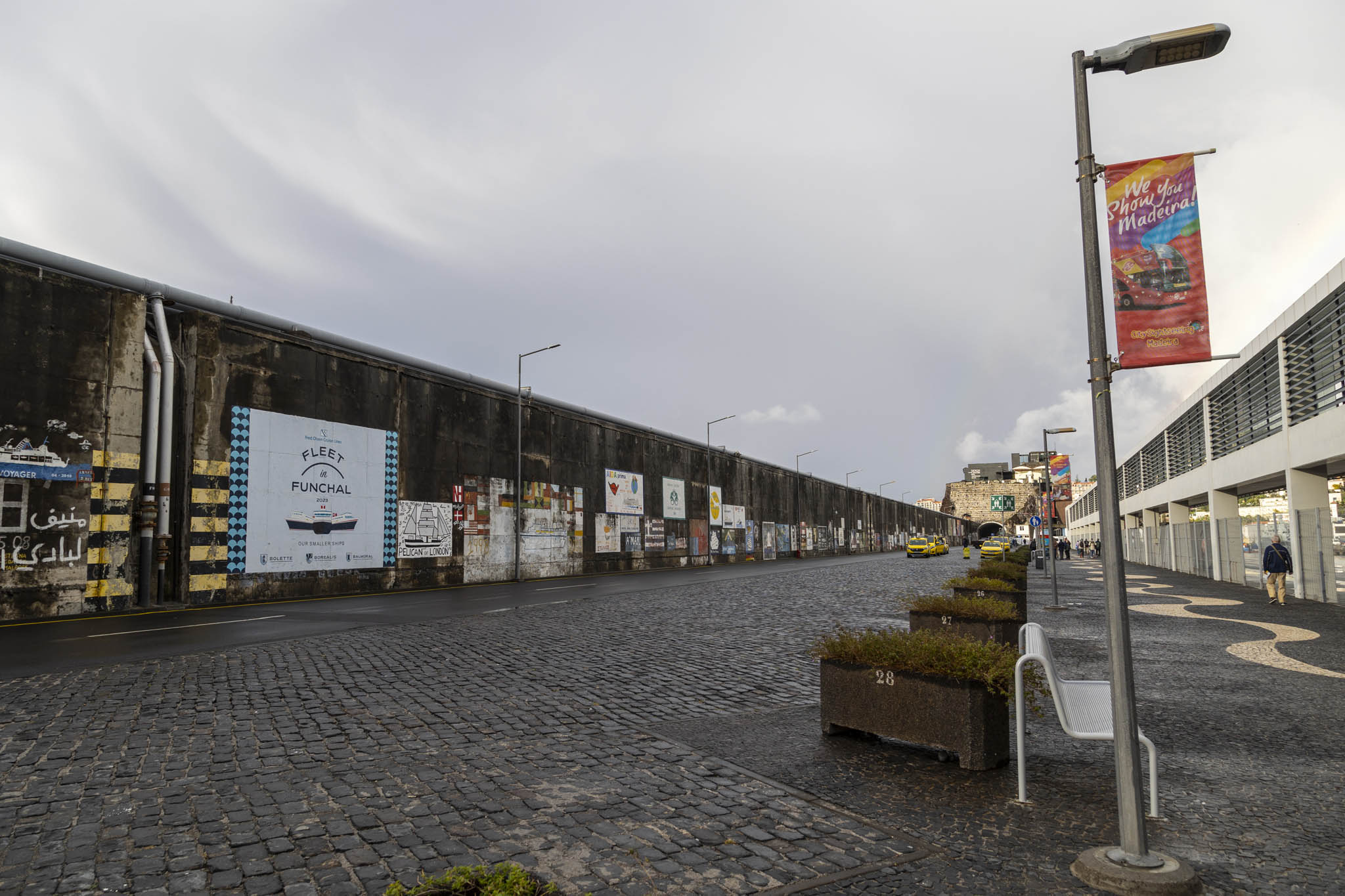
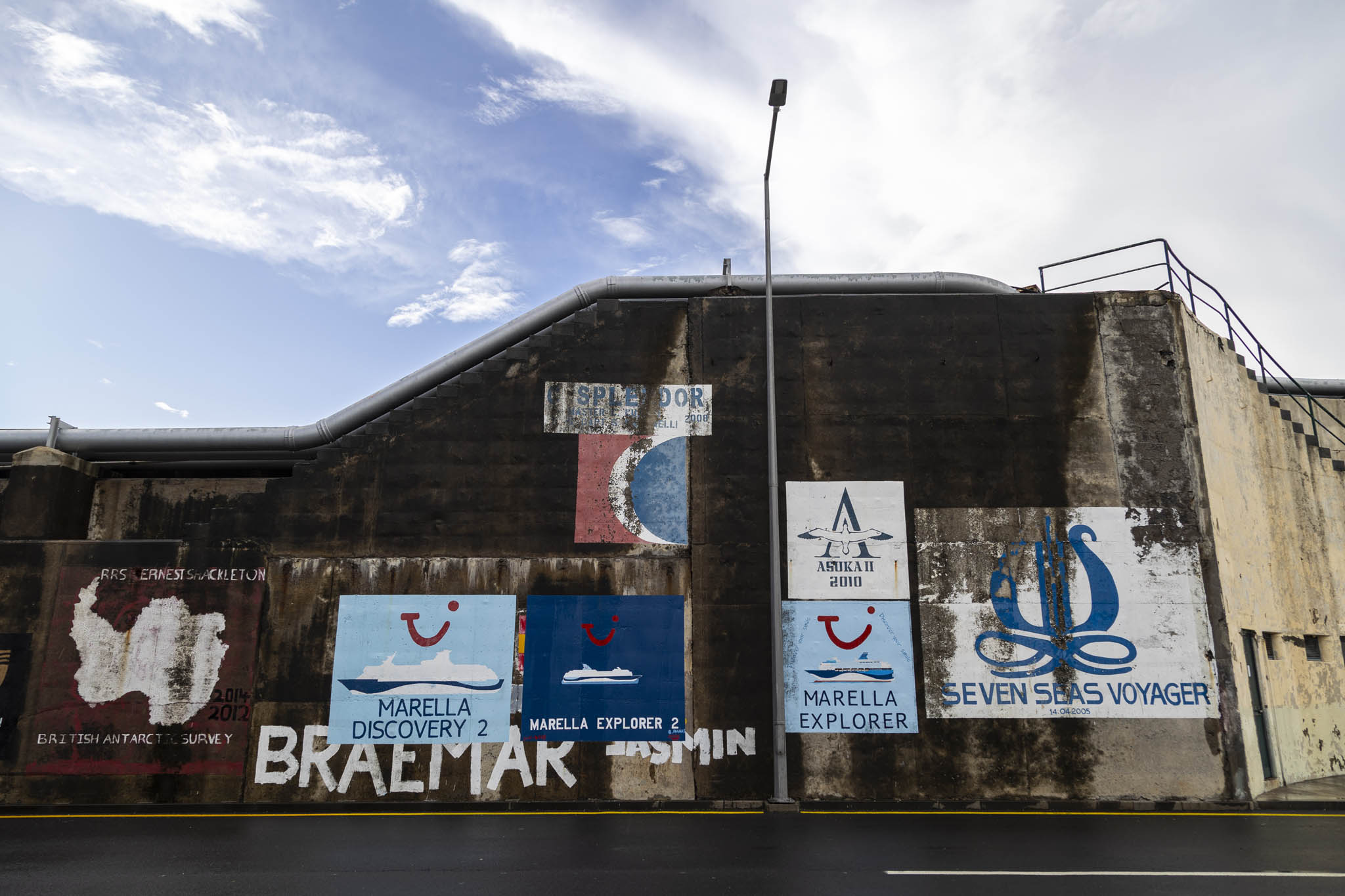
Funchal has its own tradition in a similar but somewhat reversed vein (possibly unique, or at least we’ve not seen it done elsewhere), which you’ll see most clearly if you walk into the city rather than take a shuttle bus. Along the harbour wall murals have been painted over the years acknowledging the visit of certain ships with vessels from merchant and naval fleets, ferry lines, and cruise ships all represented. Interesting to do some ship-name-spotting as you stroll along the waterfront.
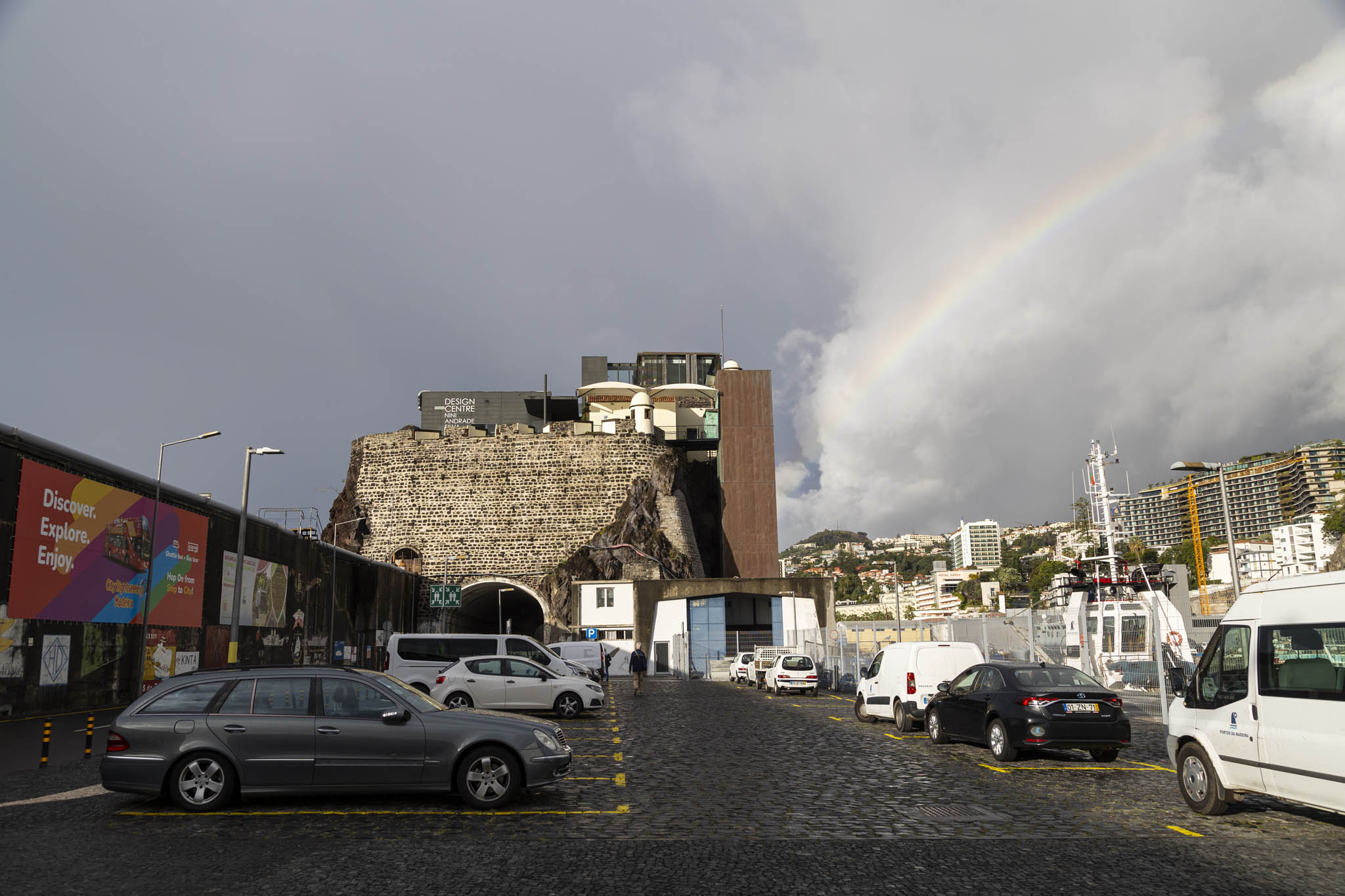
A short, narrow tunnel links the port area to the city, passing through part of the old defensive walls.
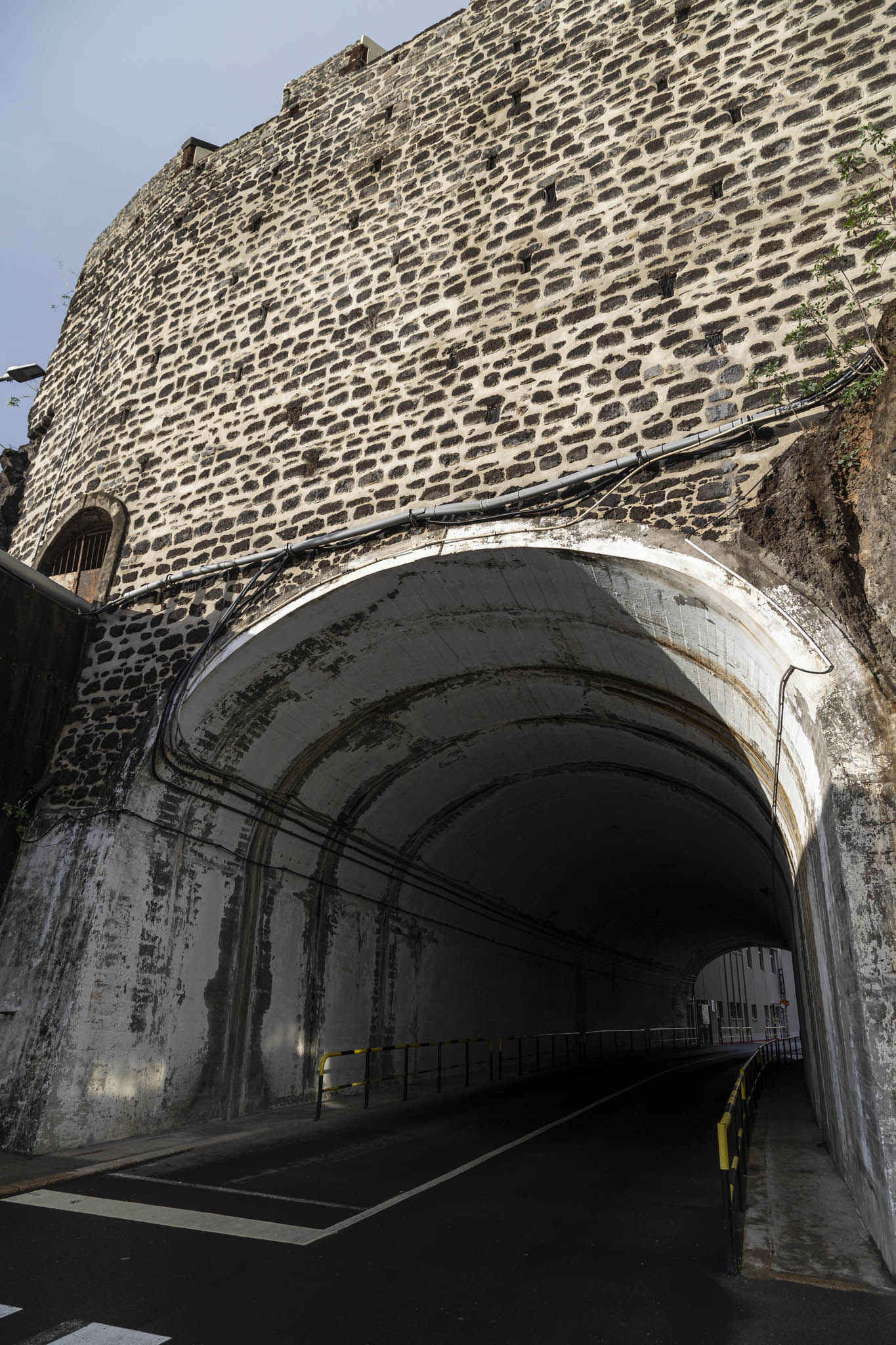
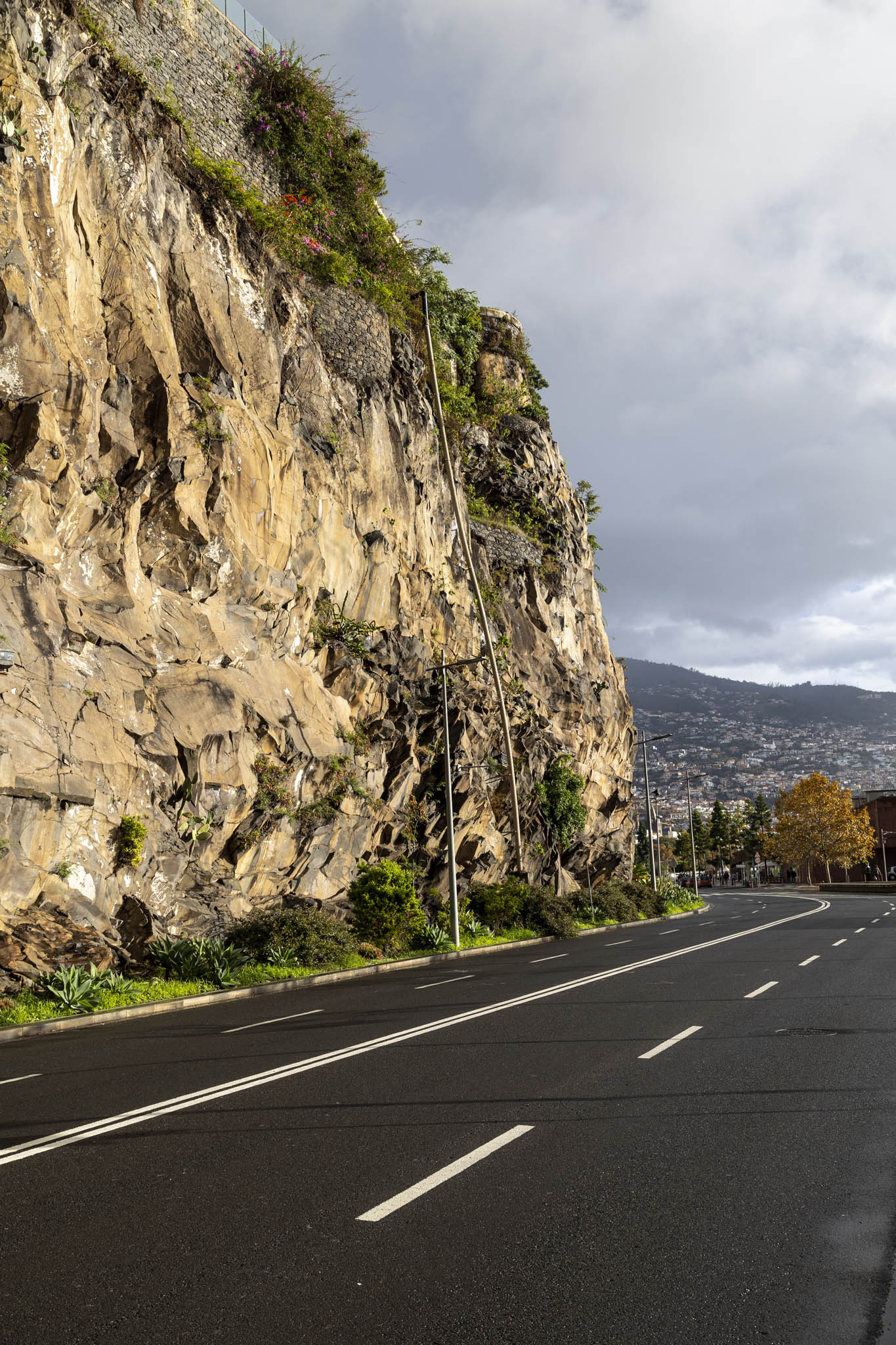
We’d not long got out of the port area and started on our way to where we wanted to hit first when it started to rain, and for a brief period we thought “Ah, a little bit of rain never hurt anyone,” conveniently forgetting the lesson from a few days earlier regarding just how much rain can actually fall when it wants to (see: Two Mediterranean Sea Days Aboard Caribbean Princess). And so the rain retaliated by coming down harder. A lot harder. We were forced to seek shelter by pretending to peruse souvenir shops until it became too obvious we had no intention of buying anything, then hovering outside under an awning.
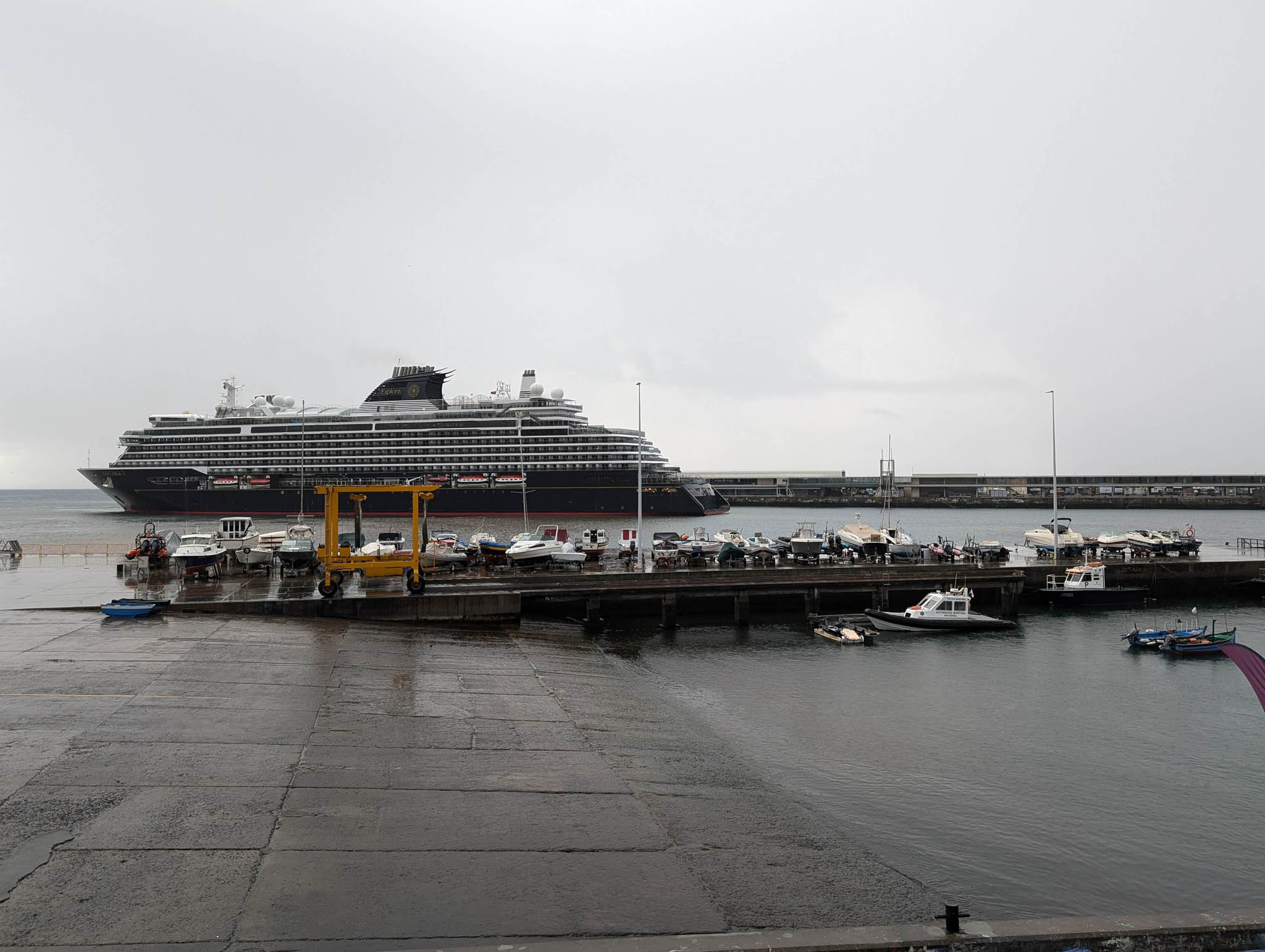
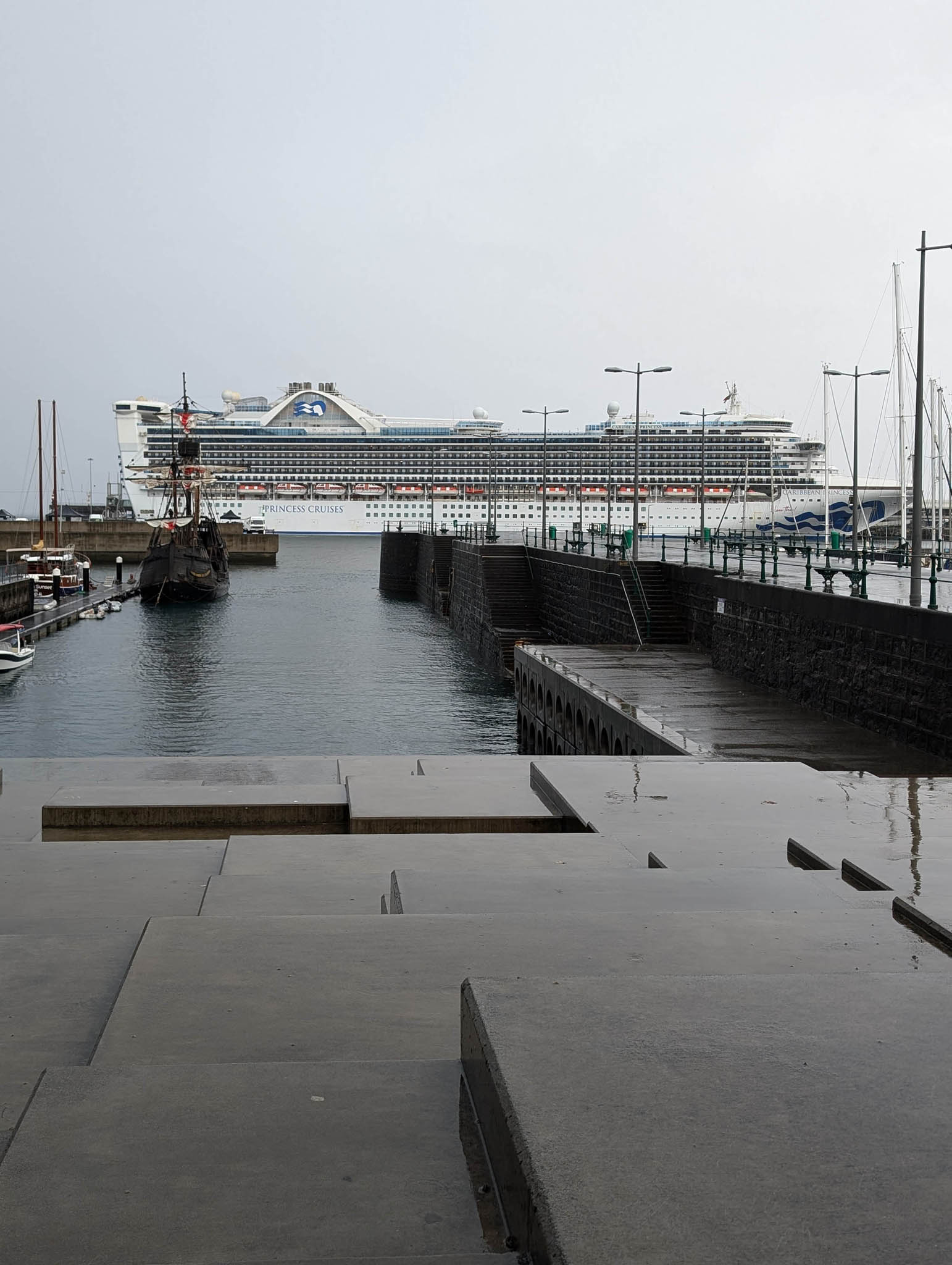
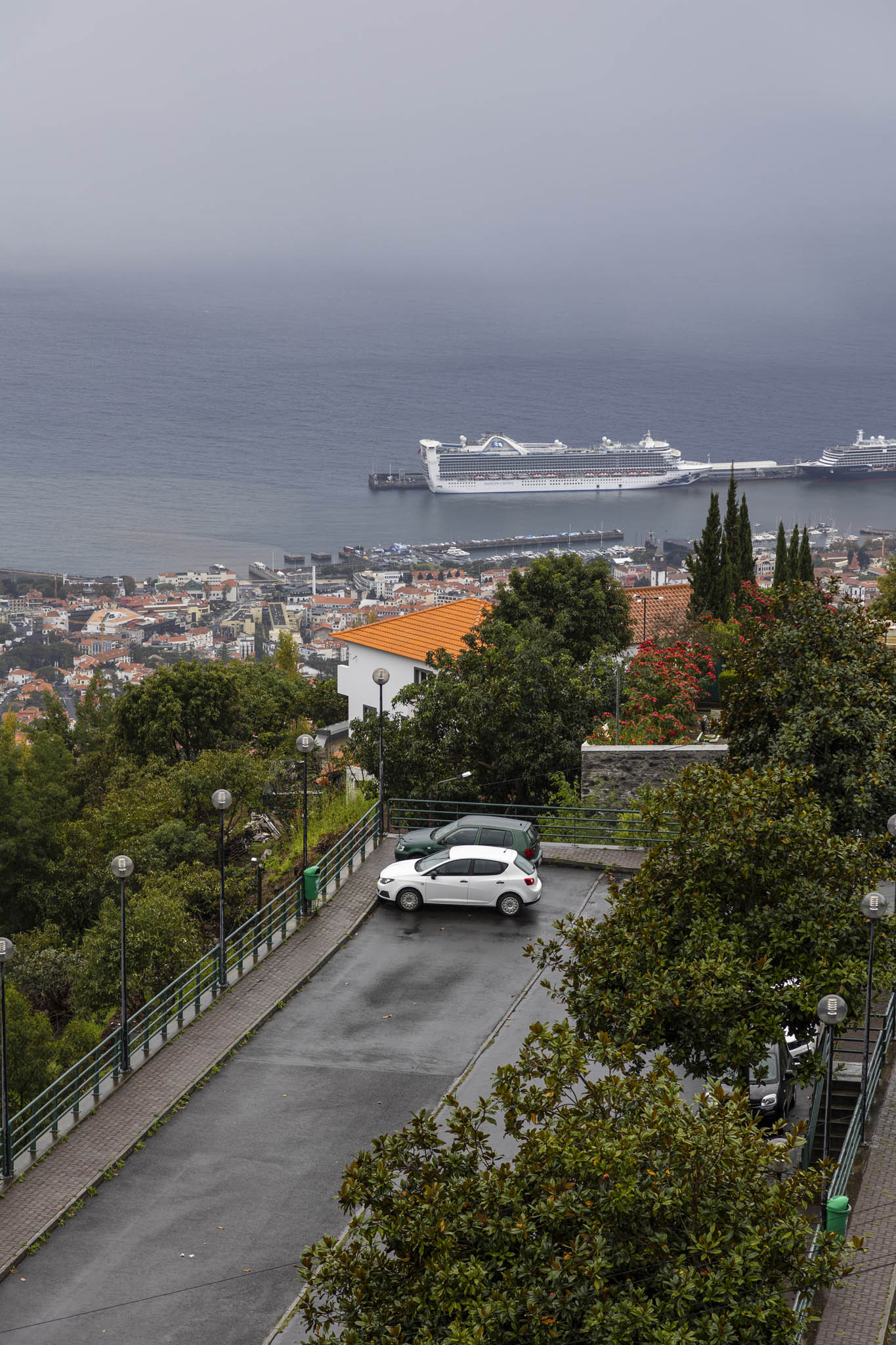
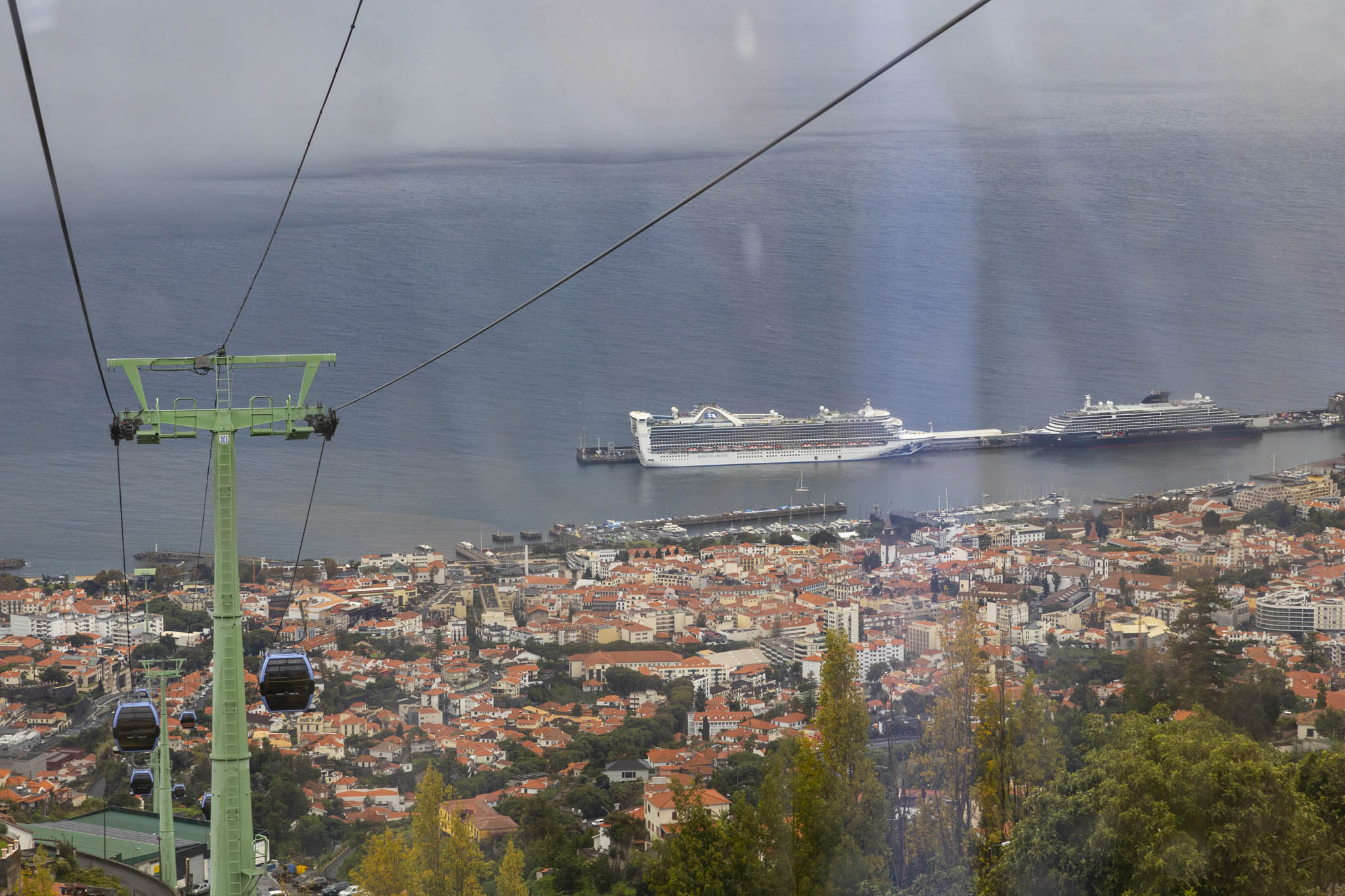
We had a partial view not only of our ship, Caribbean Princess, but also of Explora I which was docked behind us. Explora I looks a lovely ship, but with a daily cost per person rocking in at around six times what we paid for our transatlantic cruise then, short of a lottery win (and maybe not even then), it’s not a cruise experience we’re likely to ever have.
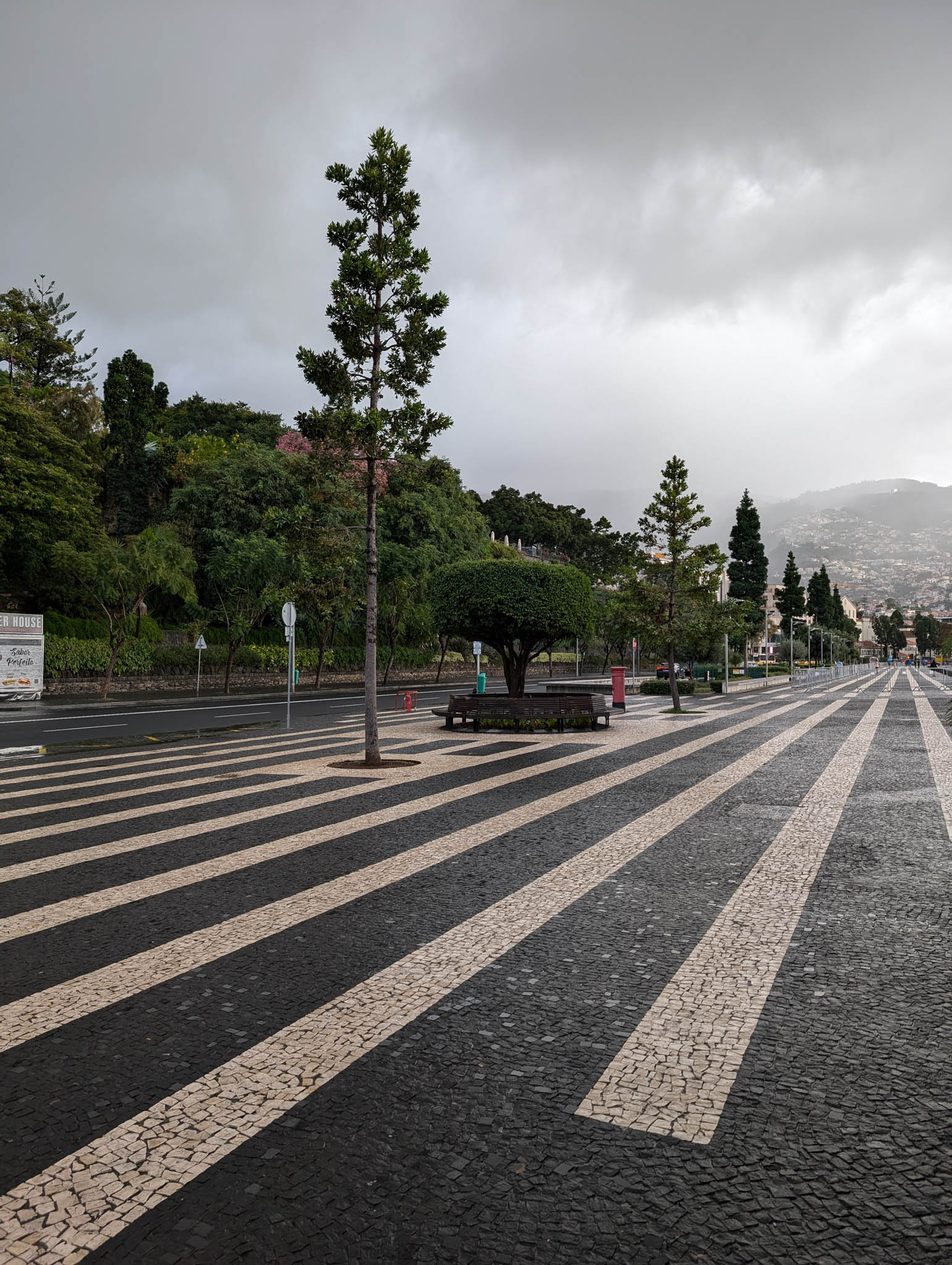
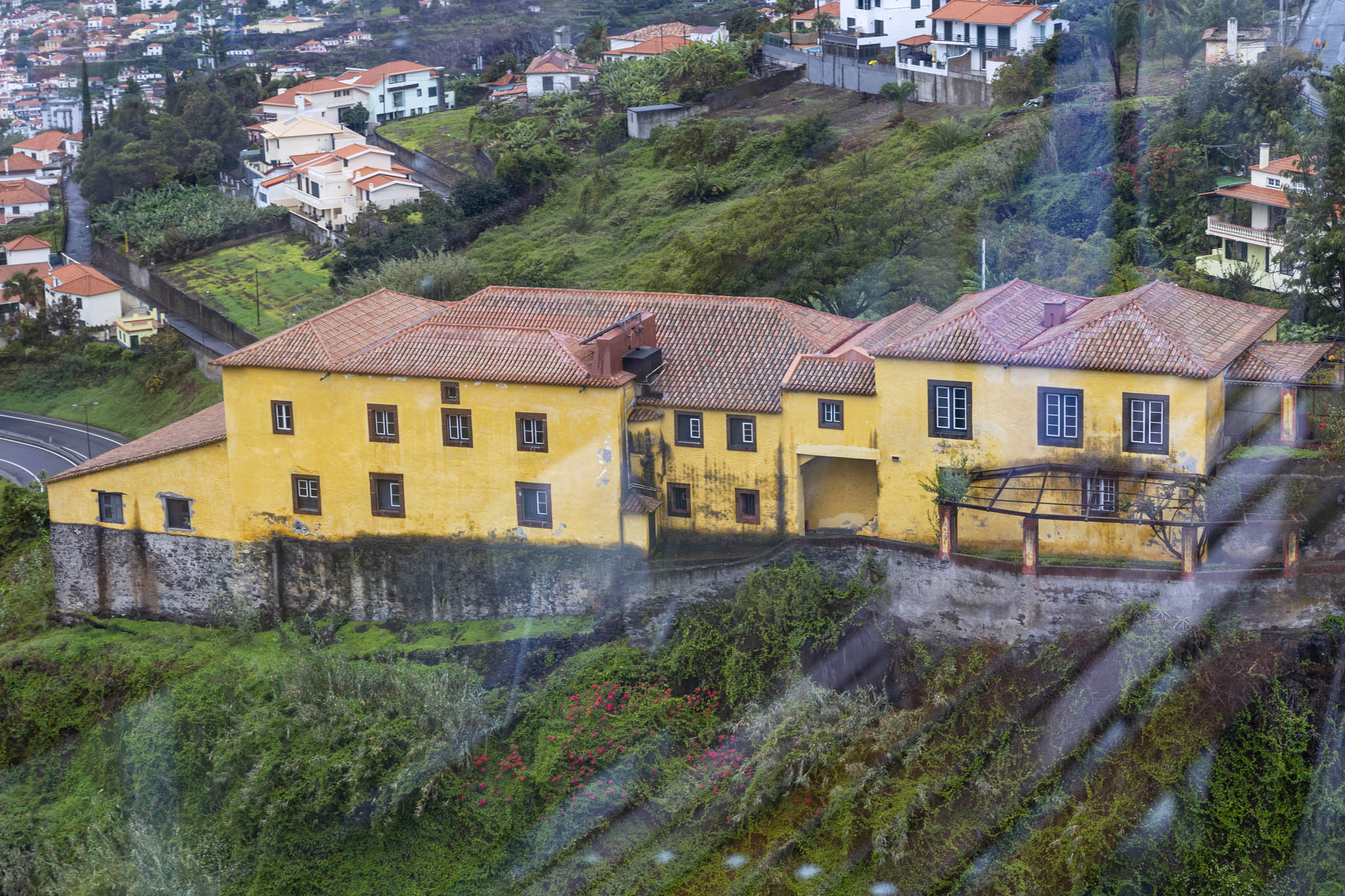
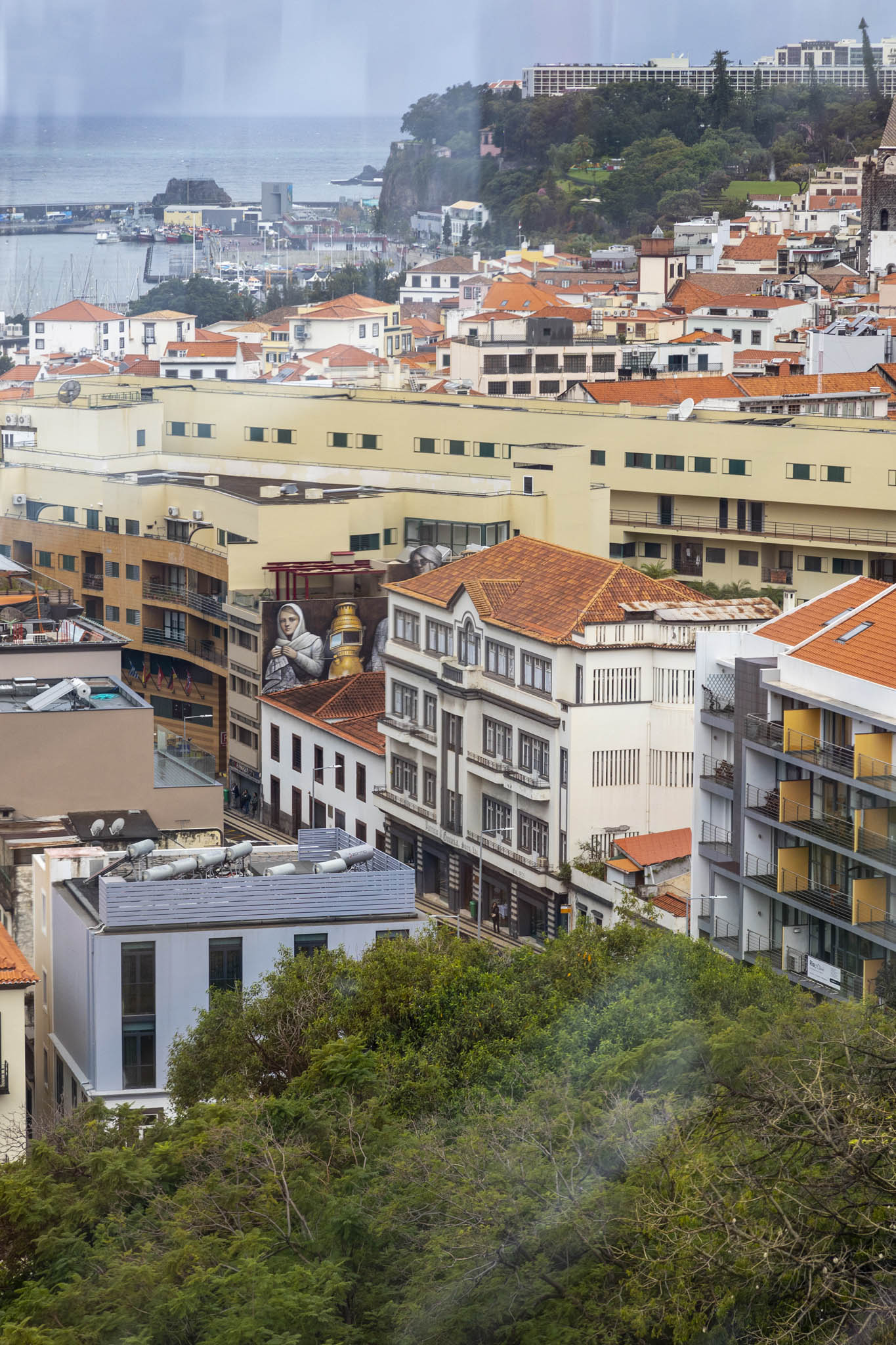
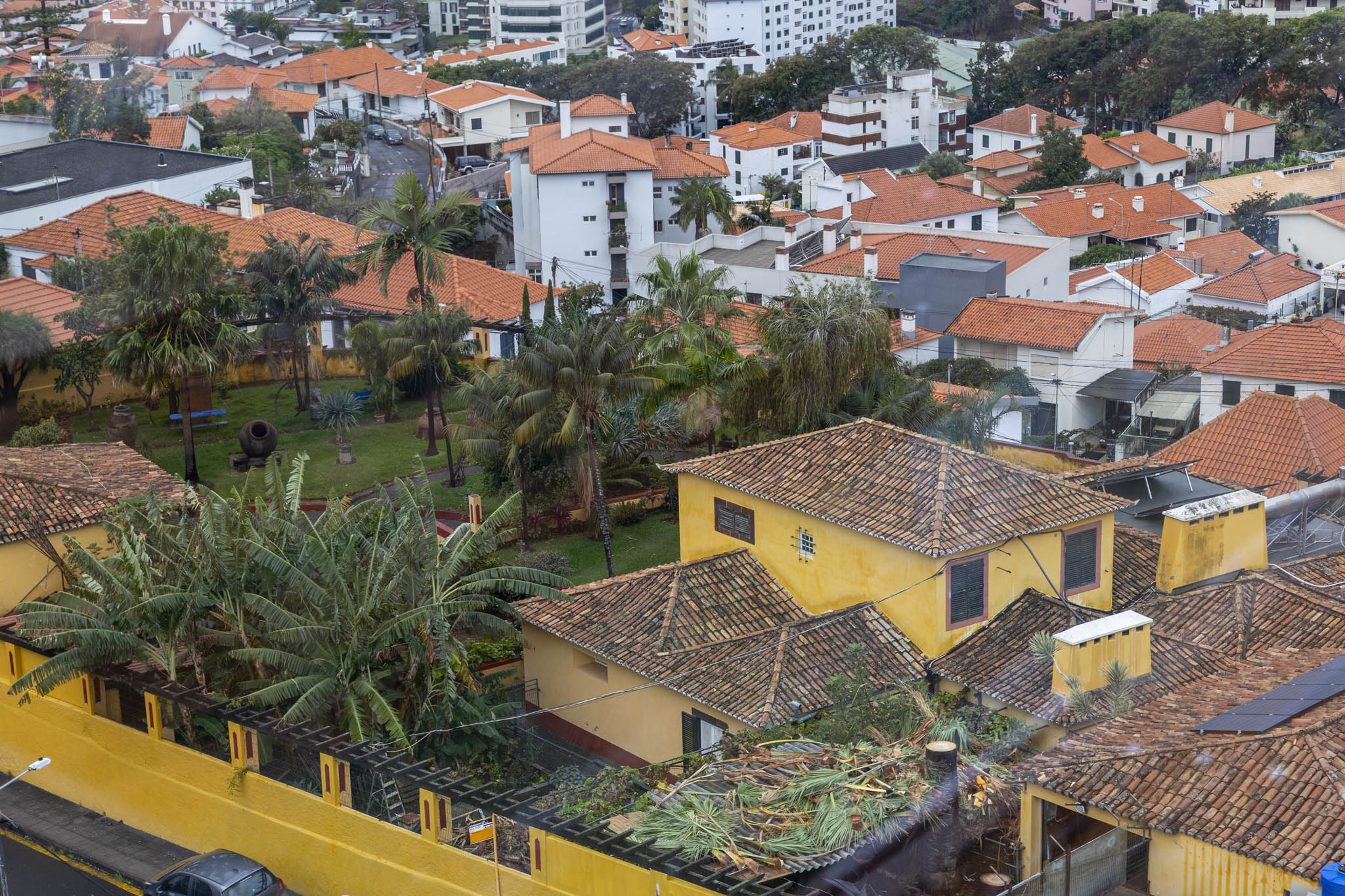
The rain eased off but never quite let up entirely so I kept my camera in its bag as we eventually decided to continue the walk to the only place we had firm plans on visiting this day. That was the cable car station and it took us probably 10-15 minutes to get there. Buying a ticket was simple enough, thanks to the pay machines in the lobby. Then we tried to hover around so it was empty enough to just get a cable car up above Funchal on our own to make taking photos or video easier but ended up sharing with a German tourist with whom we chatted mostly instead. We tried to peer about and down through the glass that was fogged up inside and covered in rain droplets outside but there was little point in taking photographs. One thing of minor interest as we were drifting slowly up and over the hills surrounding Funchal was that there was clearly some sort of car rally taking place on the island on the day of our visit. A procession of colourful and decorative vehicles with incredibly loud exhausts was snaking its way up the twisting roads we were passing over.
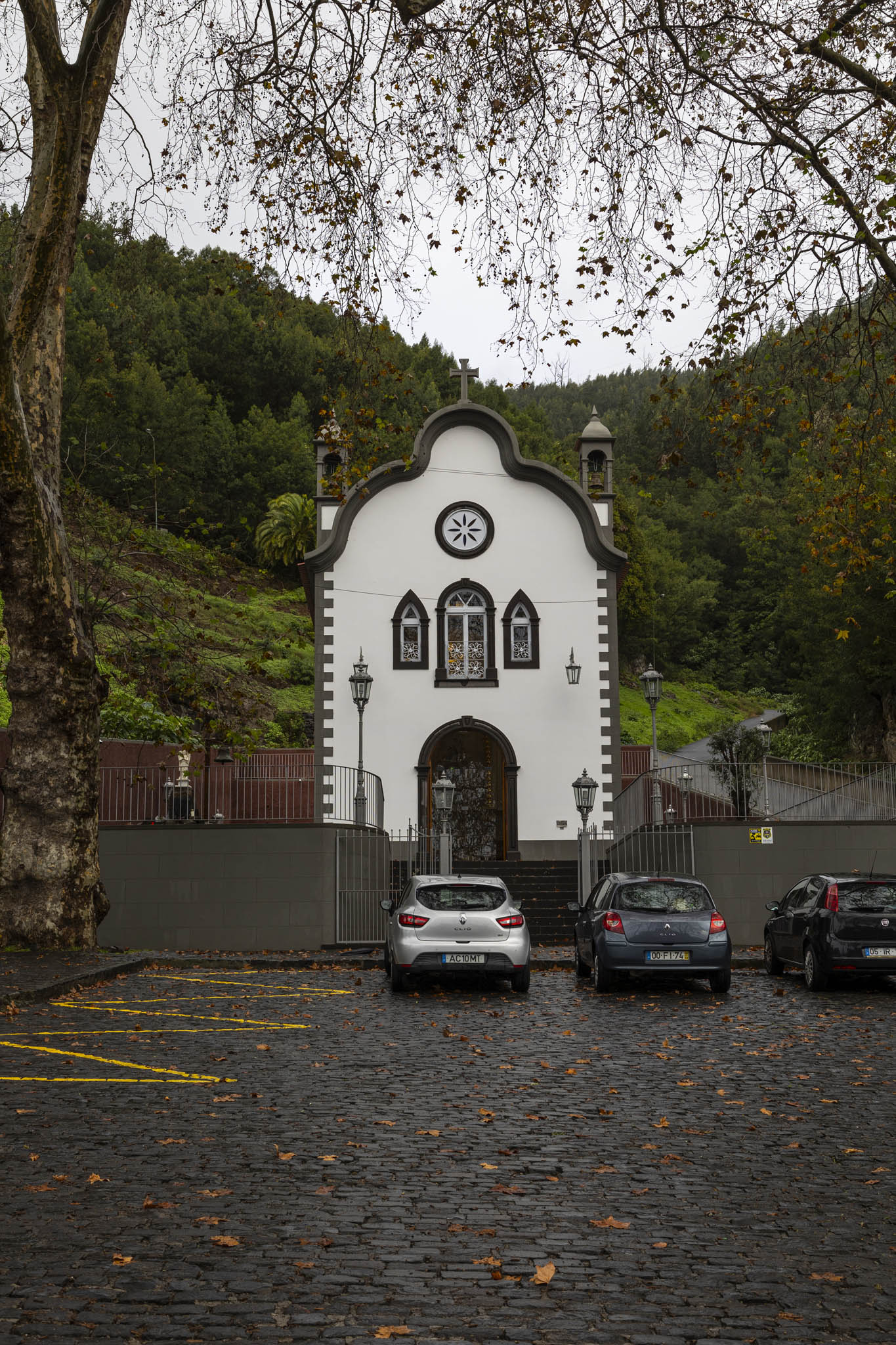
We alighted at the Monte station, and the rain, while not heavy, alighted with us, adding continuing dampness to the morning’s activities. Walking a little way east of the cable car station we approached a viewpoint over the valley below and were afforded some views back down to the main port area of Funchal where our ship could easily be spotted. The small church we passed was the Babosas Chapel, only rebuilt in 2022 following destruction in the island’s serious storm of 2010. It had been originally constructed in 1906 and the Art Nouveau style of the period is clear to see in its architecture.
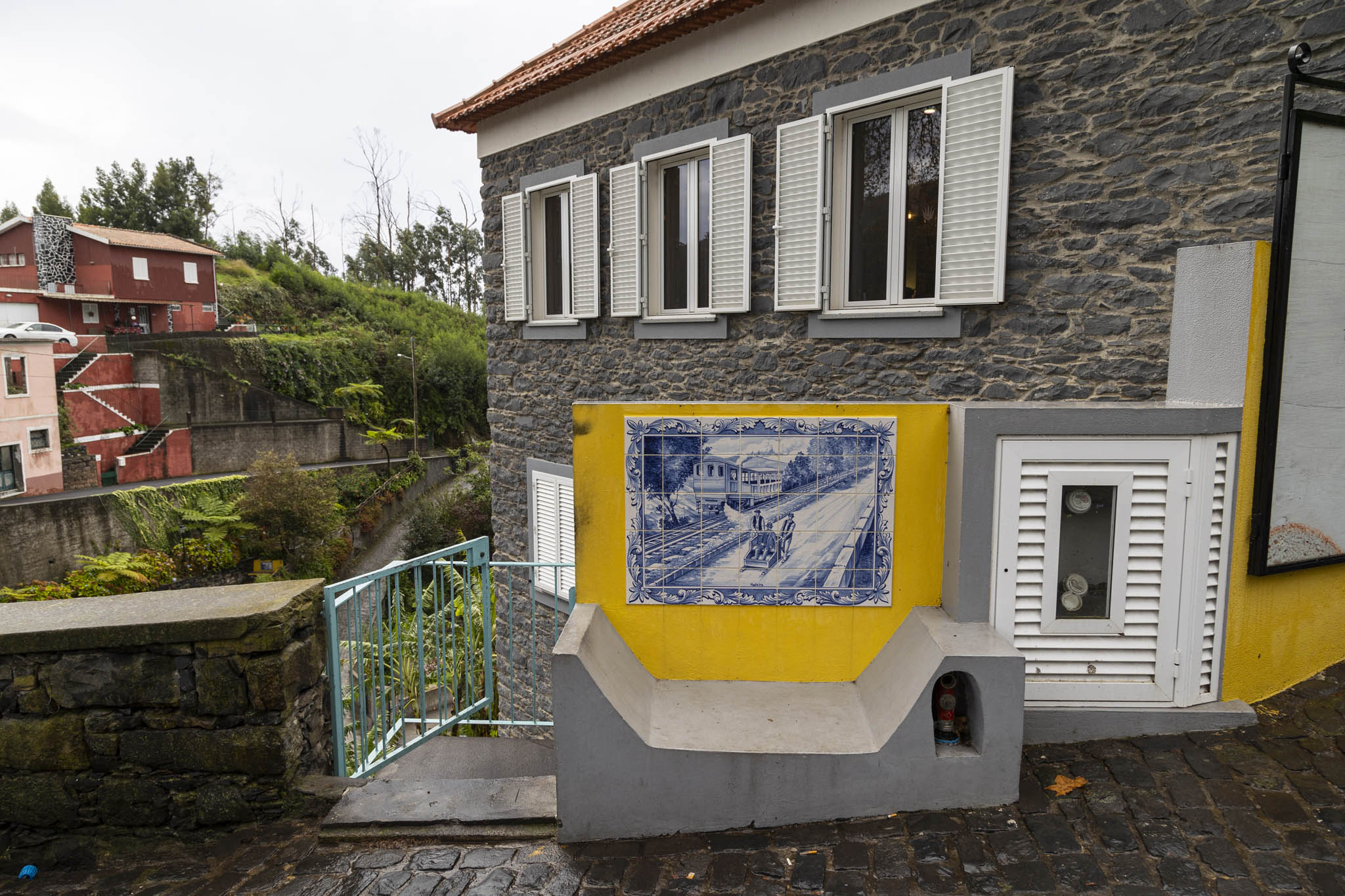
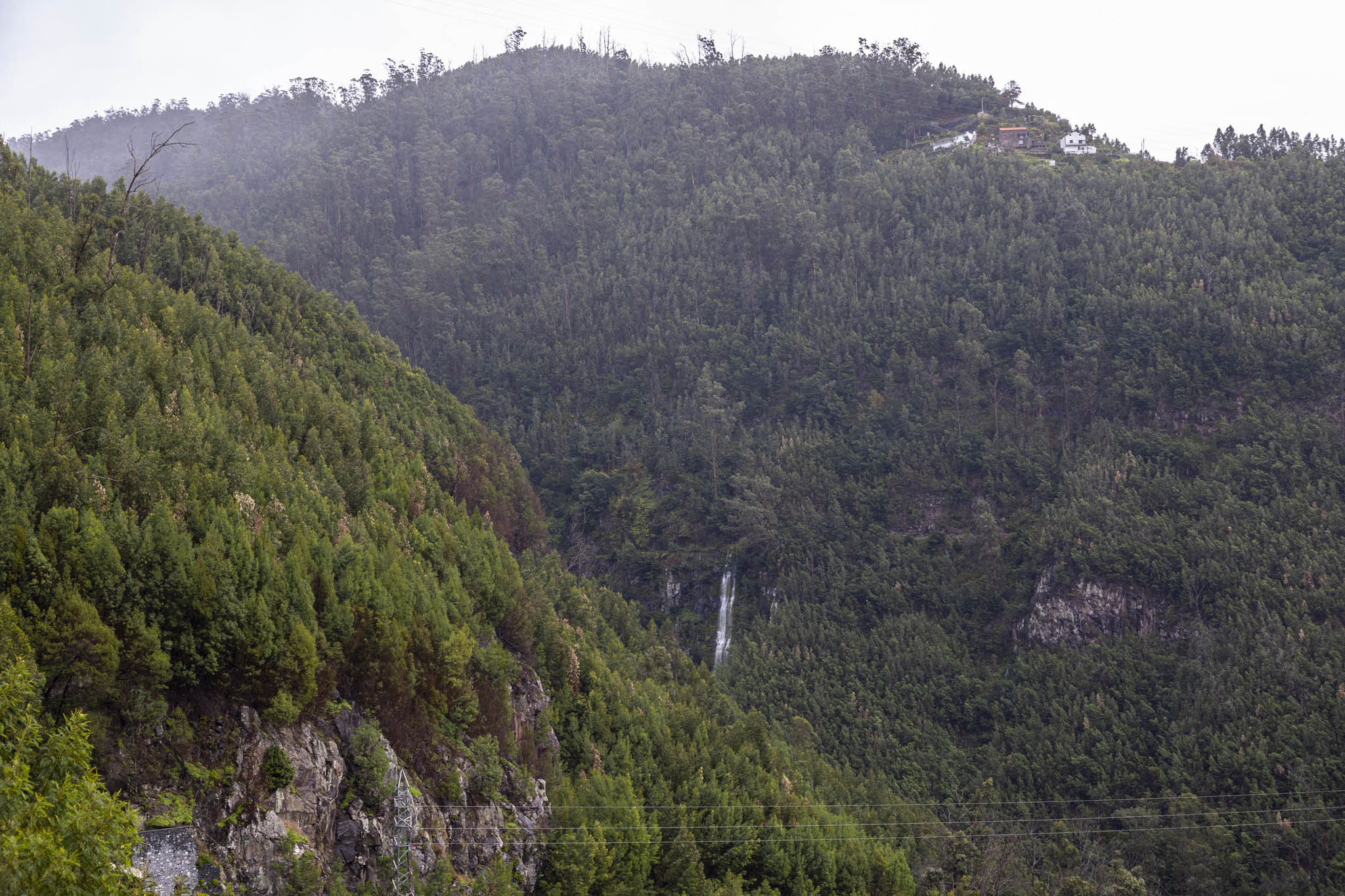
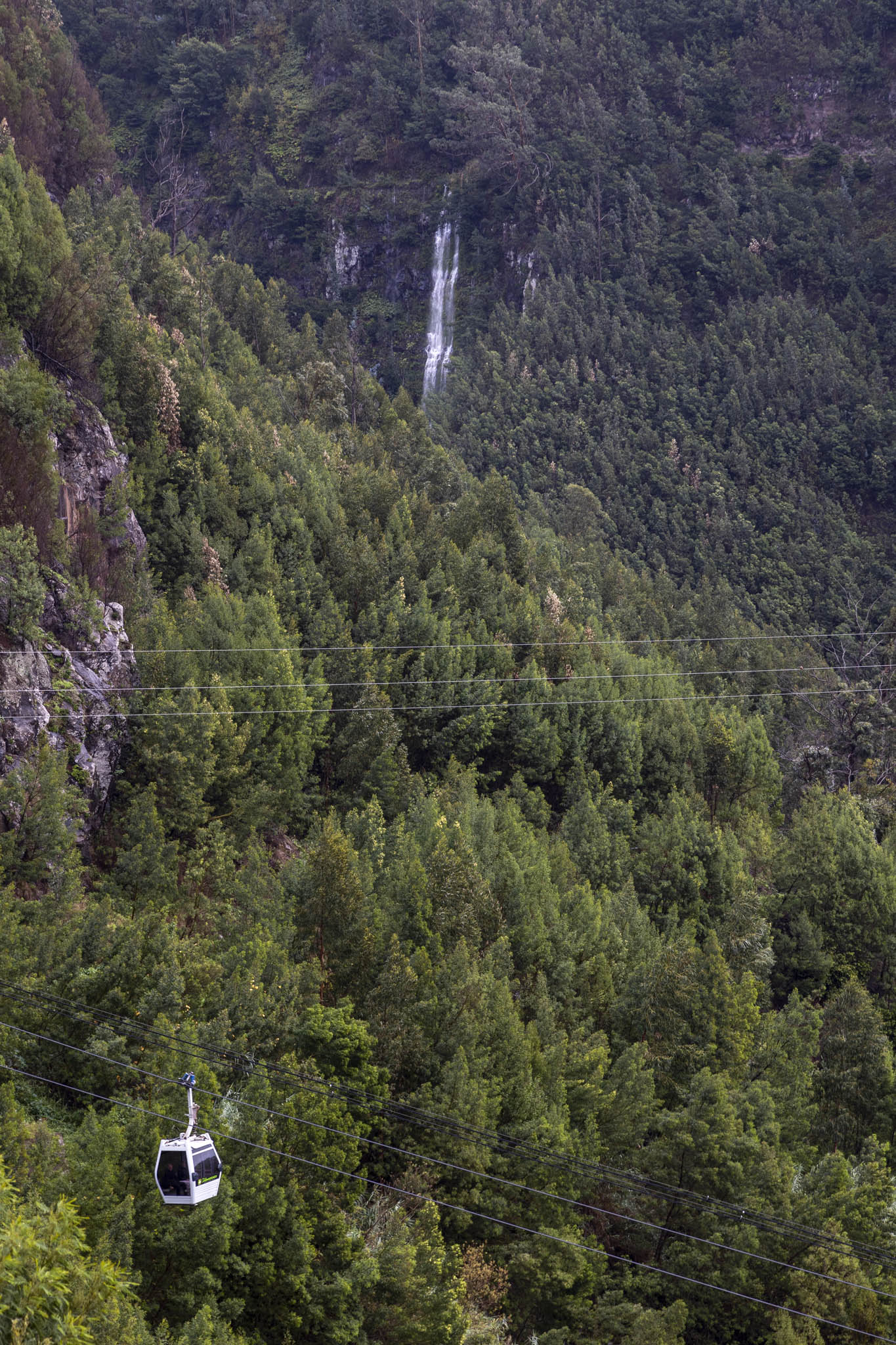
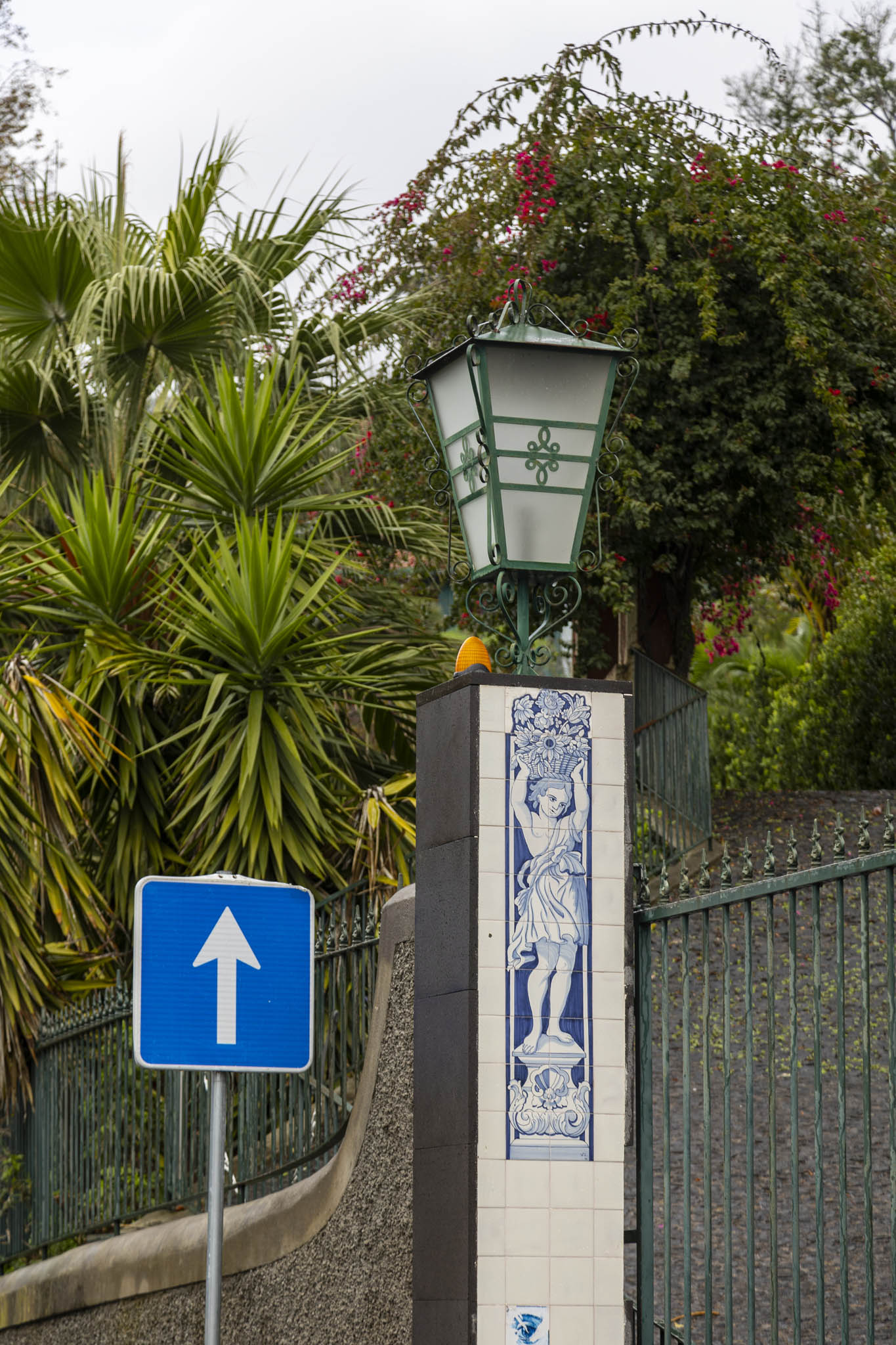
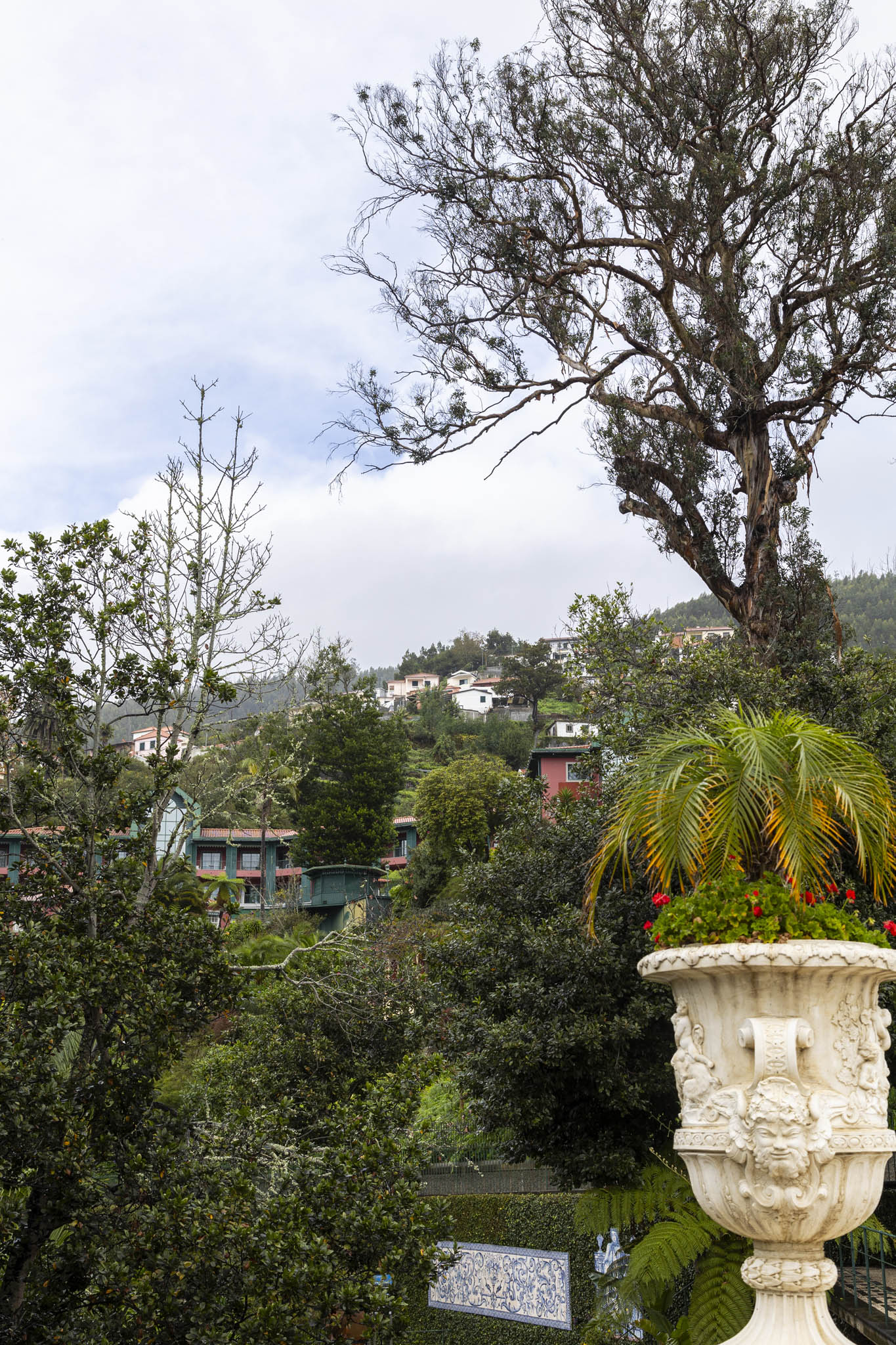
About a minute’s walk to the west of the cable car station there was a pleasant-looking garden area. This was Jardim Monte Palace Madeira, a botanical garden, and even with the rain we might have been tempted to pay it a visit had it not also been clearly over many vertical levels on the steep hillside here. Rain and slopes or steps together, though, suggested we’d not see it in its best light. We do have plans to return to Madeira in November 2026 and we’ve already agreed with people with whom we’ll be travelling that we’ll do the cable car again (as they’ve never done it) so if the weather is kind to us we’ll visit on that occasion.
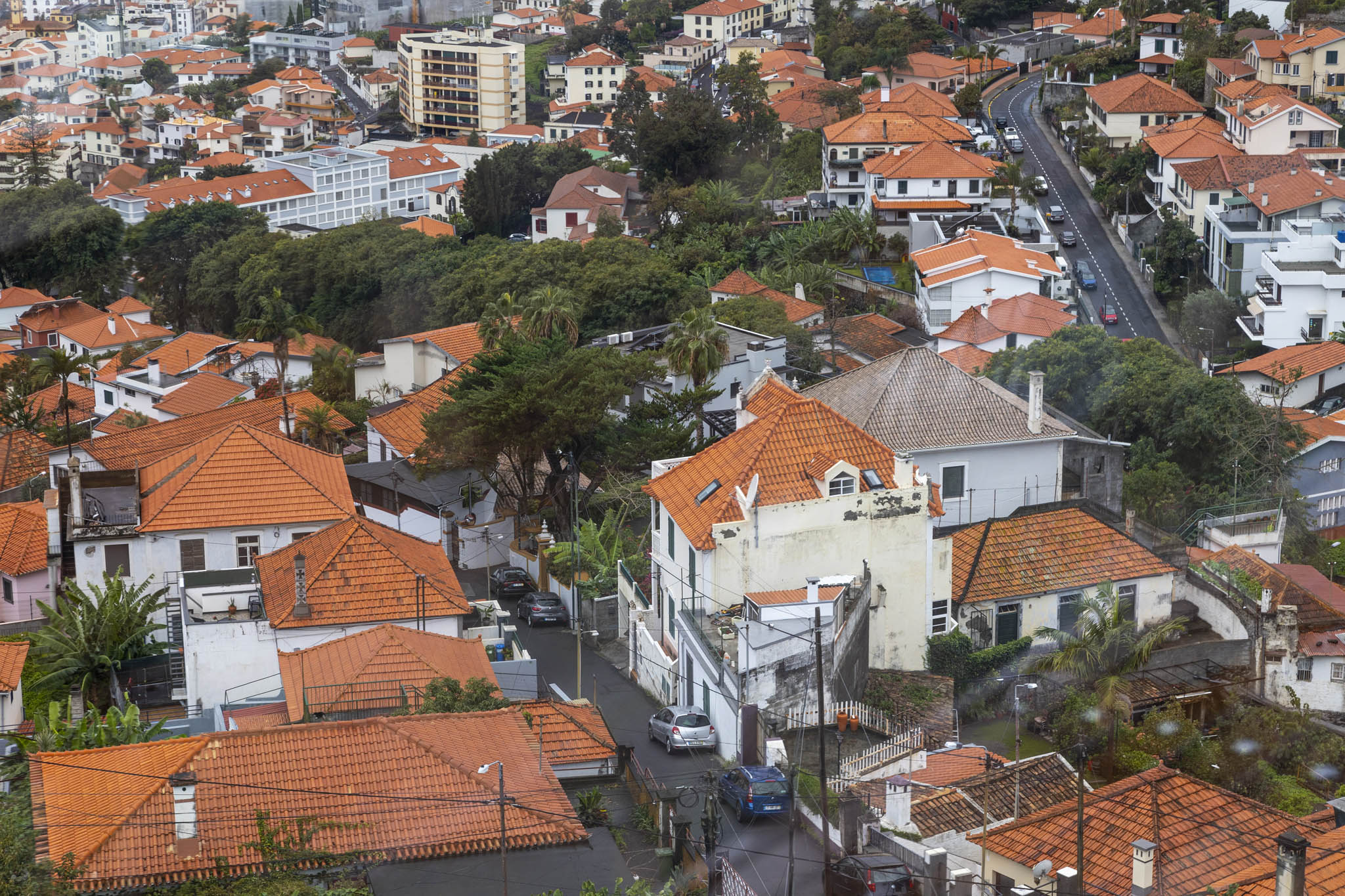
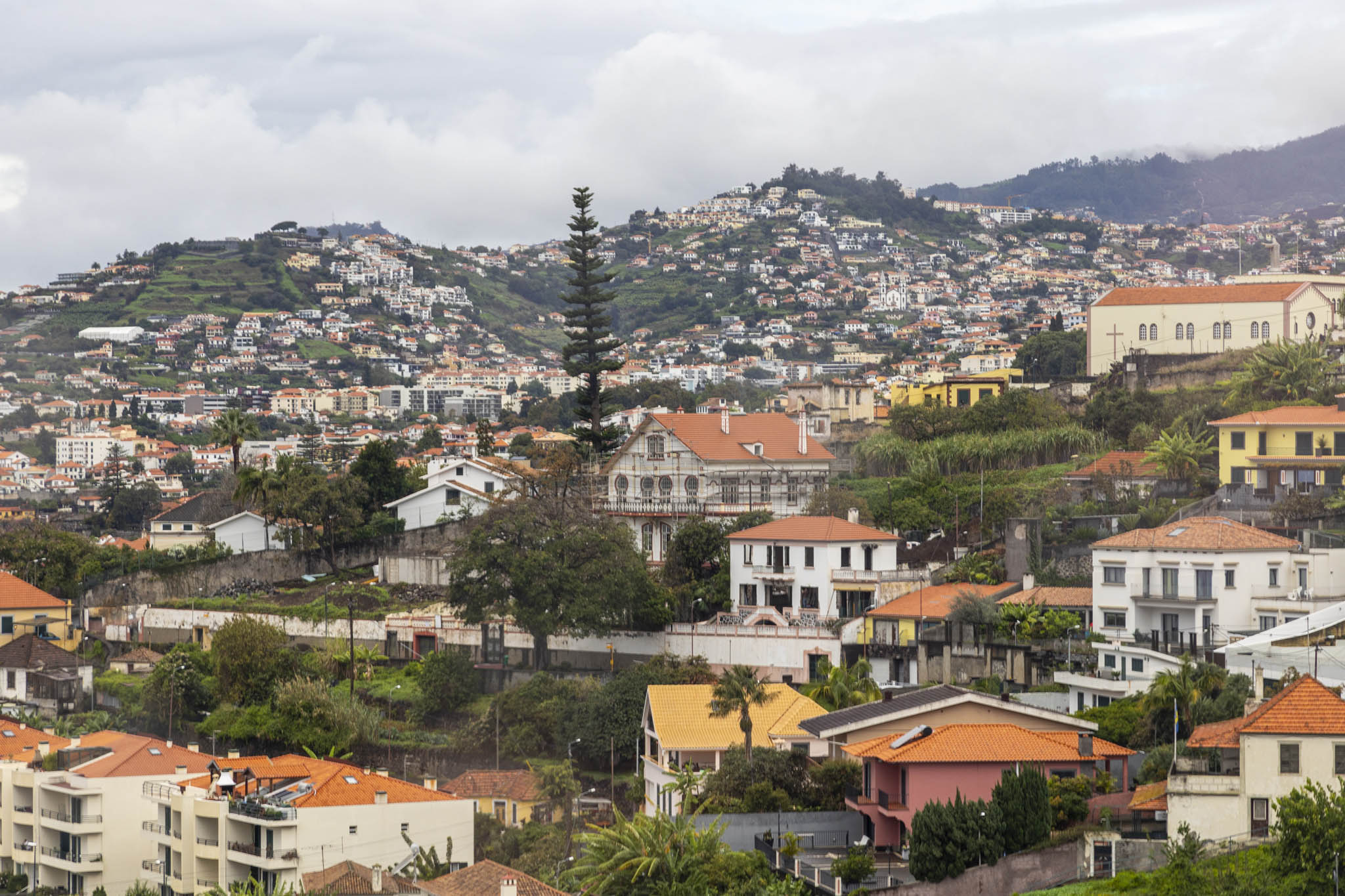
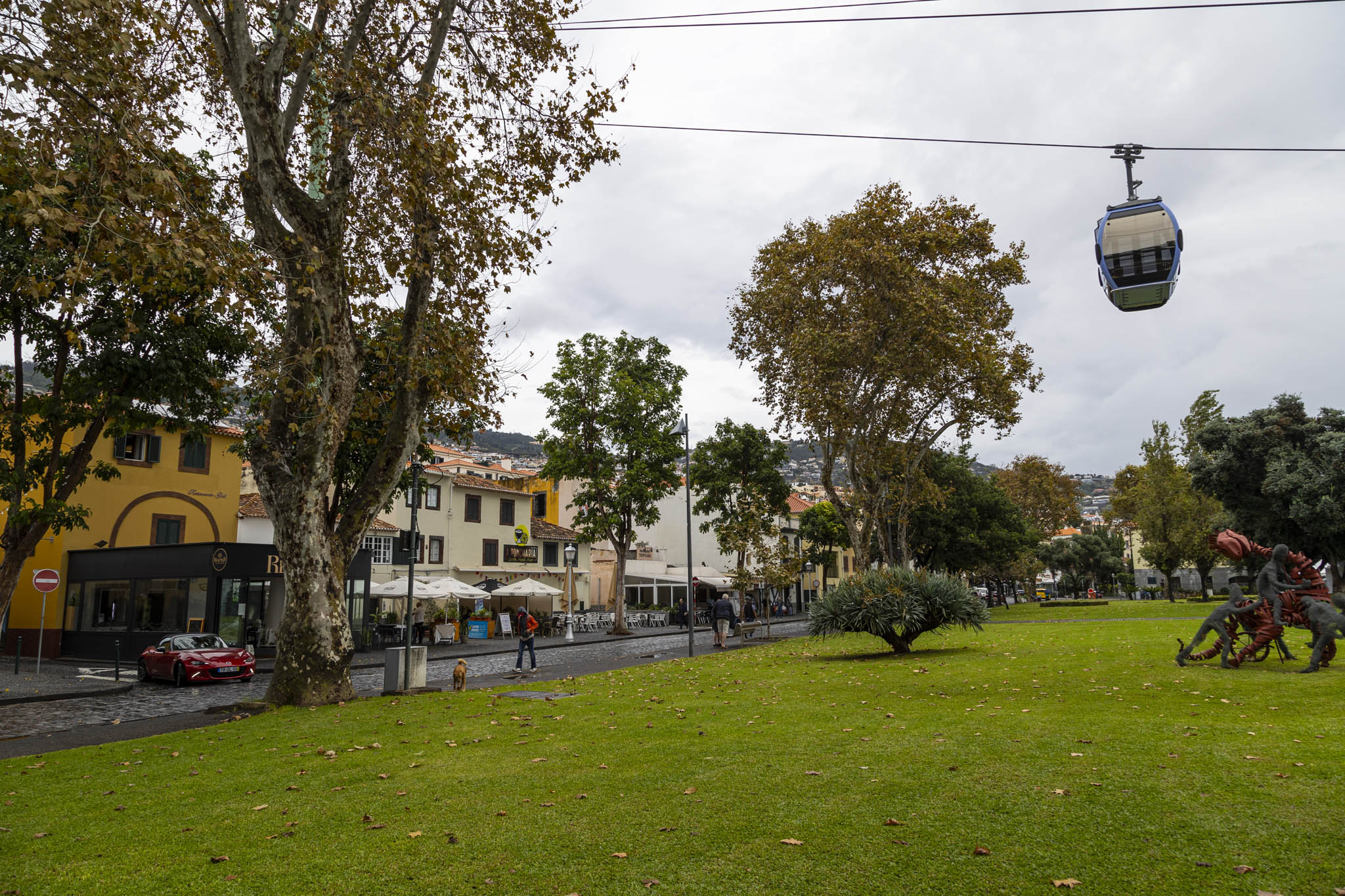
We didn’t spend long at the top of the hill over Funchal before deciding to head back down. We’ve had the experience of a cable car ride on Madeira now, and we have an outline of a plan for a return visit. Our trip back down to the port area was unaccompanied by strangers this time so it was easier to move around the car and take photos, even if reflections were an issue. On the plus side, the rain seemed to have eased off fully by the time we reached a lower altitude.
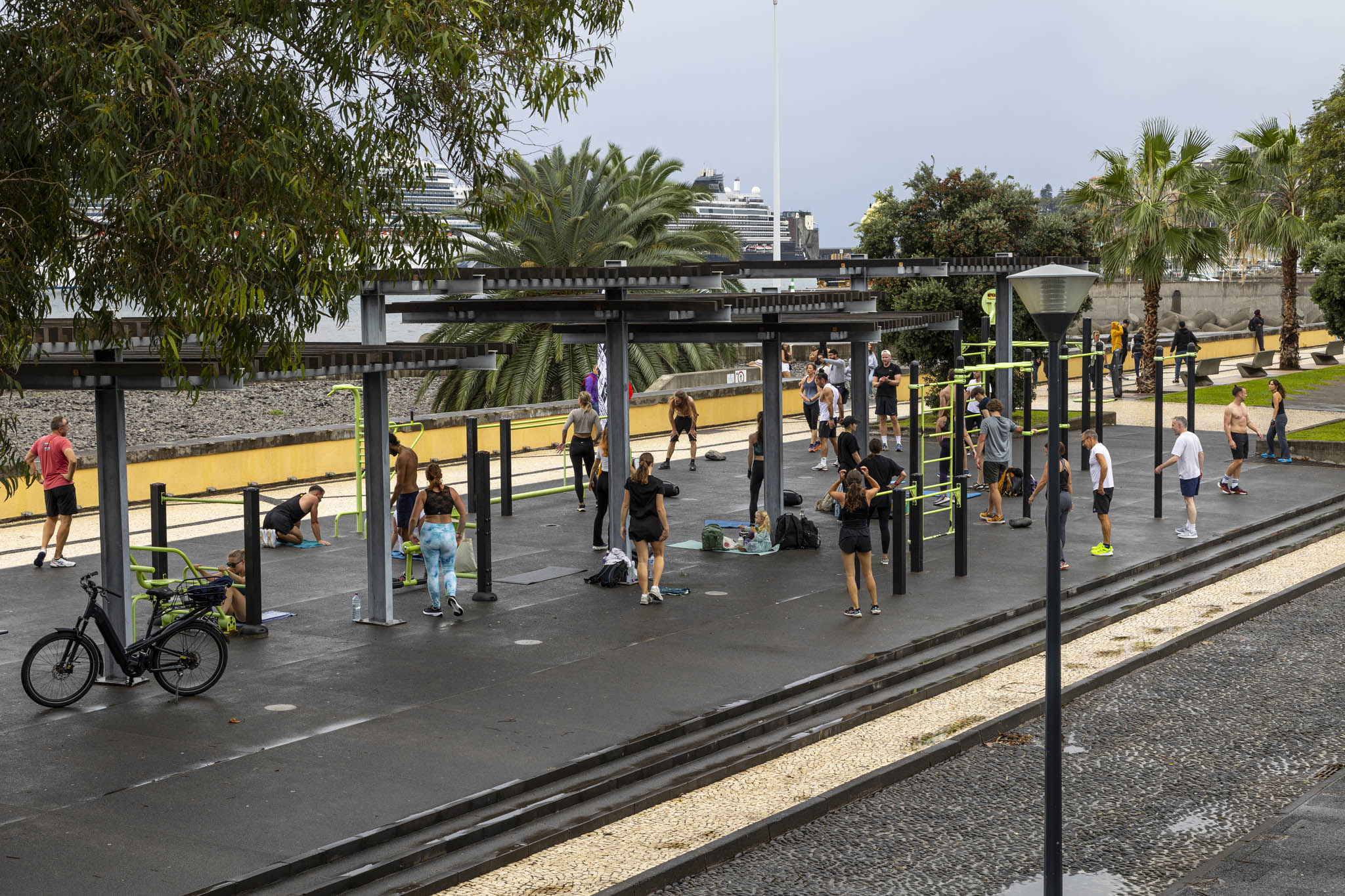
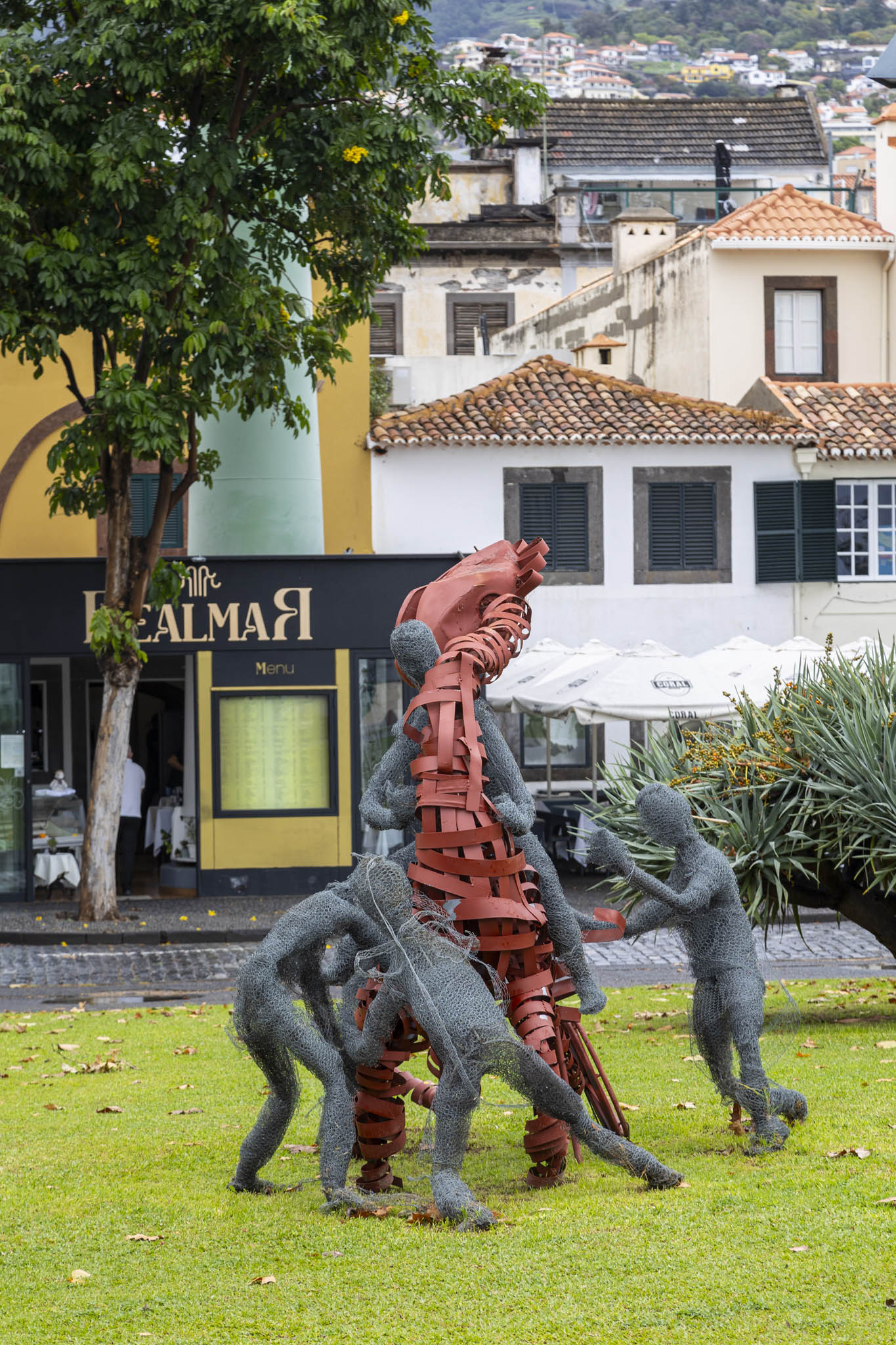
We reached the bottom and disembarked to the sight of a mad sculpture and madder people exercising outside. Crazy! There are no walls! People can see you! Oh, that’s what you want, isn’t it? Healthy, egocentric perverts, the lot of you.
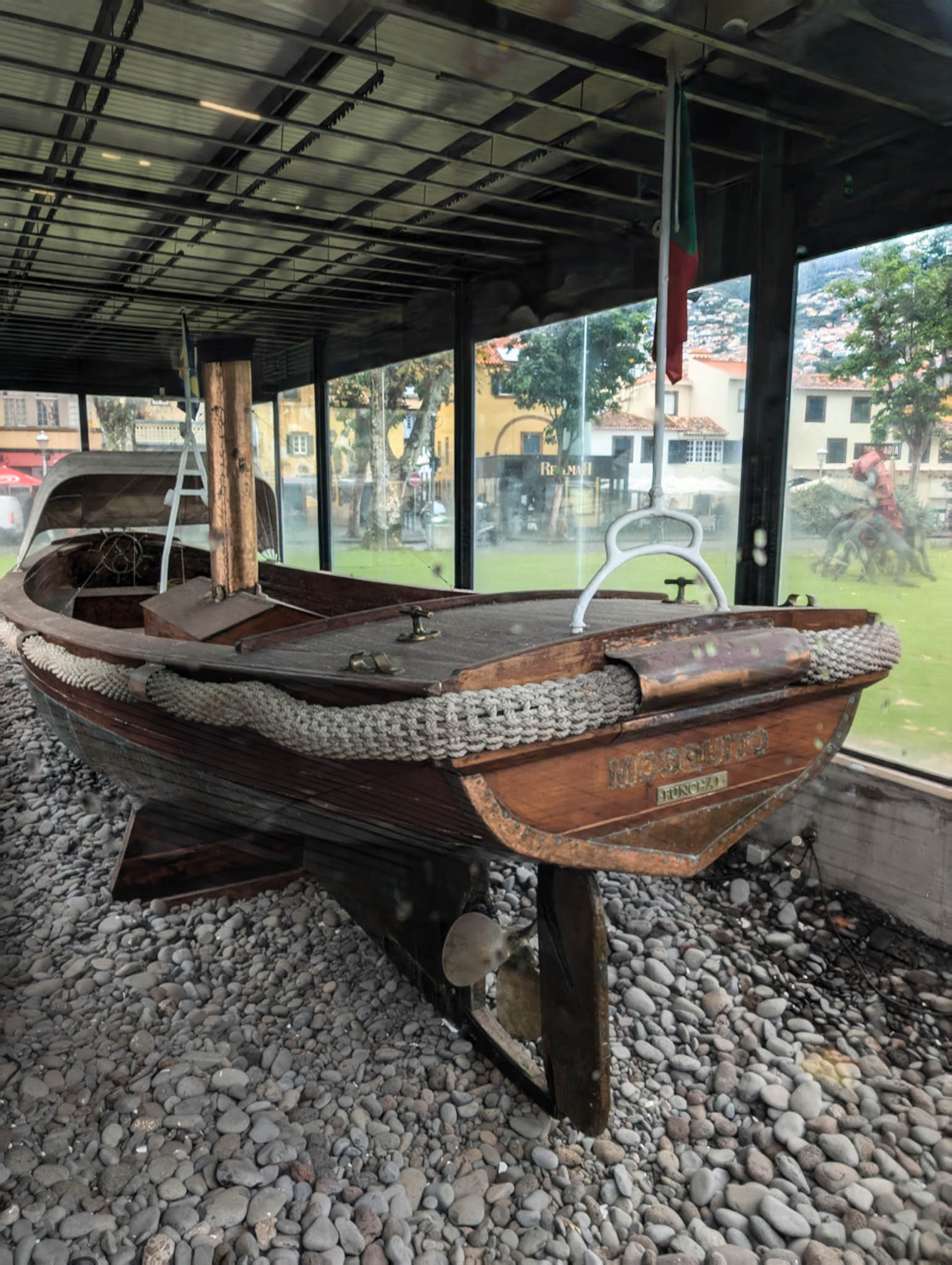
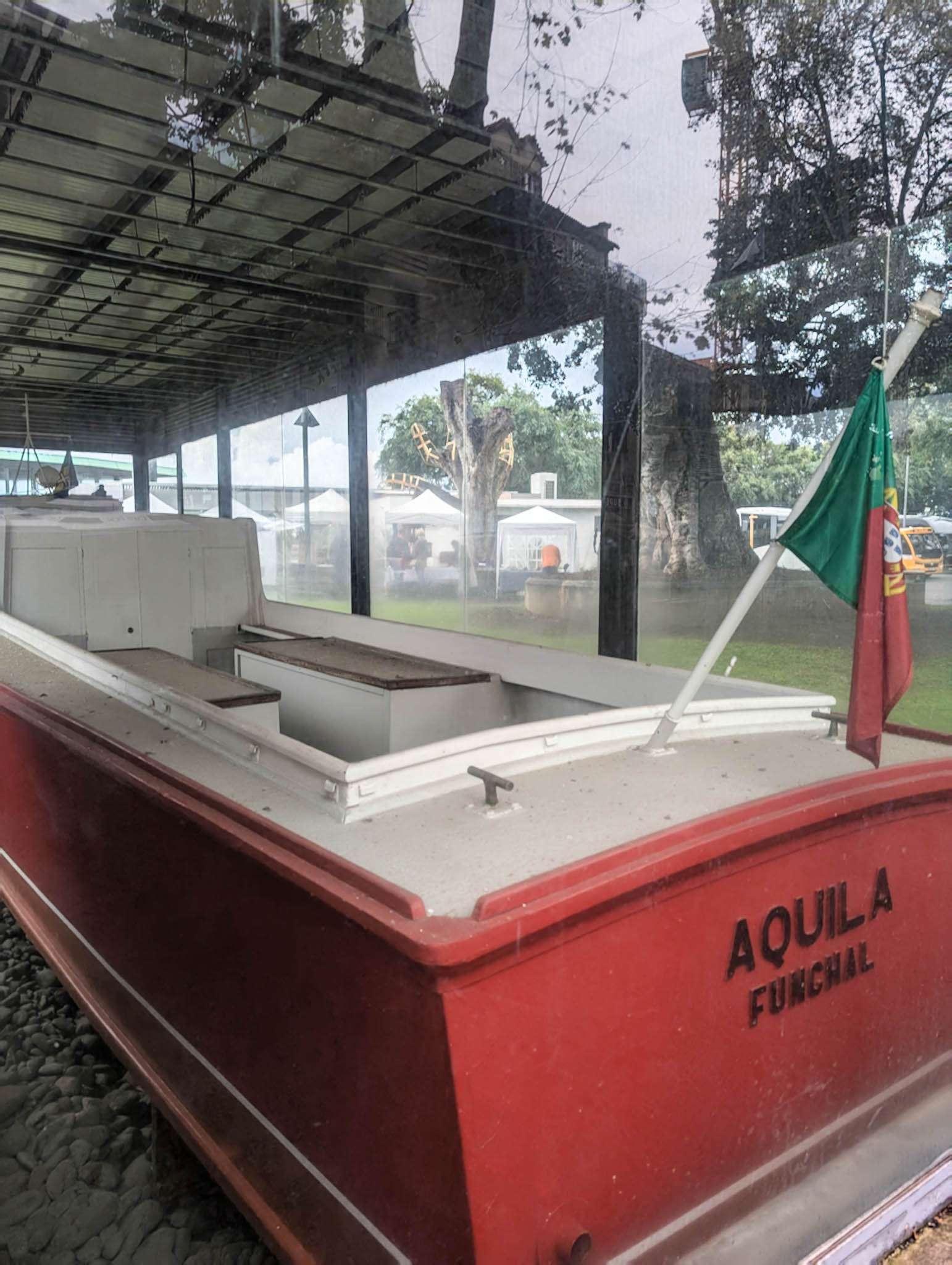
A couple of historical boats of local significance were also on display within glass-walled enclosures. Mosquito was a steam-powered boat (later converted to diesel), built in 1900 in England, and used in and around Funchal to service ships and the dock area on behalf of Blandy, a well-known wine merchant in the city. Aquila was a tender for flying boats visiting Funchal from 1949 onwards, but earlier, during the war, it had been used to train Royal Air Force pilots and perform coastal patrols.
With the rain looking like it had left the low-lying parts of Funchal for the mountainous heights now and us not needing any immediate shelter we made for the historical centre of the city where we expected to find an abundance of street art.
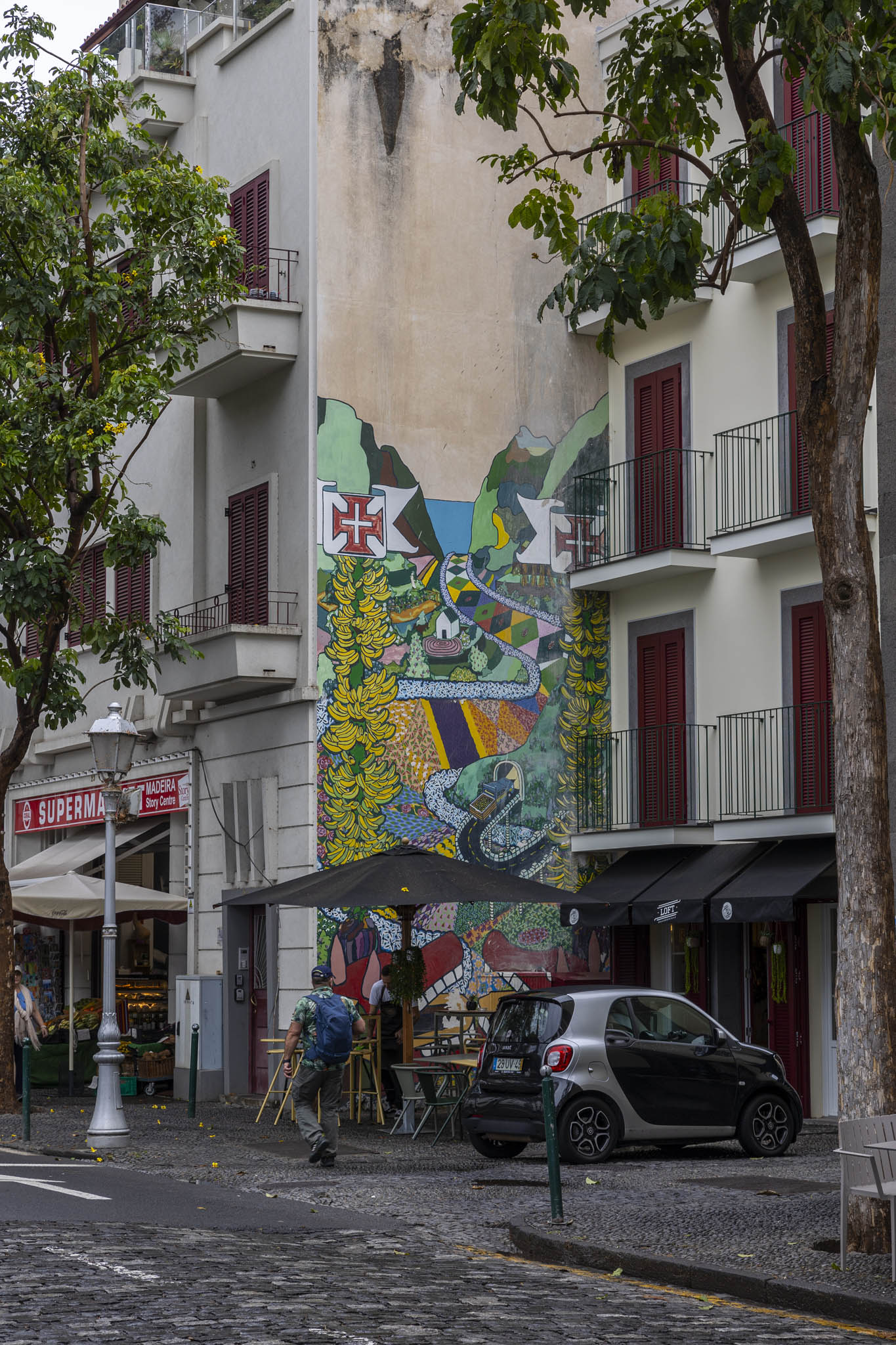
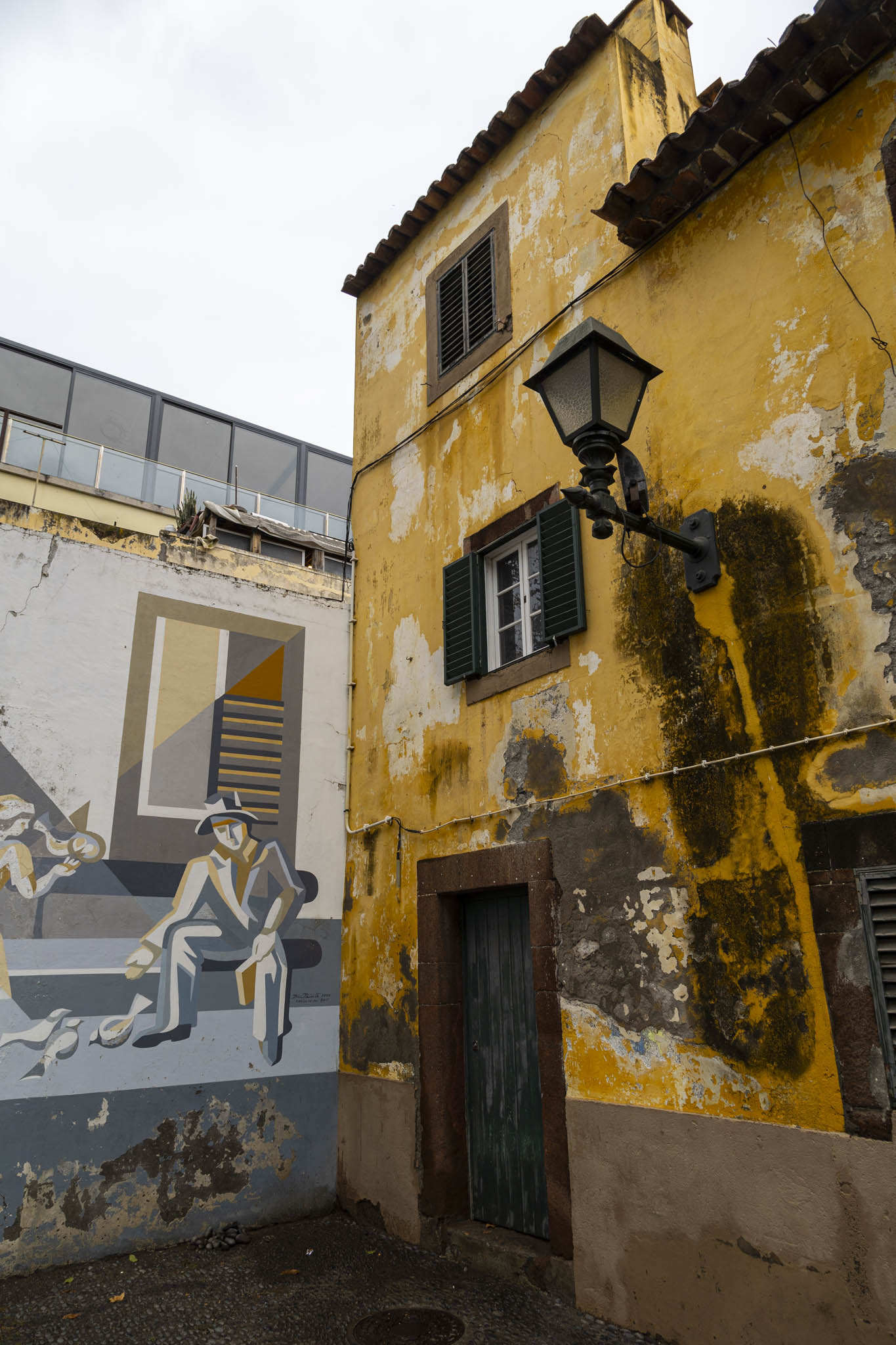
In the next post in this series we’ll enjoy the vibrant public street art project that is the Art of Open Doors in Funchal.