To be clear, despite the title of this post, when we awoke on the morning of the penultimate day of our 2024 cruise on Ventura to see a bright and sunny A Coruña from our balcony it wasn’t completely unexpected as we’d been informed that this was going to be happening the evening prior just before we’d set sail from Leixões in Portugal, but up until that point this should have been a sea day and we should have been following it with a visit to Guernsey.
We were not upset at all about the late change to the cruise itinerary but it did mean that we didn’t really have much time to do any planning. Luckily for us, A Coruña is a very easy and charming place simply to get off and wander around anyway and that’s what we would end up doing.
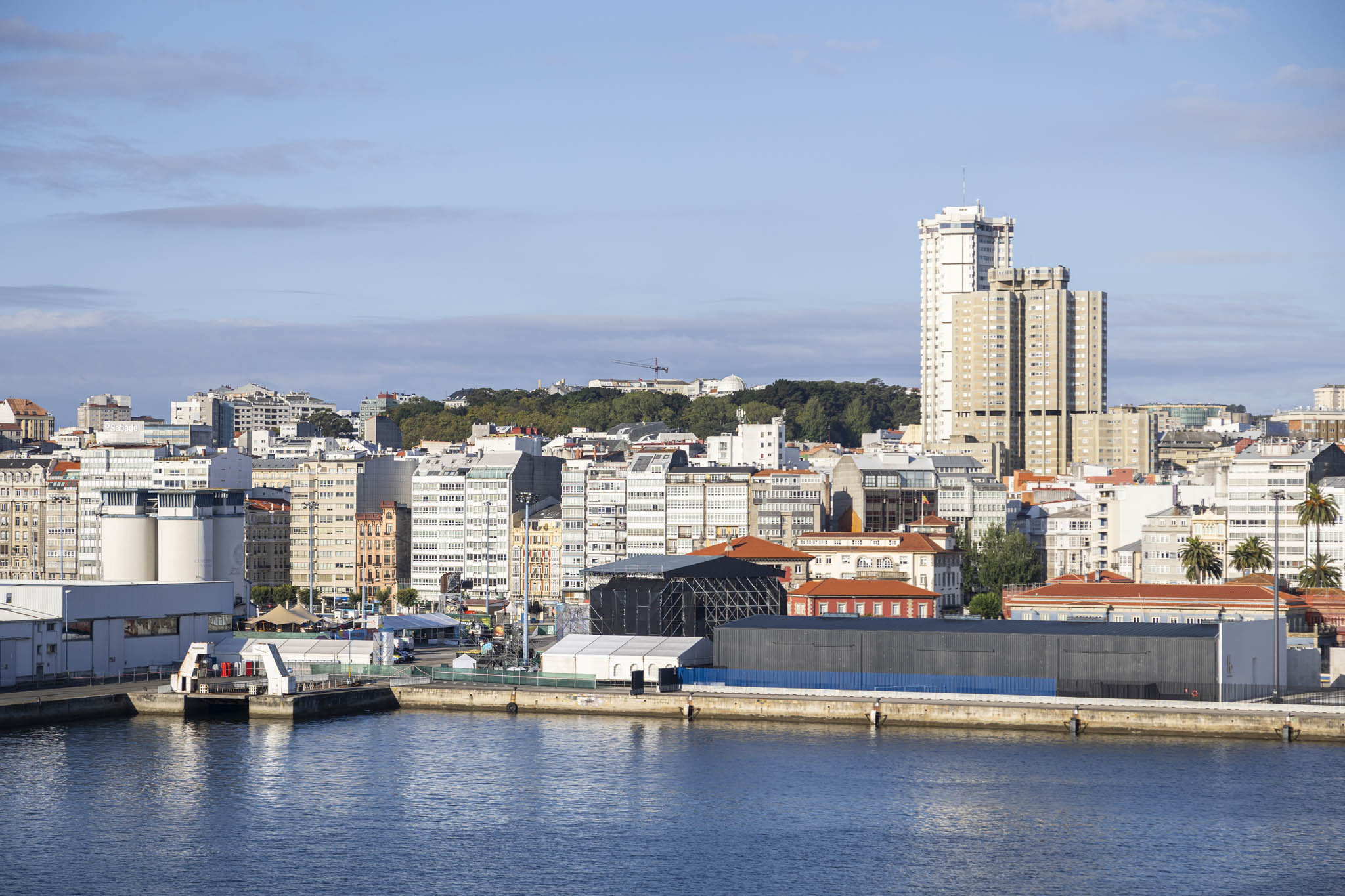
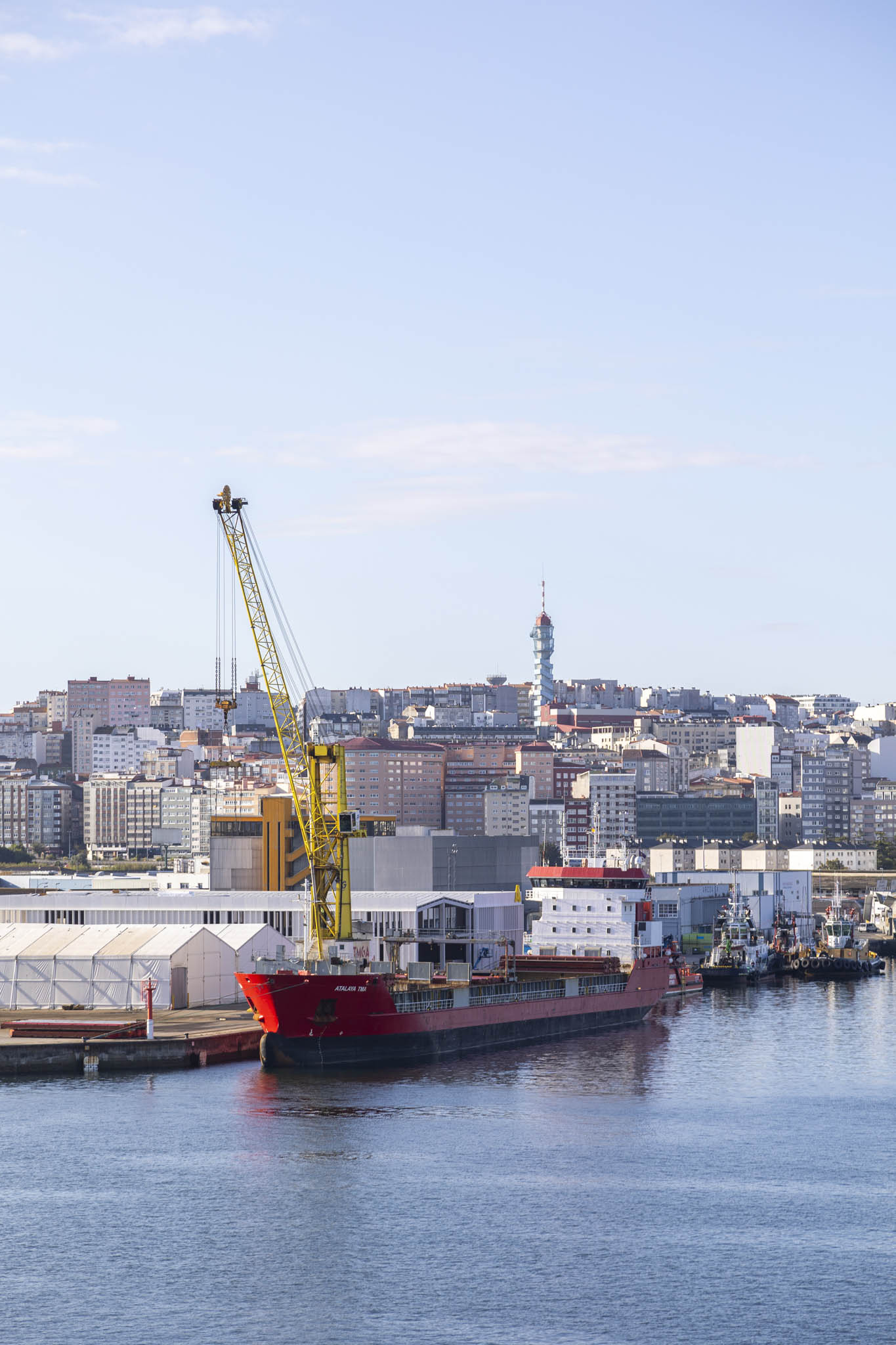
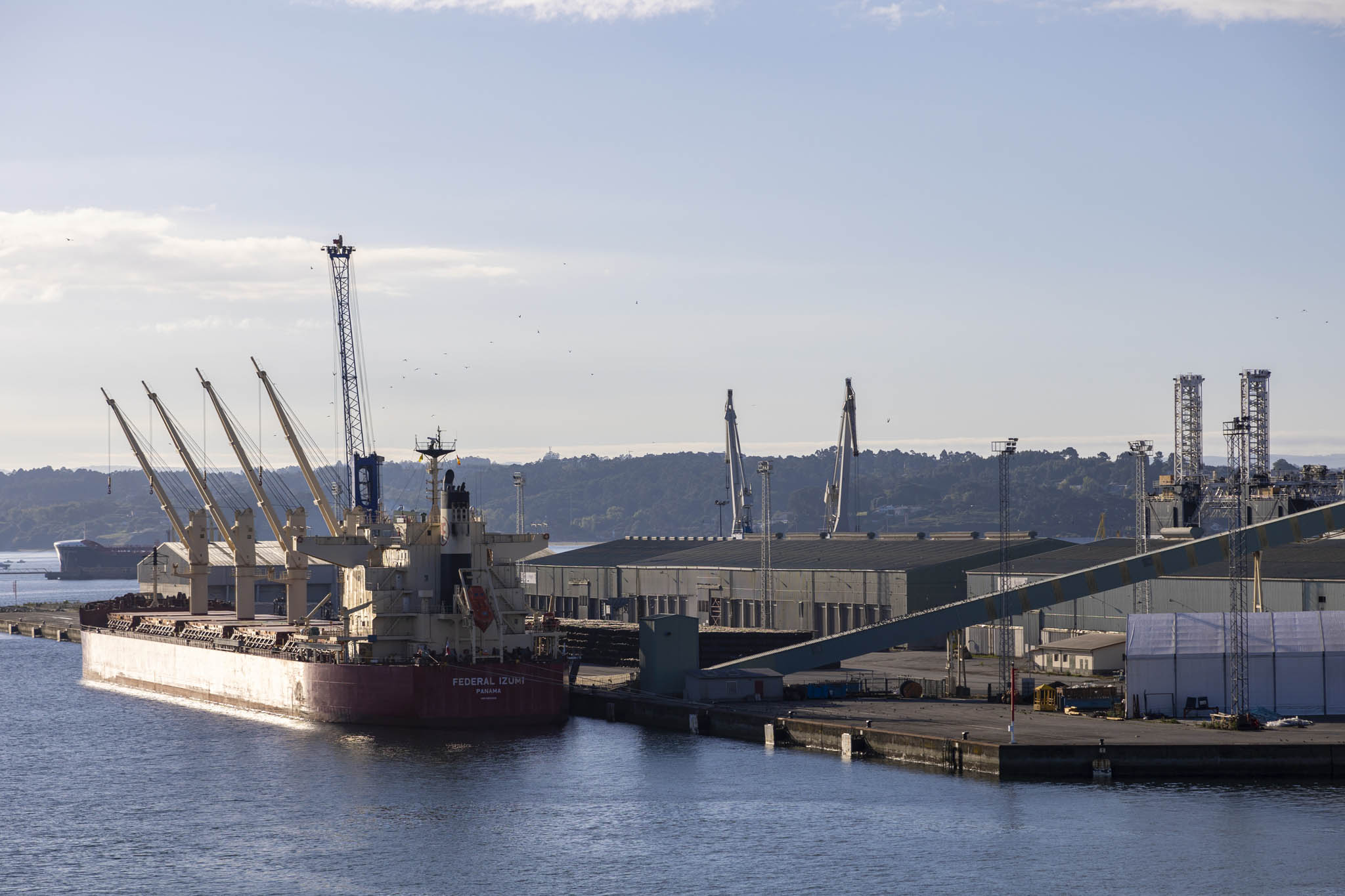
We had visited this city once before but on that occasion we’d only docked in A Coruña aboard Sapphire Princess then headed off on an excursion. We didn’t fancy any hastily-arranged cruise tour this time around so had breakfast and headed ashore after a quick look at the map to see if there was anything we should head for. The Tower of Hercules (Torre de Hércules), a first century lighthouse, looked like it would suit us nicely so we plotted a route and wandered off in the general direction.
One thing you might see if you look online, watch any videos, read any English language travel accounts of this city, is that it’s sometimes called La Coruña and you might not be aware of the difference. Simply, A Coruña, as I spell it, is the Galician form of the name, while La Coruña is Spanish. The Galician form is the preferred term and the Spanish form is in decline as a result.
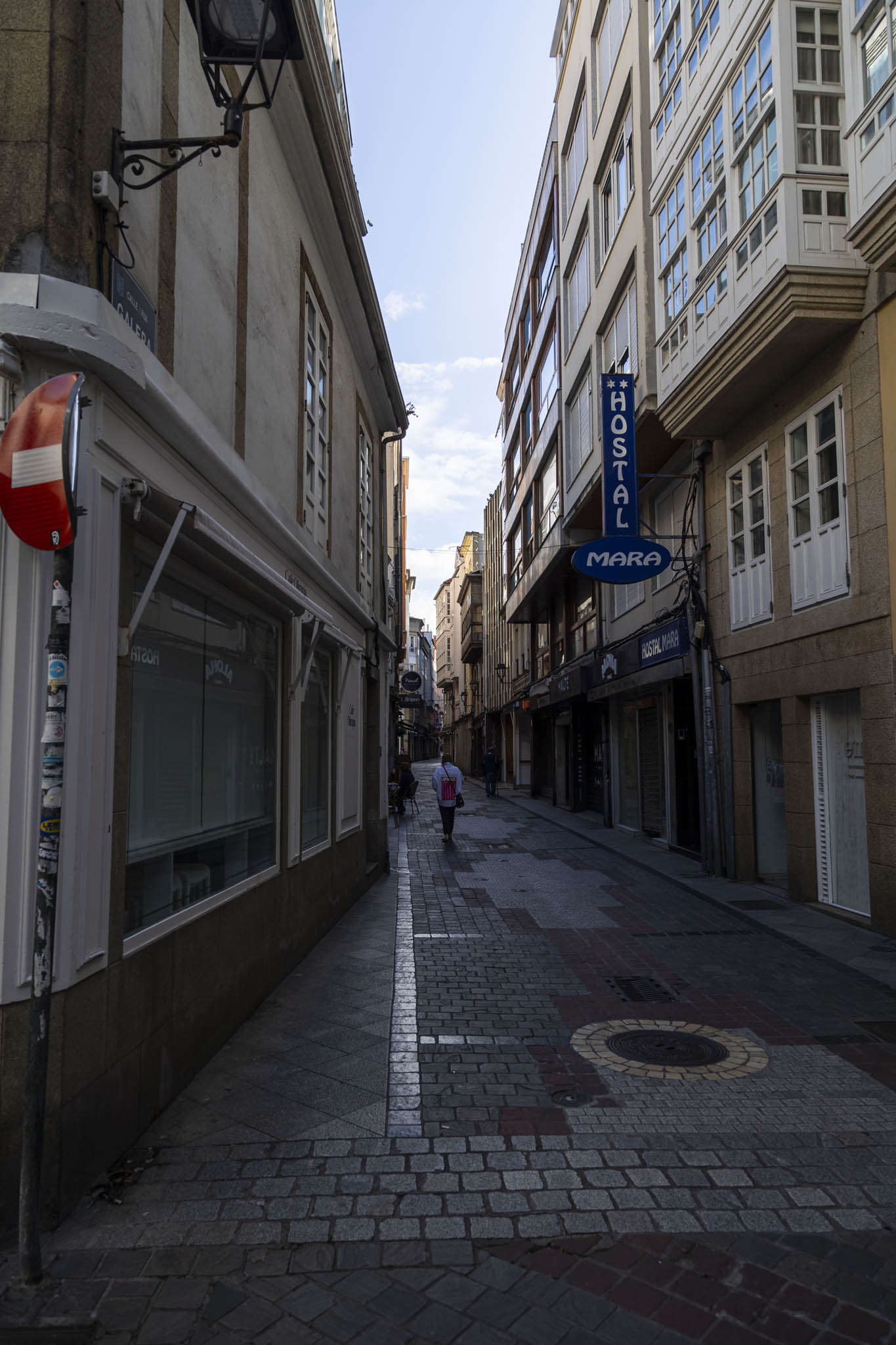
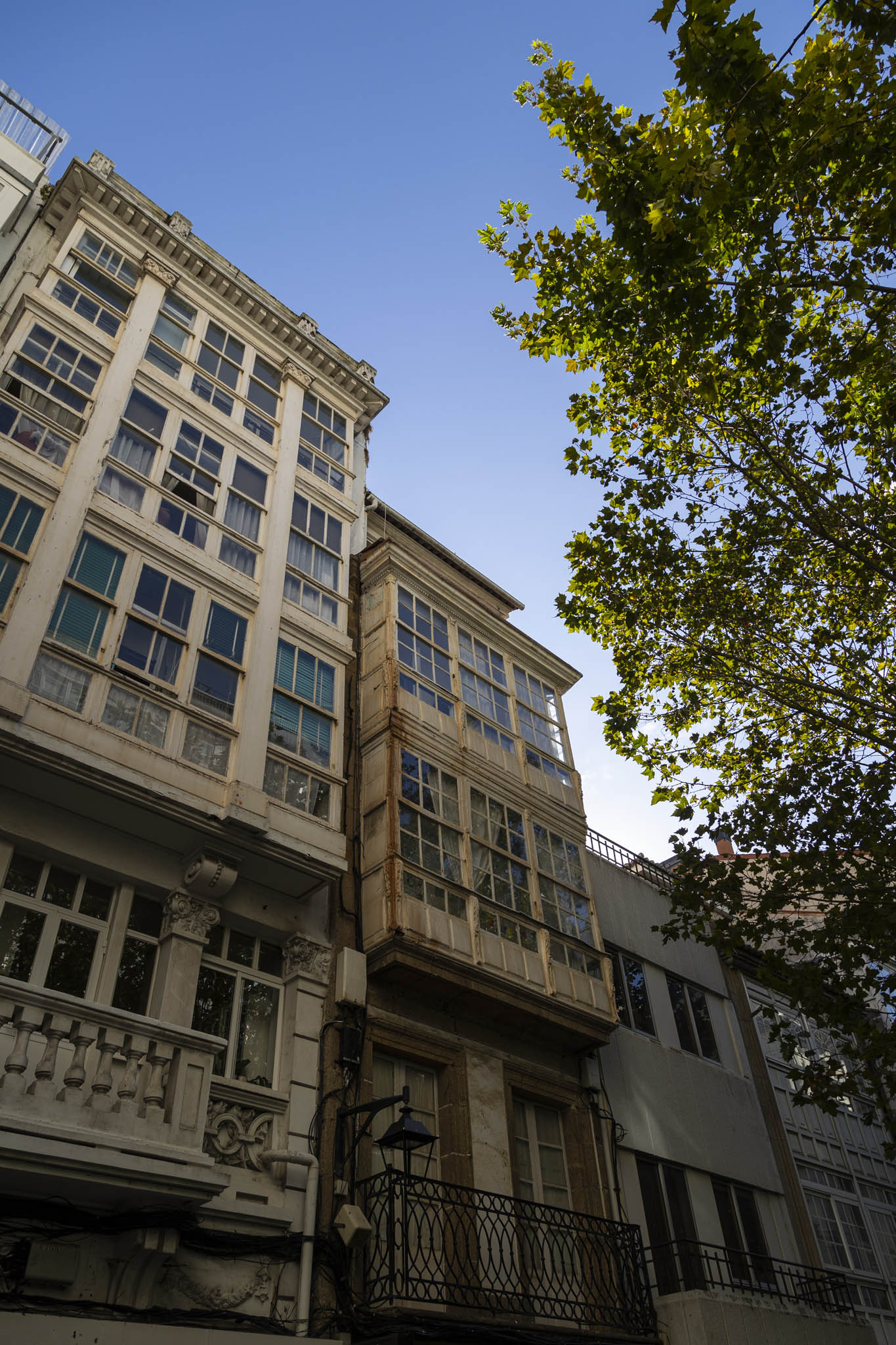
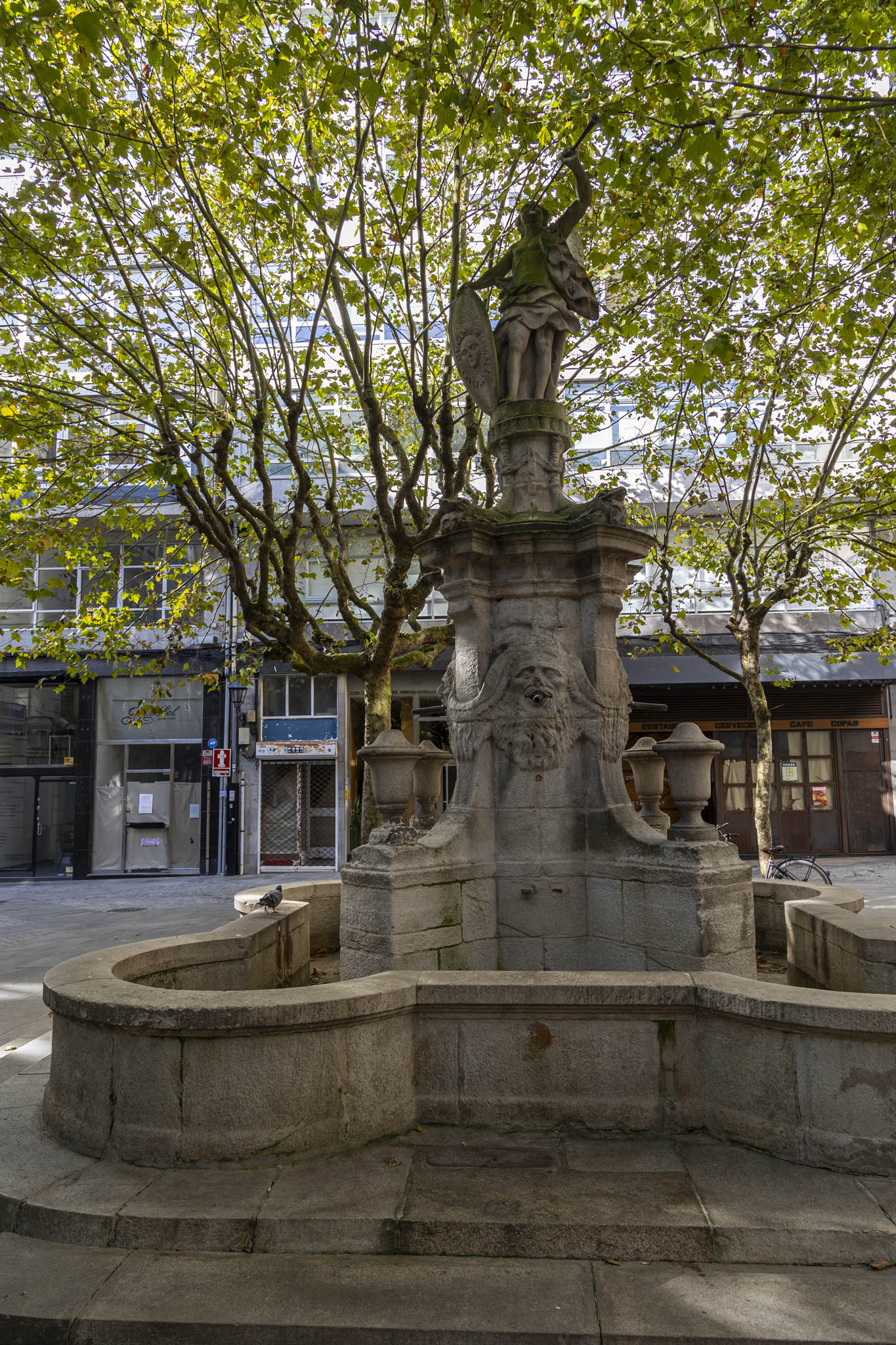
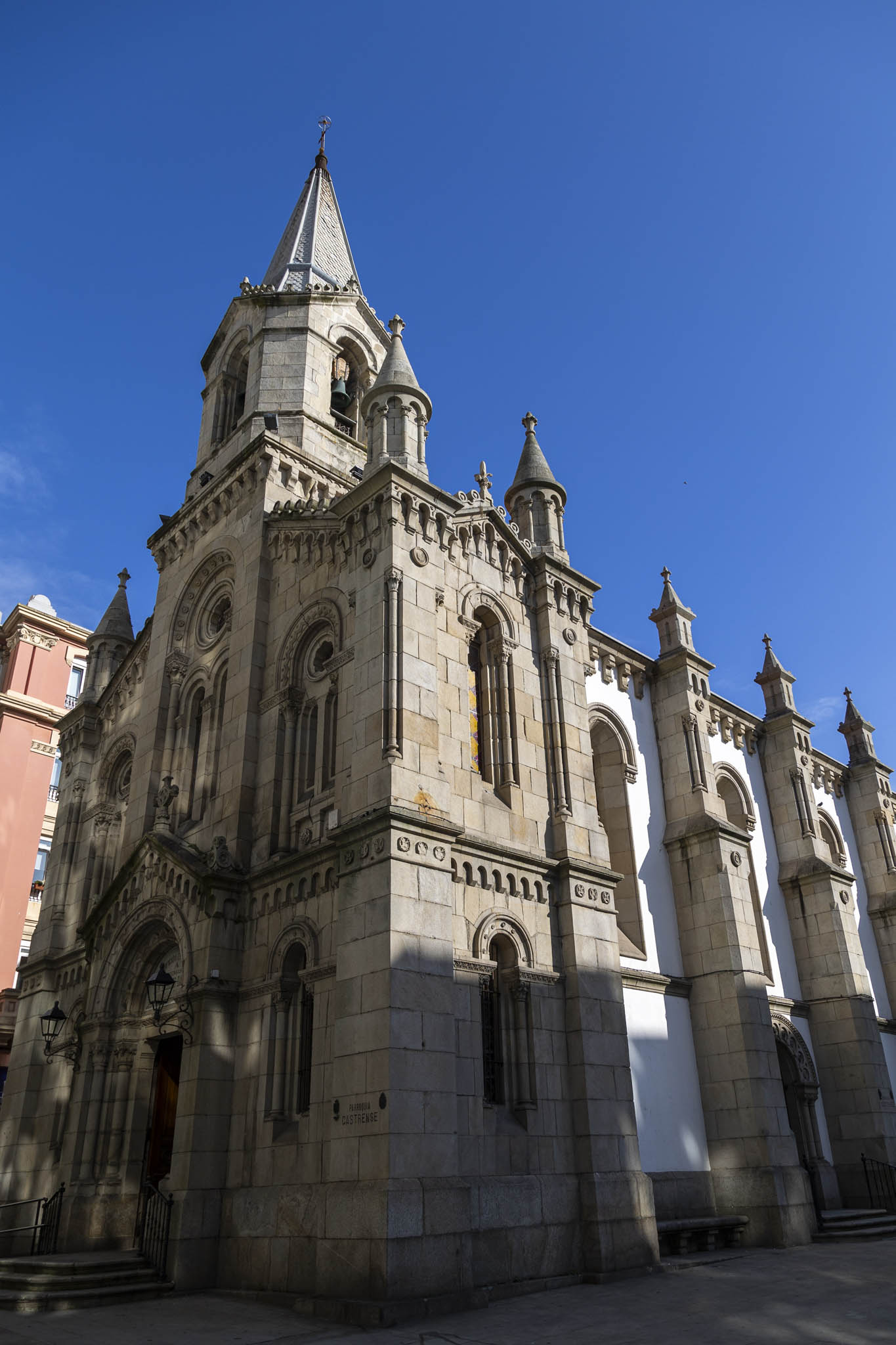
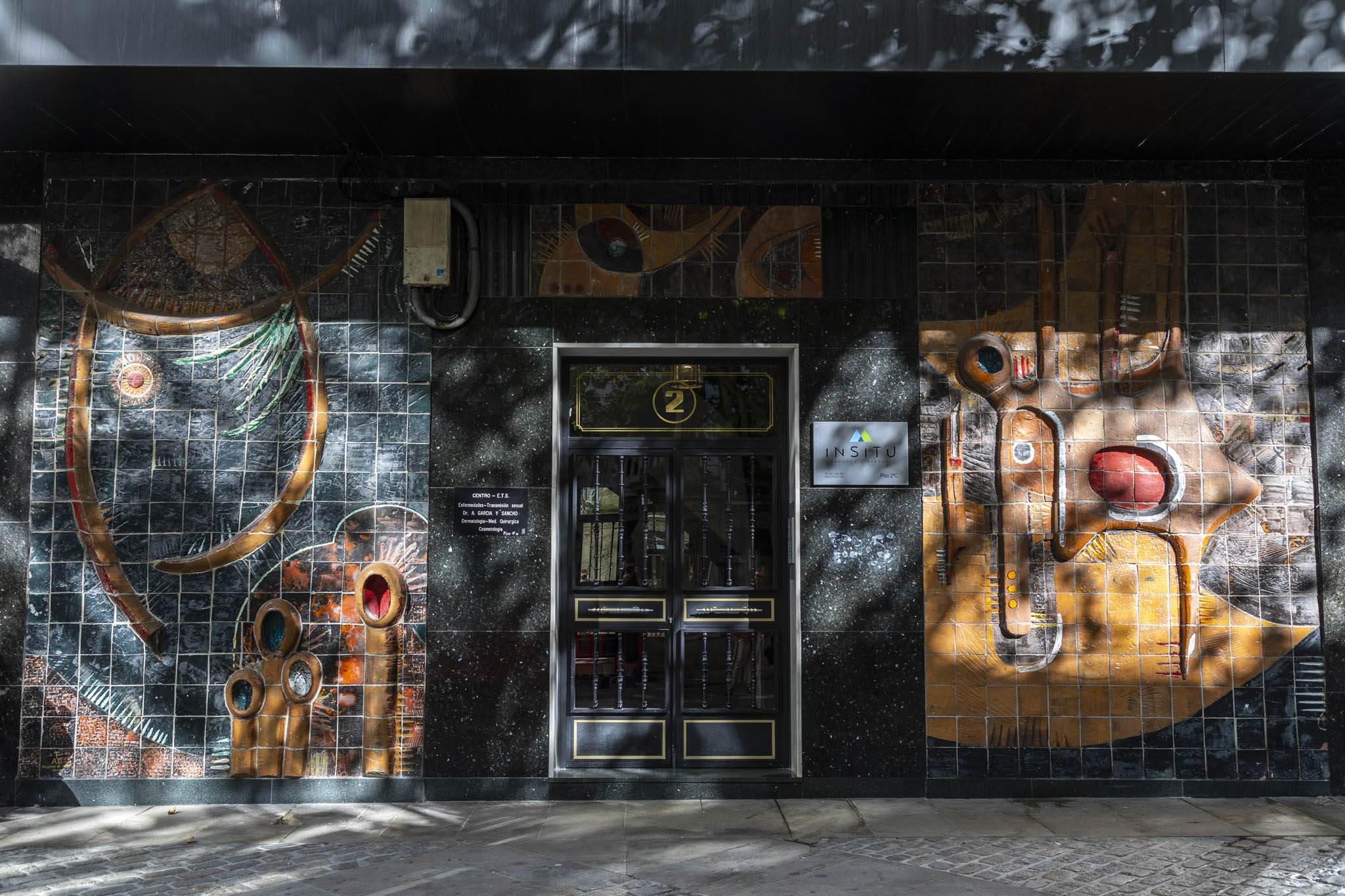
A Coruña’s architecture was very varied. While our intended destination of the Torre de Hércules dates to the Roman period, passing through the streets of the city presented us with a wide array of different styles from different periods through history, from medieval to modernist. The city has records of visits (in the euphemistic sense of pillaging) from Vikings, Normans, and Muslims, and its strategic location has led to numerous battles and sieges taking place around it in the latter half of the second millenium. The San Andrés drinking fountain below dates from the eighteenth century while the nearby church is a neoclassical structure from a hundred years later.
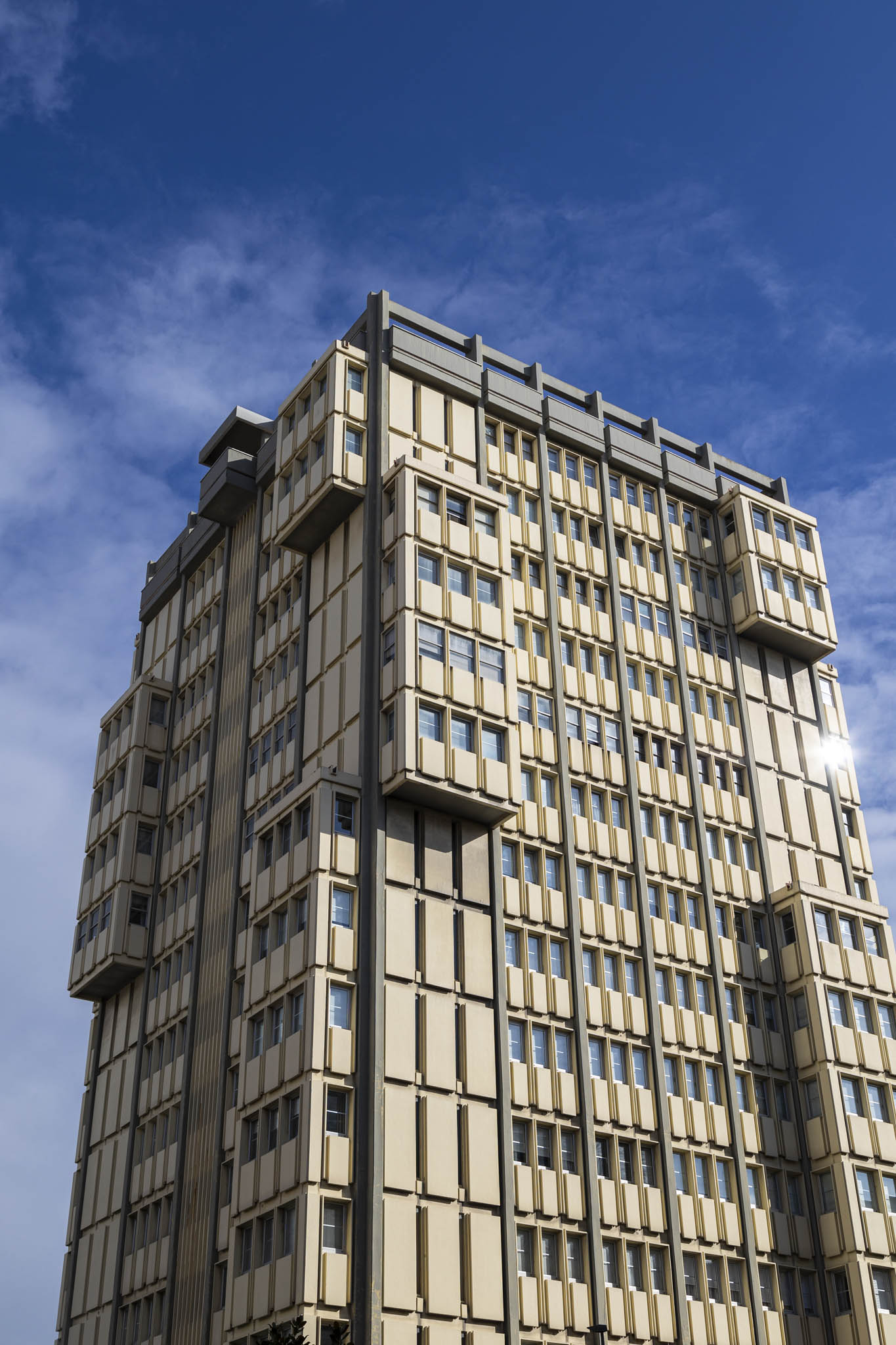
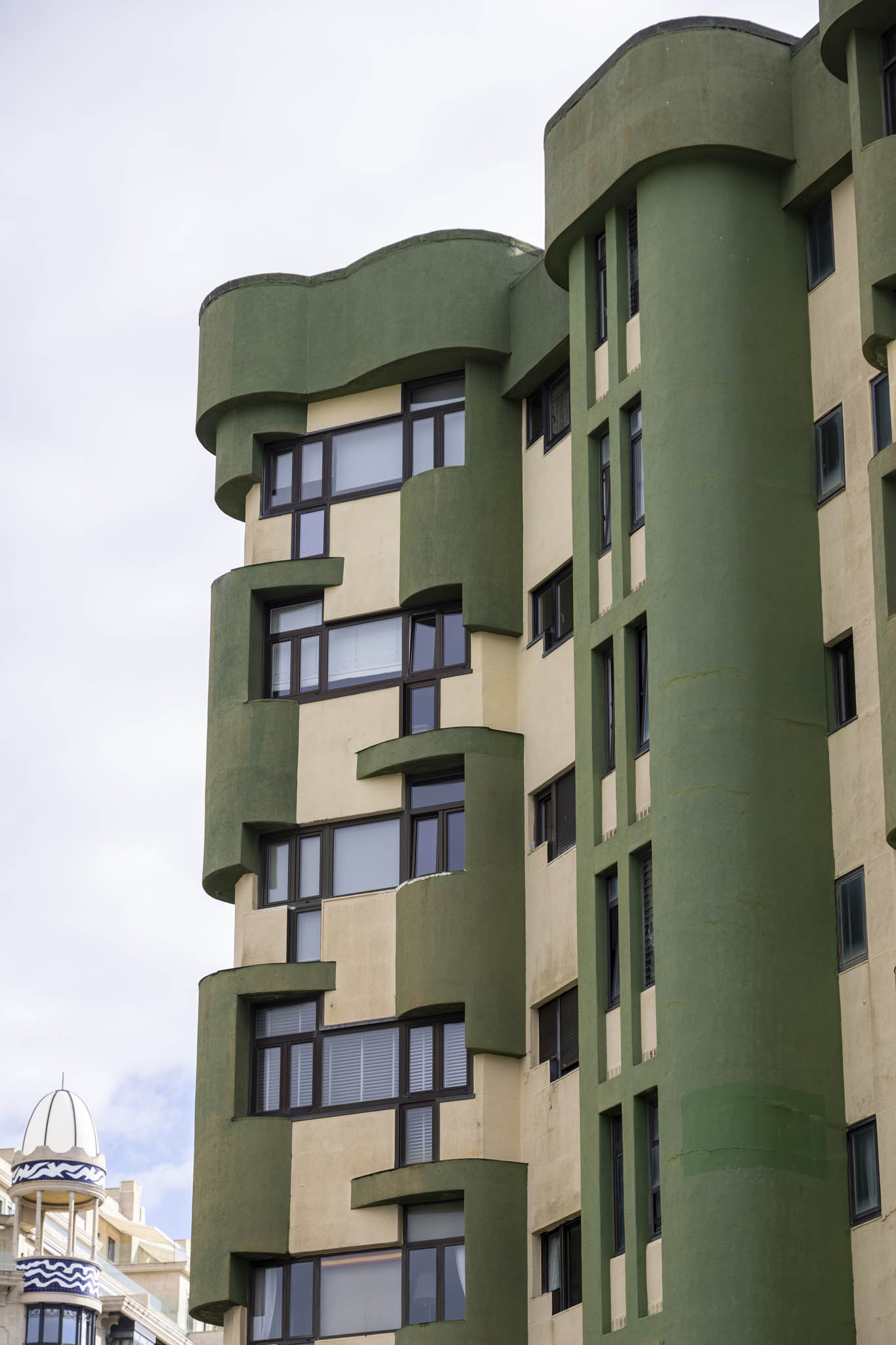
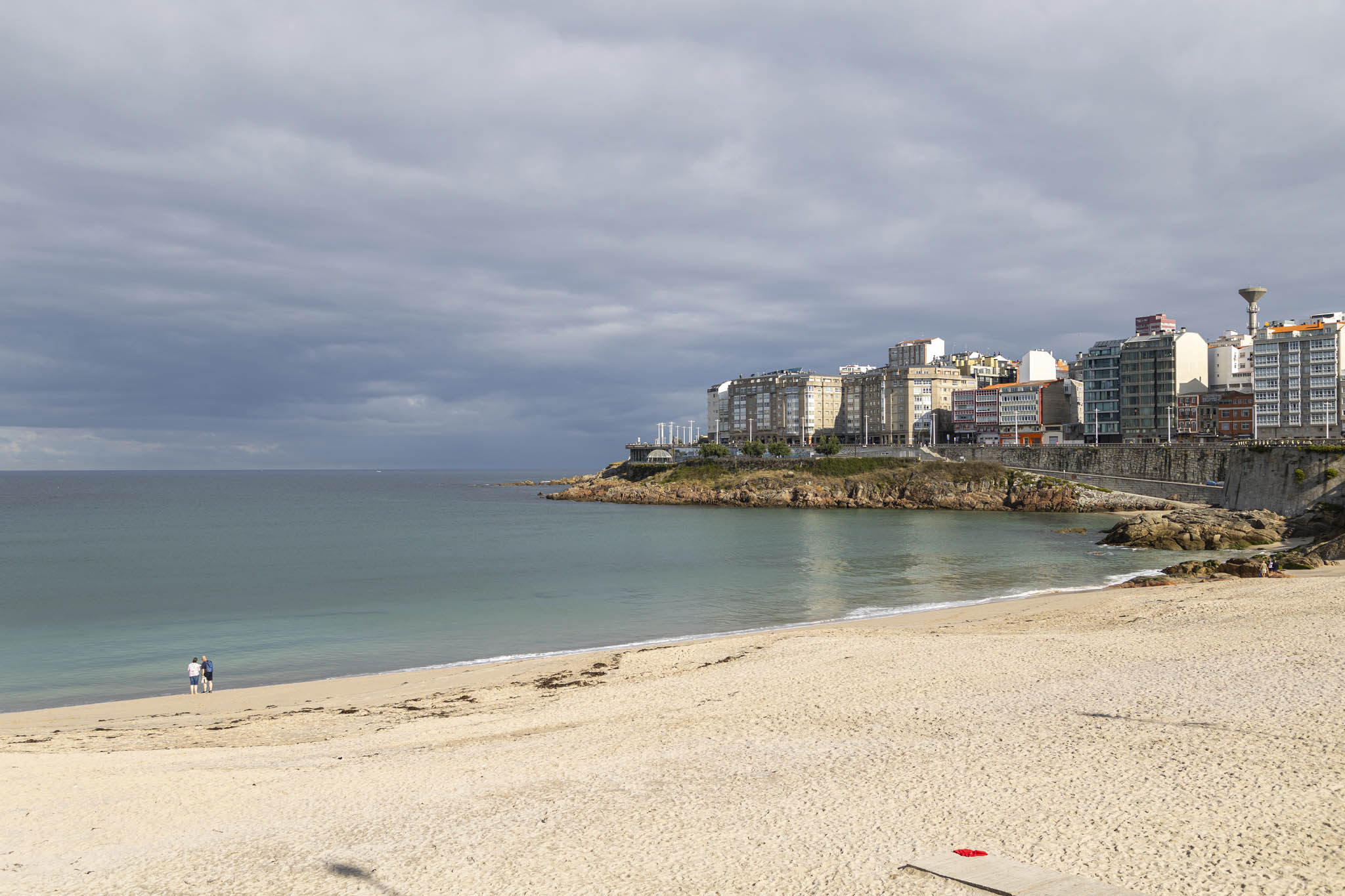
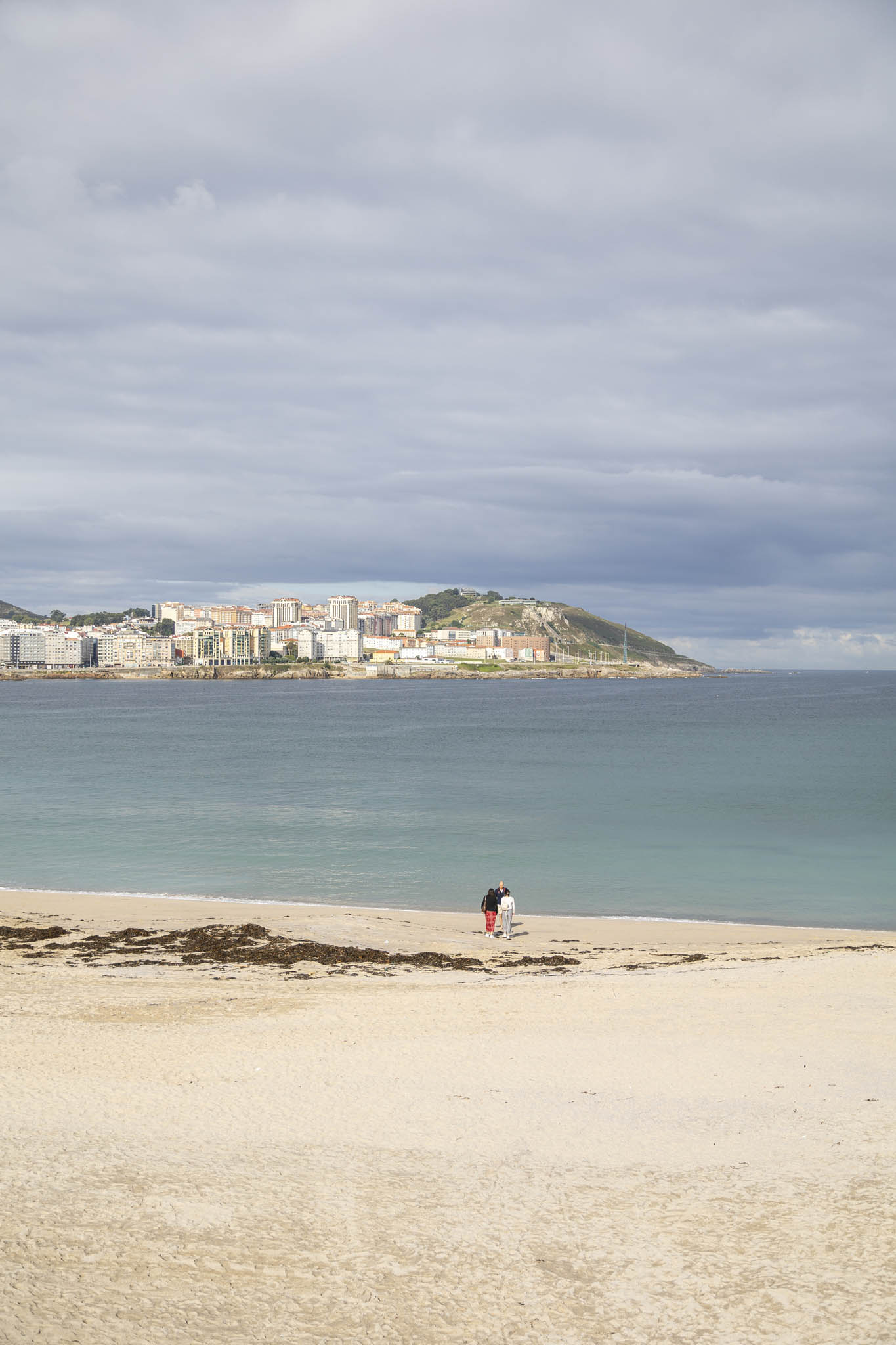
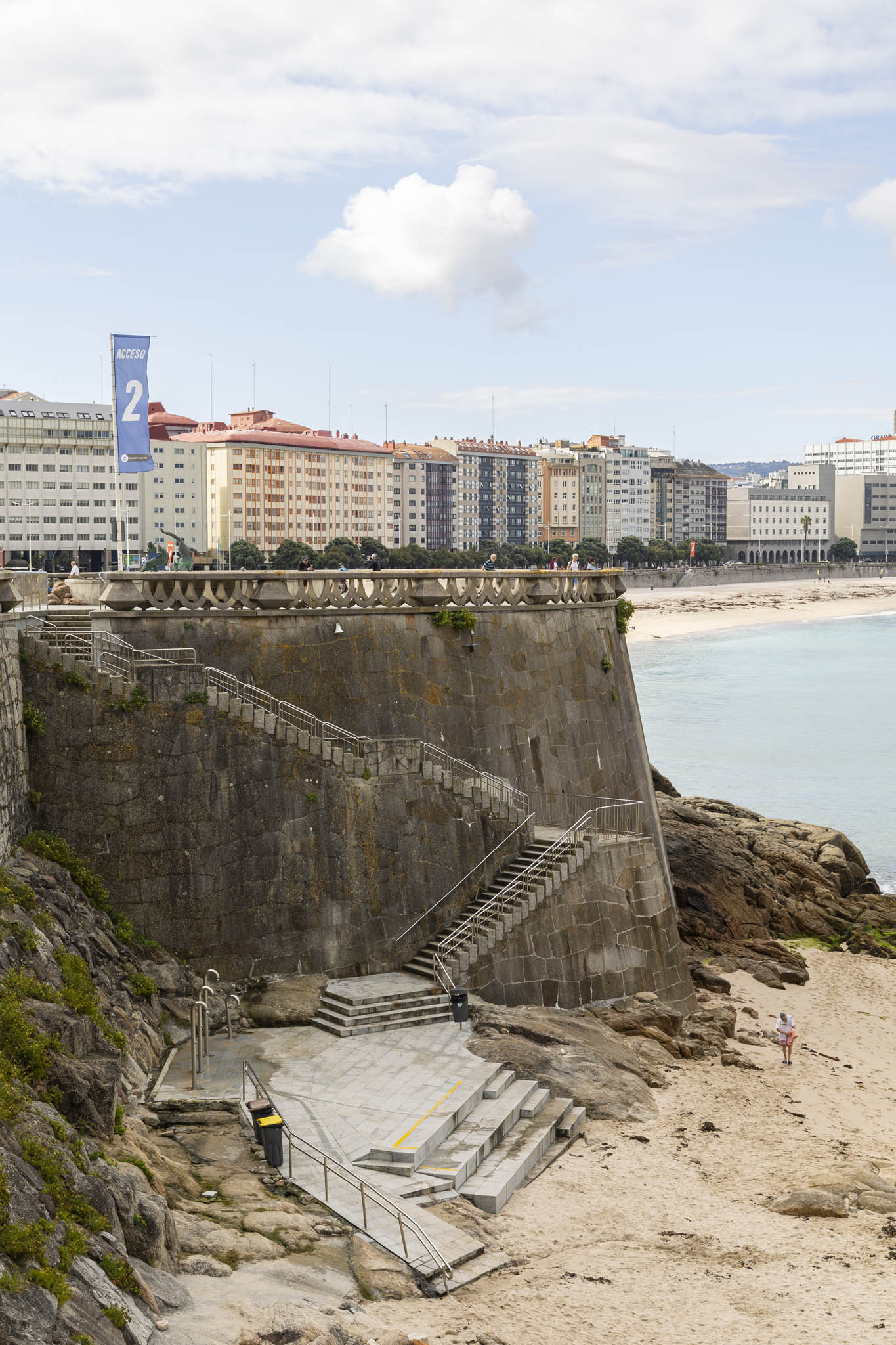
After passing through the close streets of the city we emerged at Orzán Beach. The golden sand was bright enough under the sunshine to make the light cloud cover seem darker and threatening in the pictures below but it was wonderfully warm with no fear at all that rain might make an appearance.
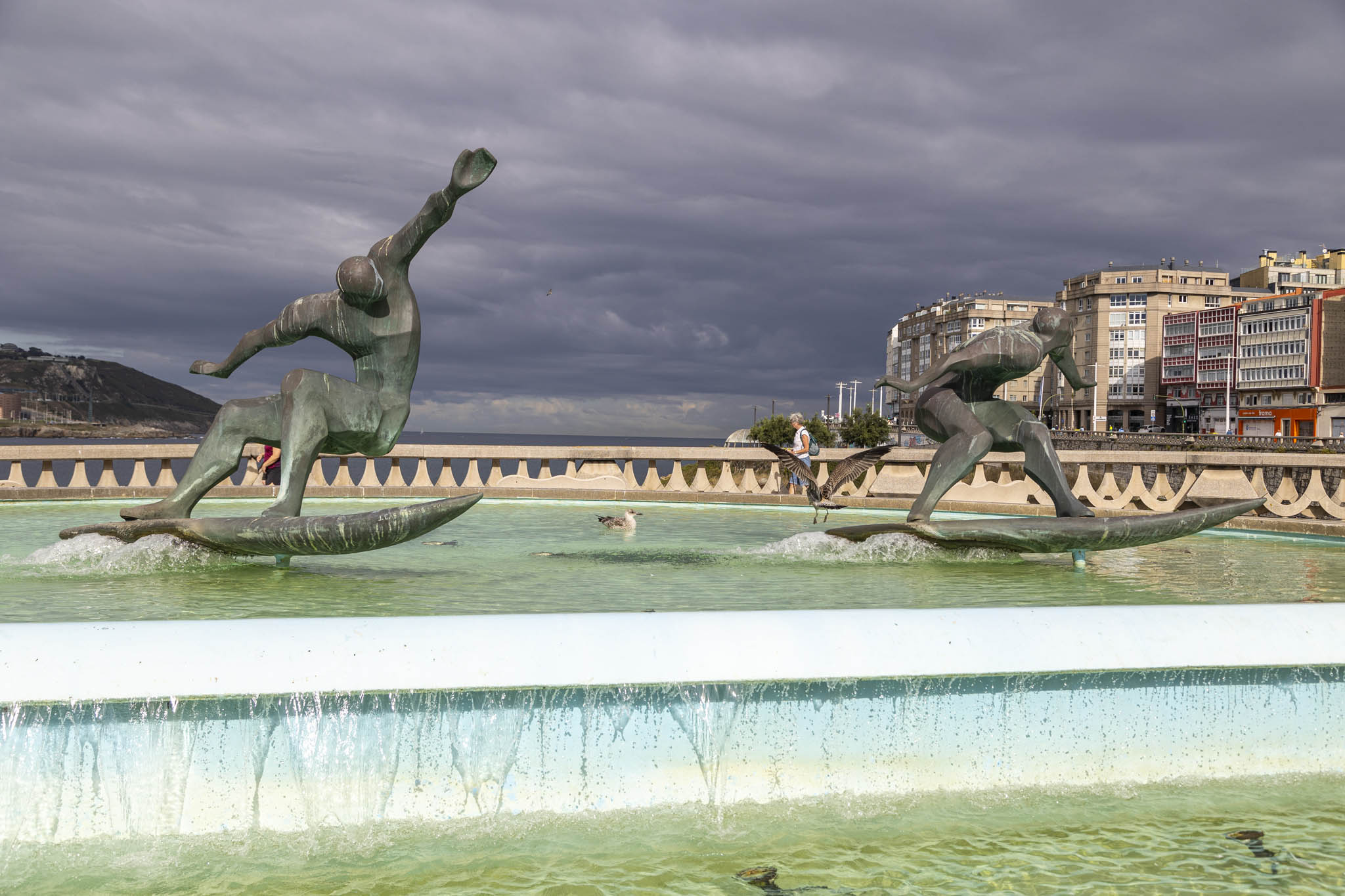
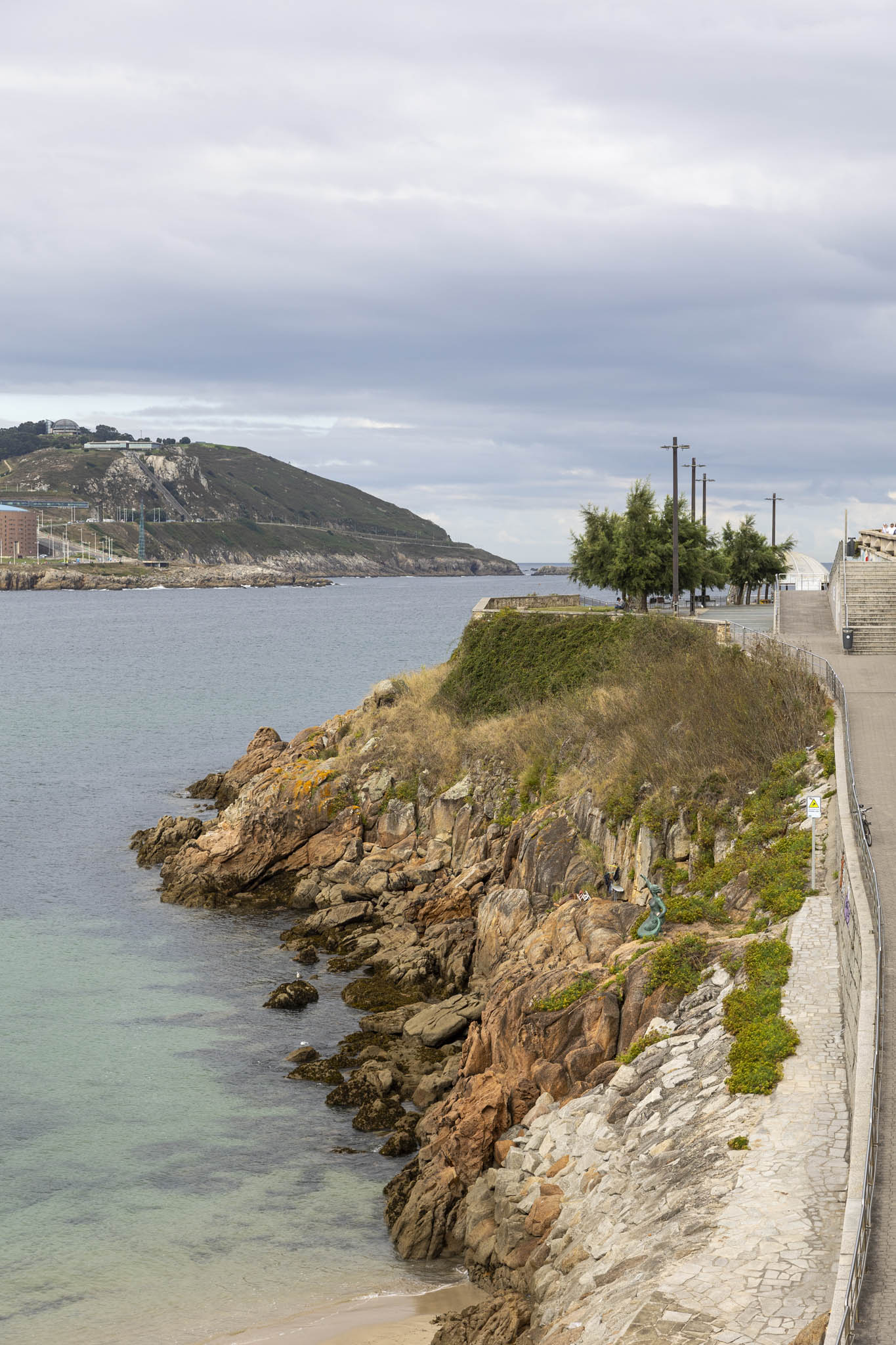
It was time to spot some artwork on the shore. Following the coastline around to the north we soon came upon a monument to surfers. The fountain sculpture was created by José Castiñeiras Iglesias and it wouldn’t be the only work of his we’d see in A Coruña on this day.
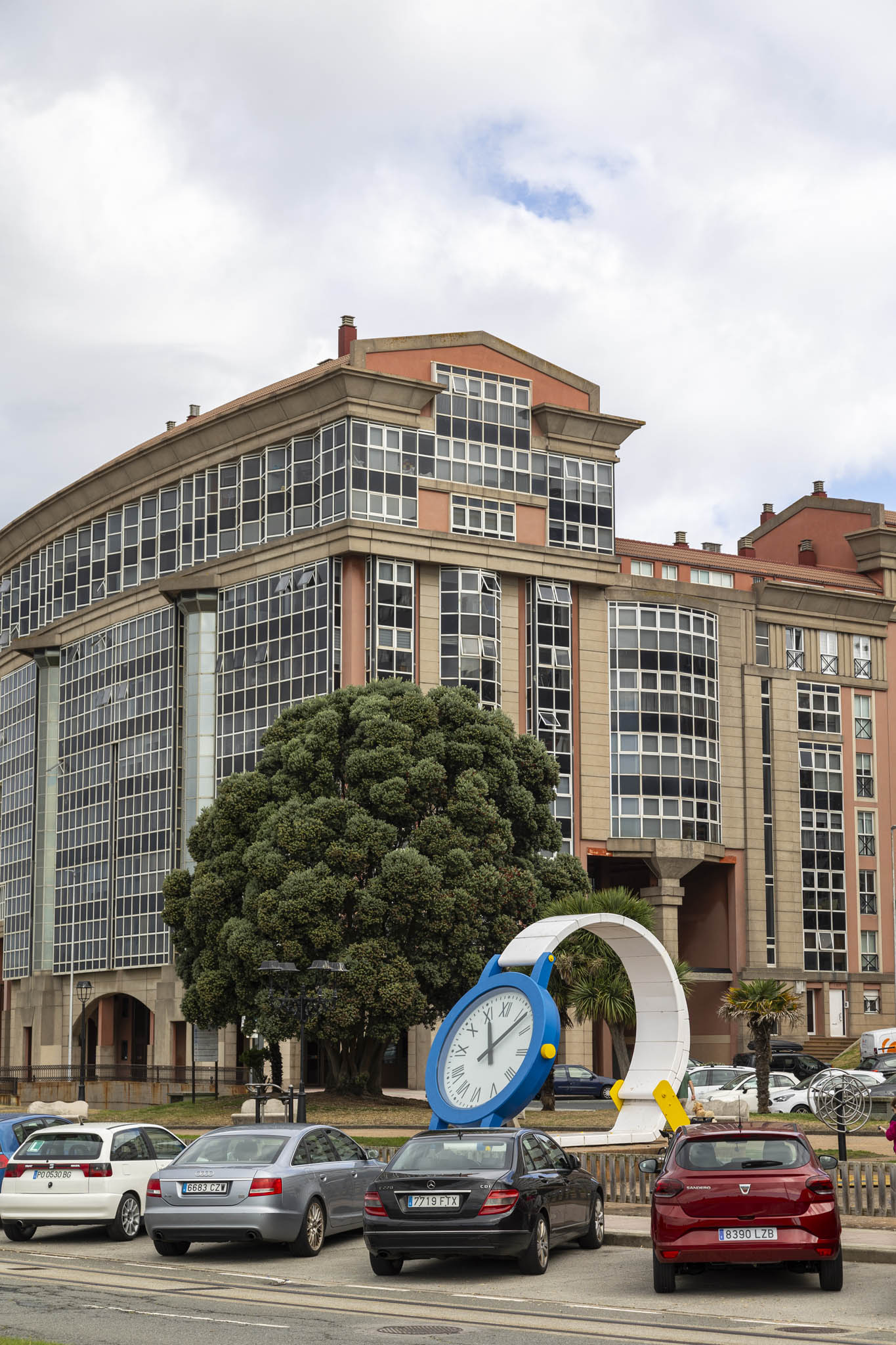
Most recently restored in 2022, the giant wristwatch sculpture – telling the correct time – we were next impressed by actually dates to 1994 and was created by the artist Antonio Vázquez Liñeiro.
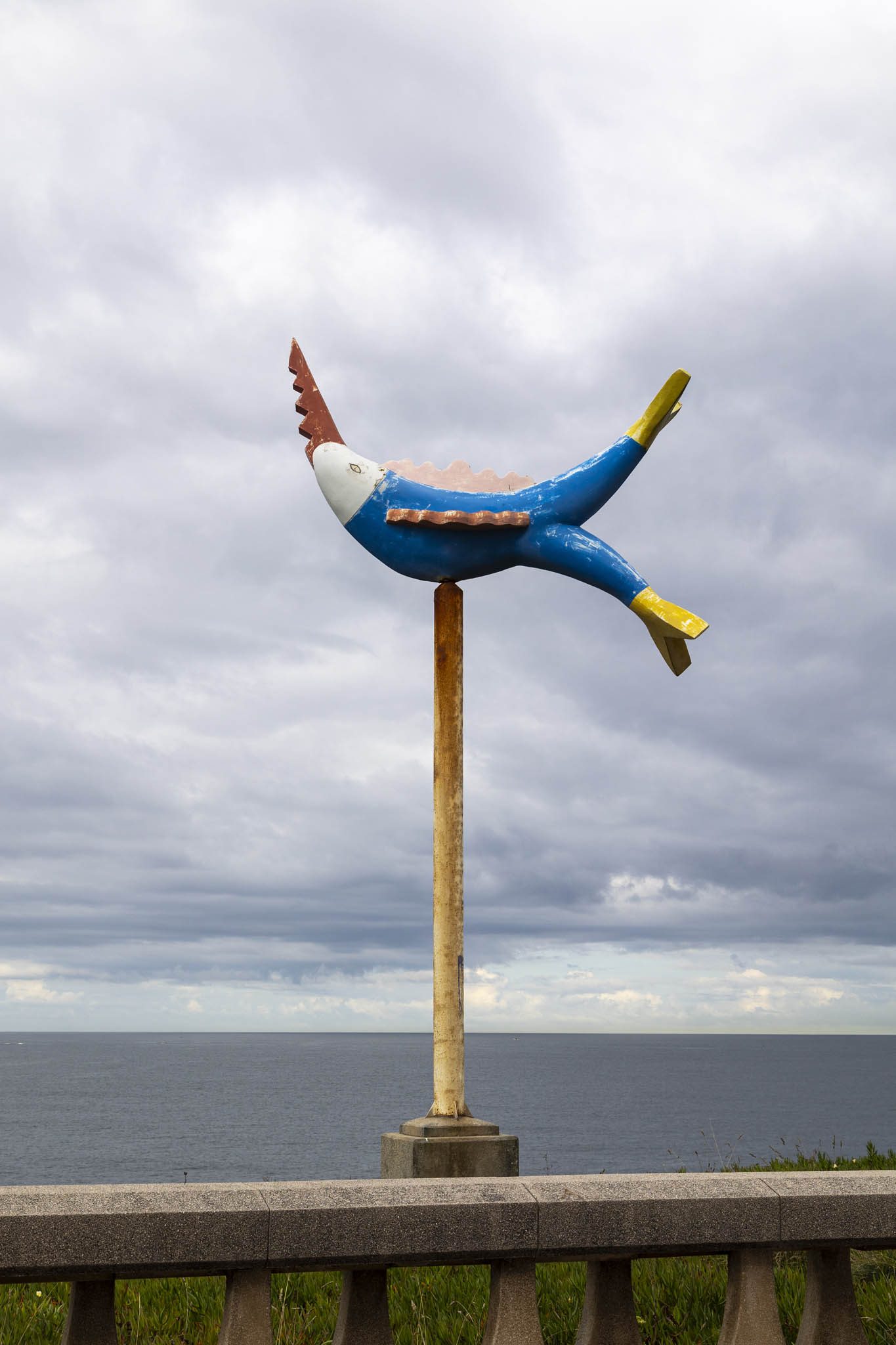
By far the weirdest sculpture was that by Jorge Peteiro. A double-tailed swordfish chicken? Who knows? If you’ve a better explanation then feel free to share it. I liked it, though.
We now came within sight of the tower that had been our destination since getting off the ship a little earlier but we wouldn’t be heading straight for it as we’d suddenly realised that there was an aquarium close by, and we are fond of aquariums.
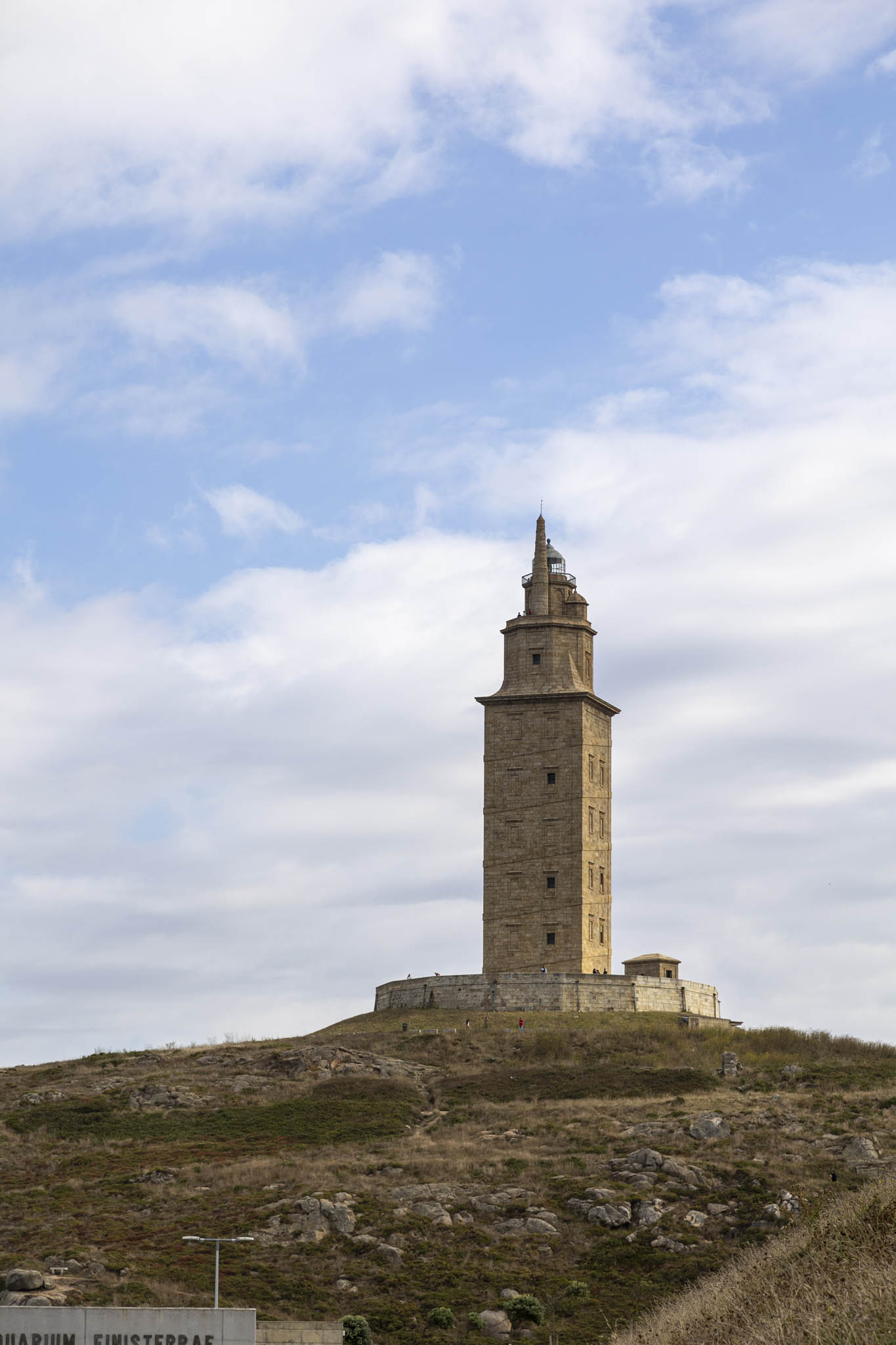
In the next post in this cruise travelogue series we’ll be paying a lovely visit to the Aquarium Finisterrae in A Coruña.