There had been no intention to split these posts about our time in Ålesund into some sort of geographical lesson at the same time as being simple accounts of our walk around the Norwegian port but it’s turned out that way and we’re all just going to have to live with it. The typical demographic who might stumble upon posts on this site are cruisers who are looking for things to do when their ship docks in strange places and that’s not really what this site is for, even if that’s going to be a side-effect. It’s mostly a travel diary accompanied by photographs, but also information that I’ve found useful or interesting while researching ports of call. If this means you accidentally pick up some architectural, historical, or geographical knowledge along the way then so much the better. Or skim past the text, look at the pictures, tut that there’s nothing here about how much it costs to ride the trolley train or visit the museum and forget any facts that briefly got past your eyeball filter.
In the first post about our 2025 visit to Ålesund on our Ambassador Ambience cruise to Norway we’d walked up Storhaugen on Aspøya, the smallest of the main islands making up the city. Following on from our lovely time in the Jugendstil Centre, still on Aspøya, we next crossed over the small stretch of water linking that island to the larger island of Nørvøya. This is the island with the larger hill of Aksla but we had no intention of seeing if we could ascend the several hundred steps to reach its viewing point because one of us – me – didn’t want to be killed by the other one of us – my wife.
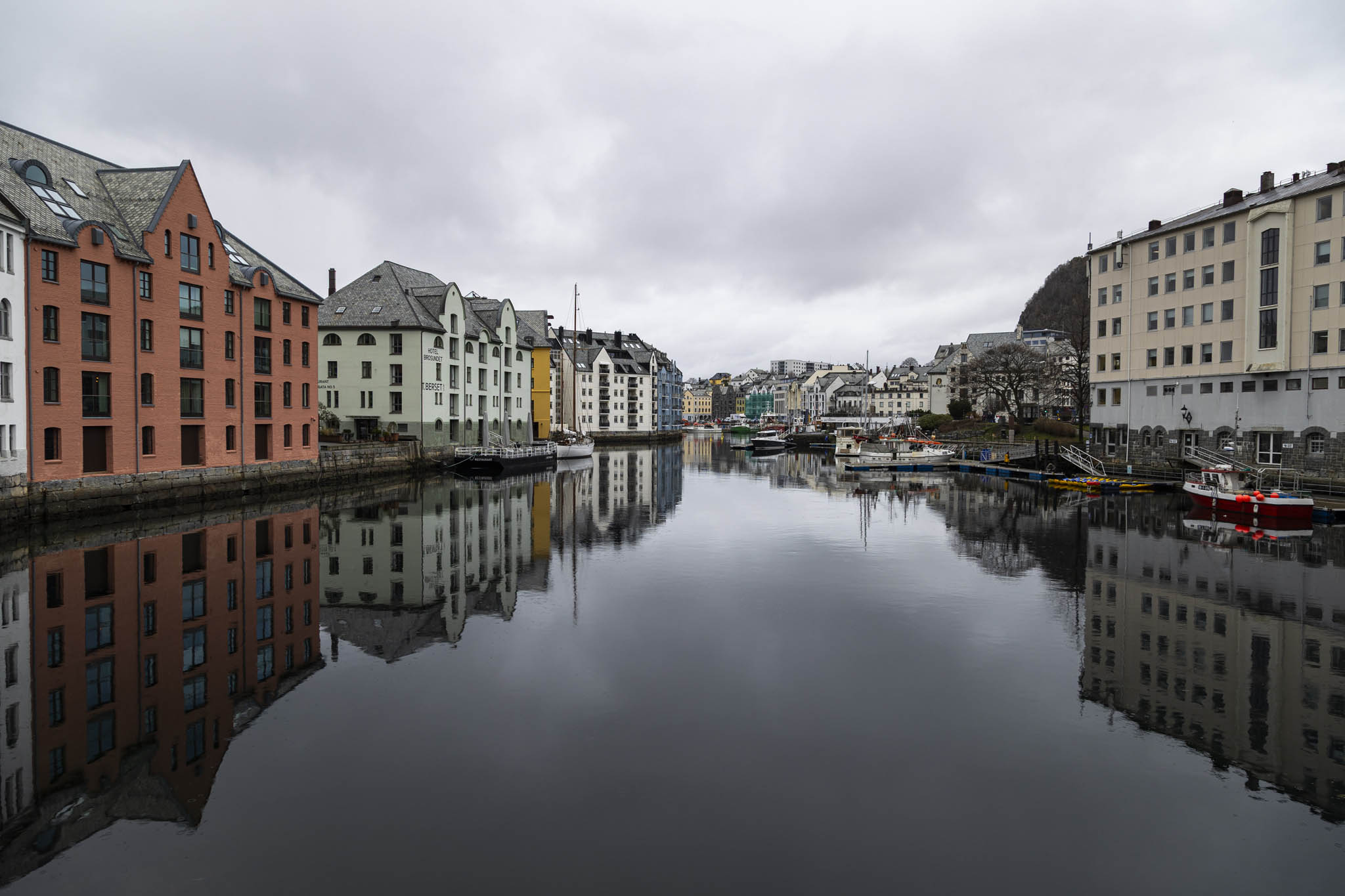
Our goal on Nørvøya was threefold: see if there were any interesting shops, eat up some time until the brewery we wanted to visit was open, and – something we only spotted on the map on the day – head for another couple of museums. Naturally, there would be lots of views of the architecture on the way but there are other posts about this sort of thing on this site so I will keep that to a minimum.
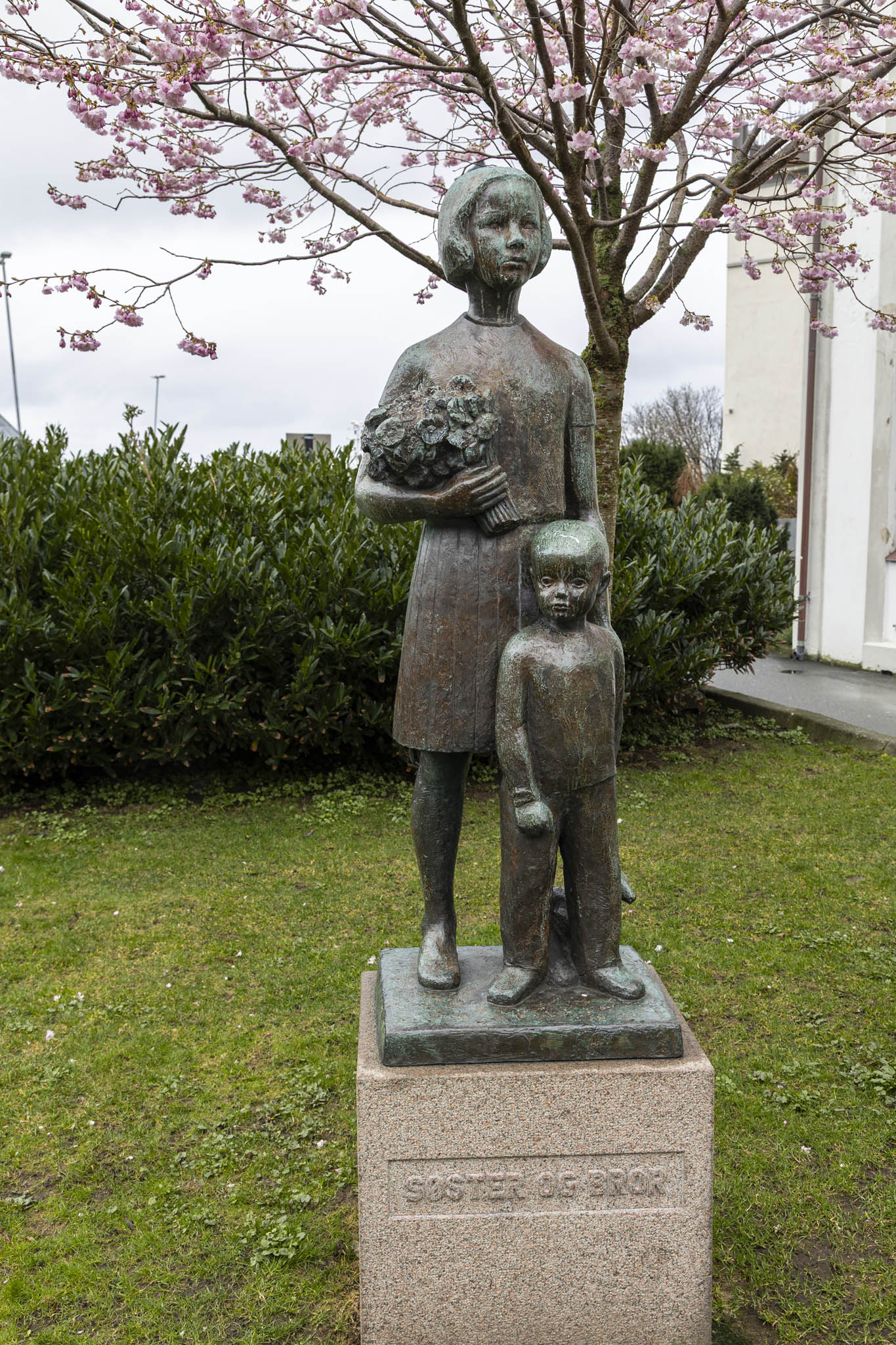
We spotted a sculpture of a sister and brother. The subject matter wasn’t terribly interesting to us but the sculptor, Odd Hilt, is worth mentioning. During Norway’s occupation by the Germans in World War II he was imprisoned in the Falstad concentration camp, a place originally destined to be part of the Nazi eugenics programme but later turned into a political prison camp. Hundreds were killed in the camp but Hilt escaped after a year and made it to safety in Sweden where we worked in exile. The sculpture was donated to Ålesund in 1961.
The first of the museums we were looking for was the general city museum but that turned out to be closed so we carried on towards the second.
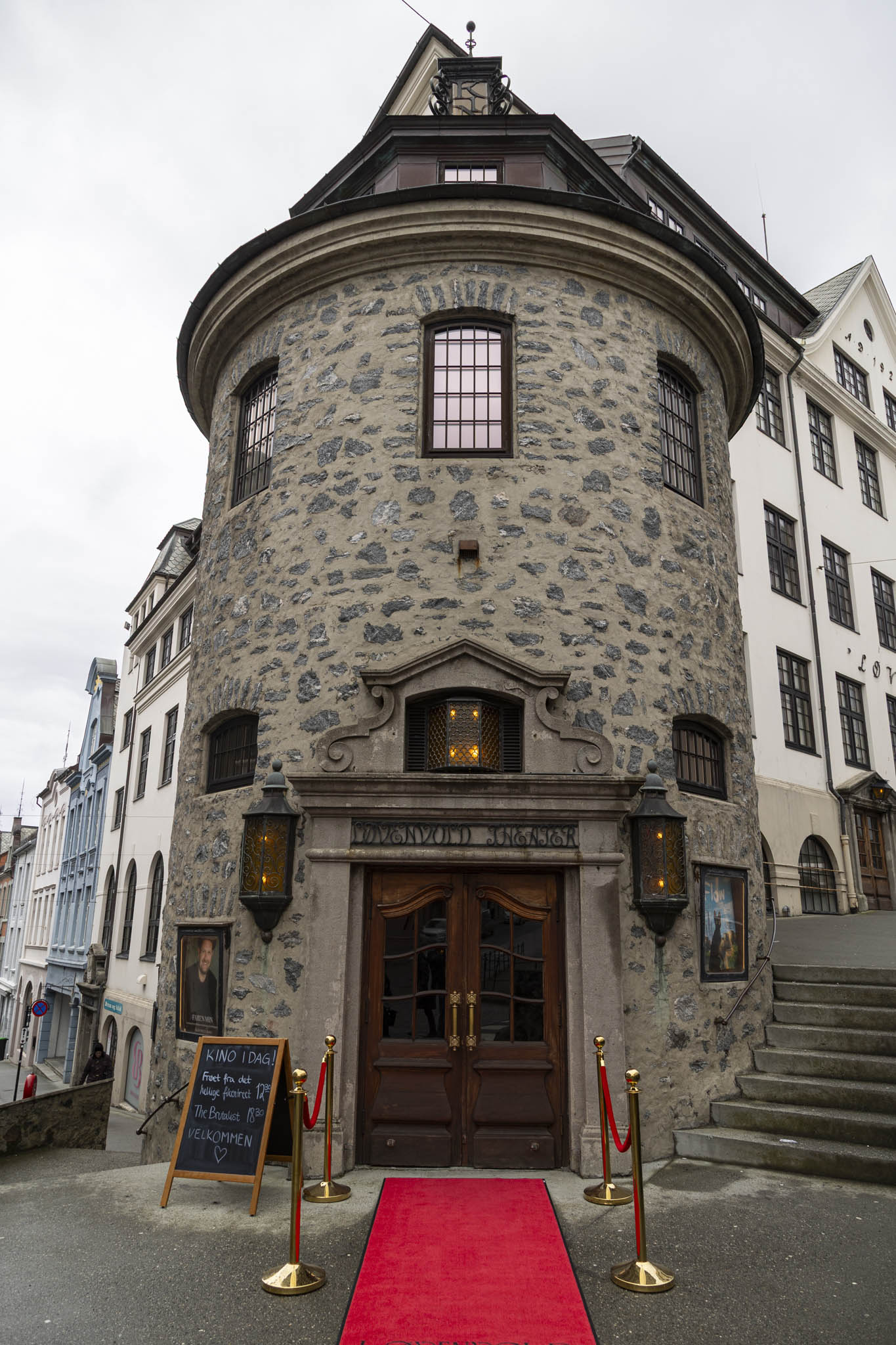
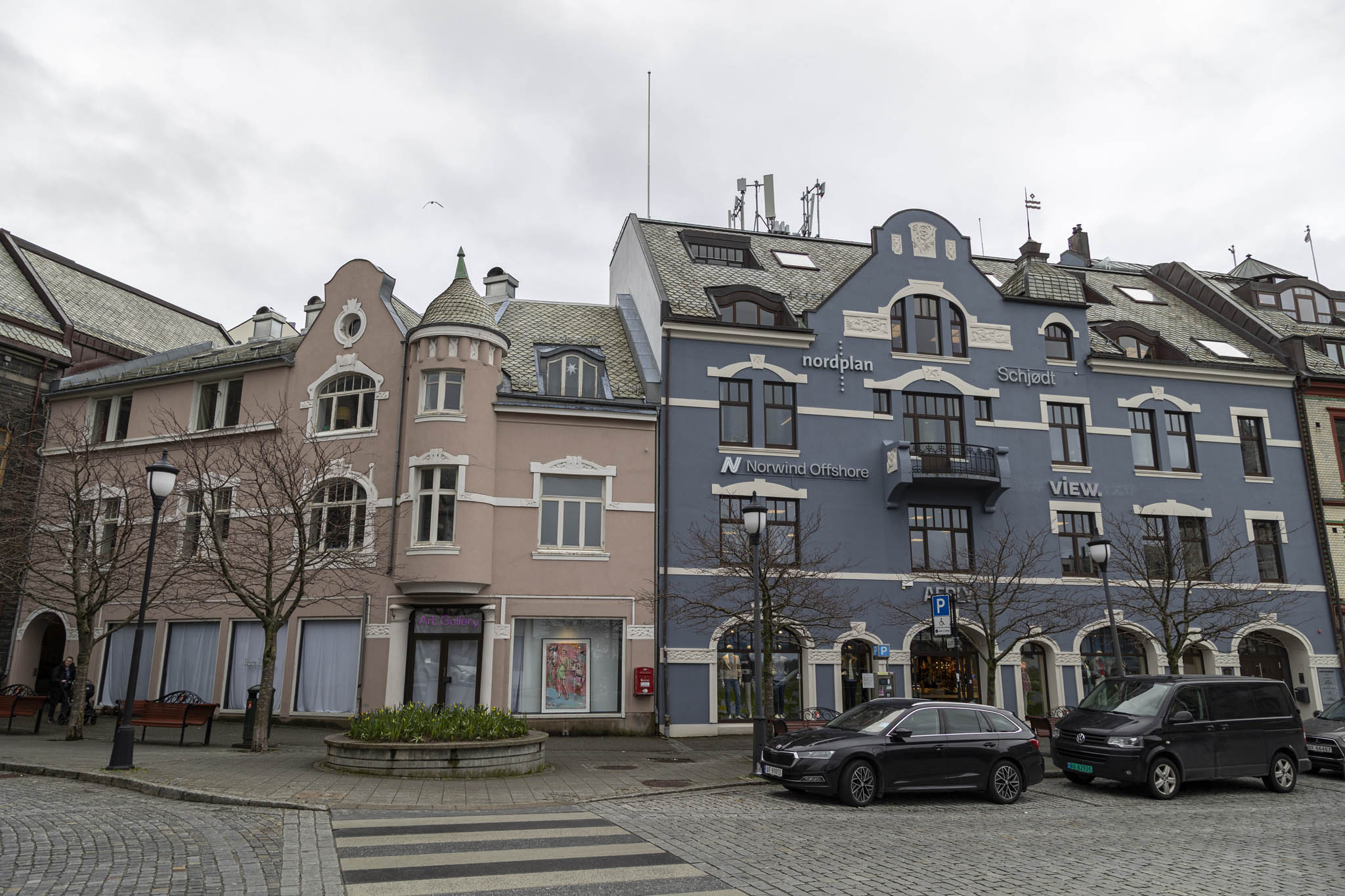
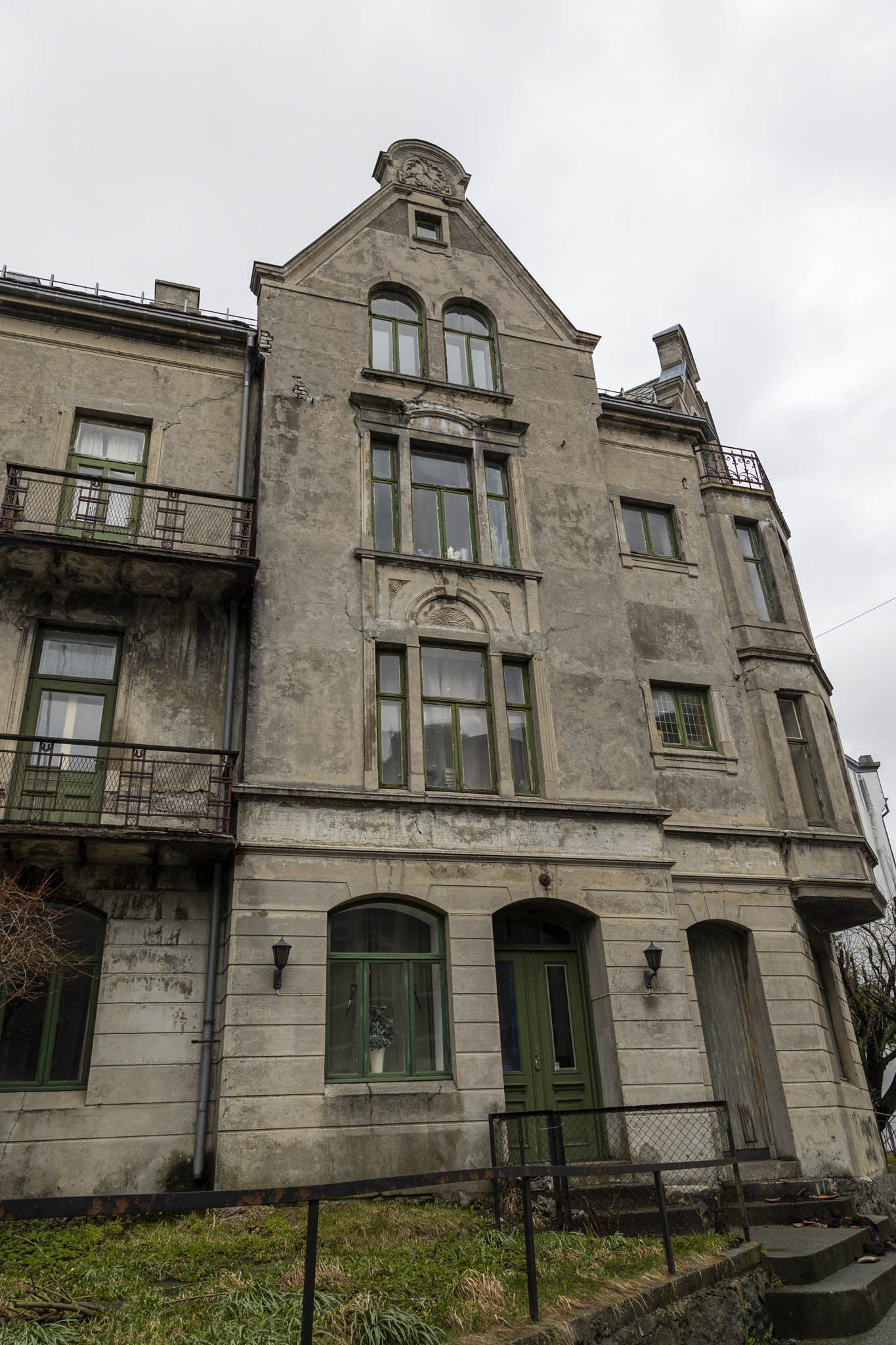
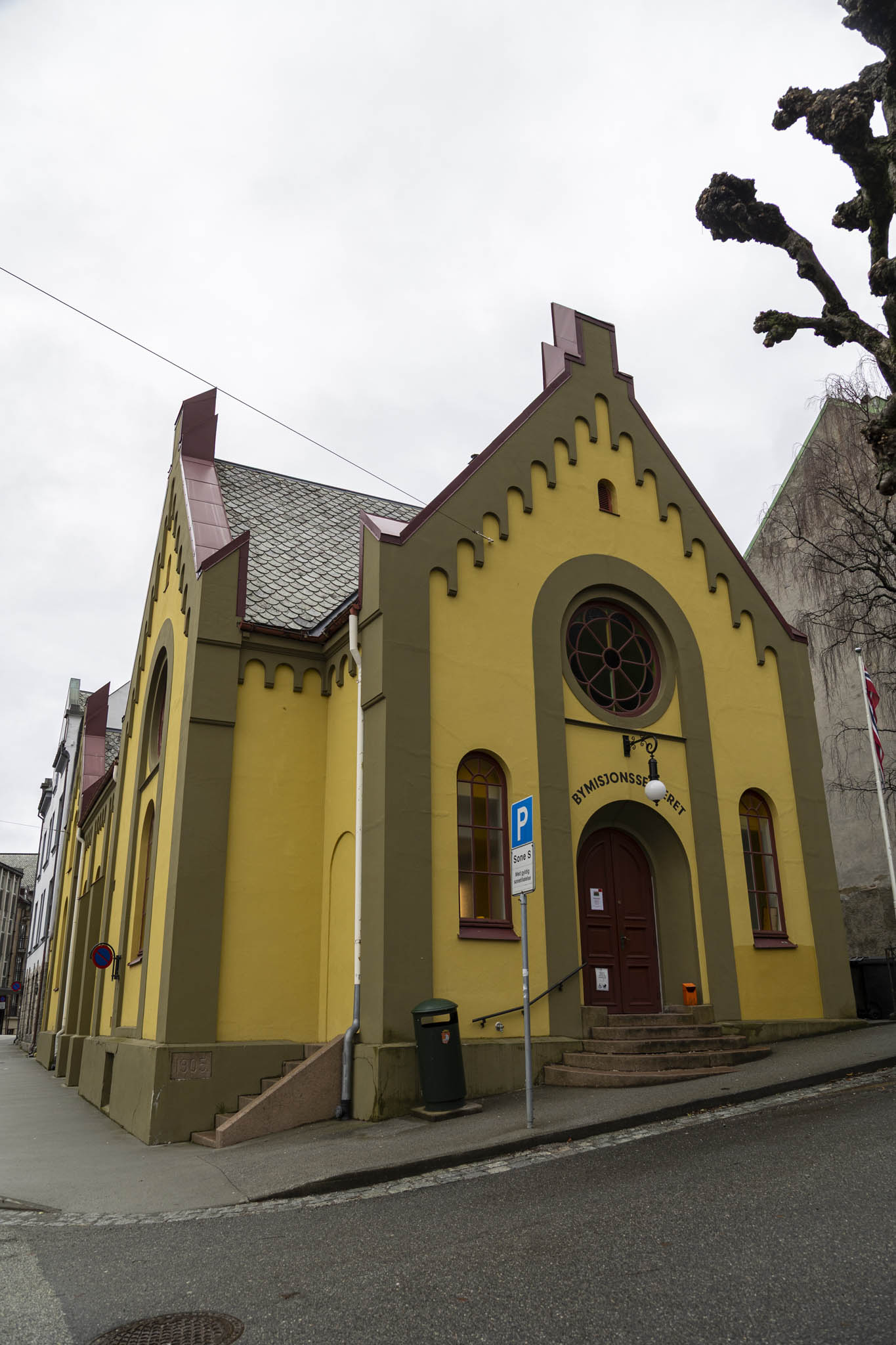
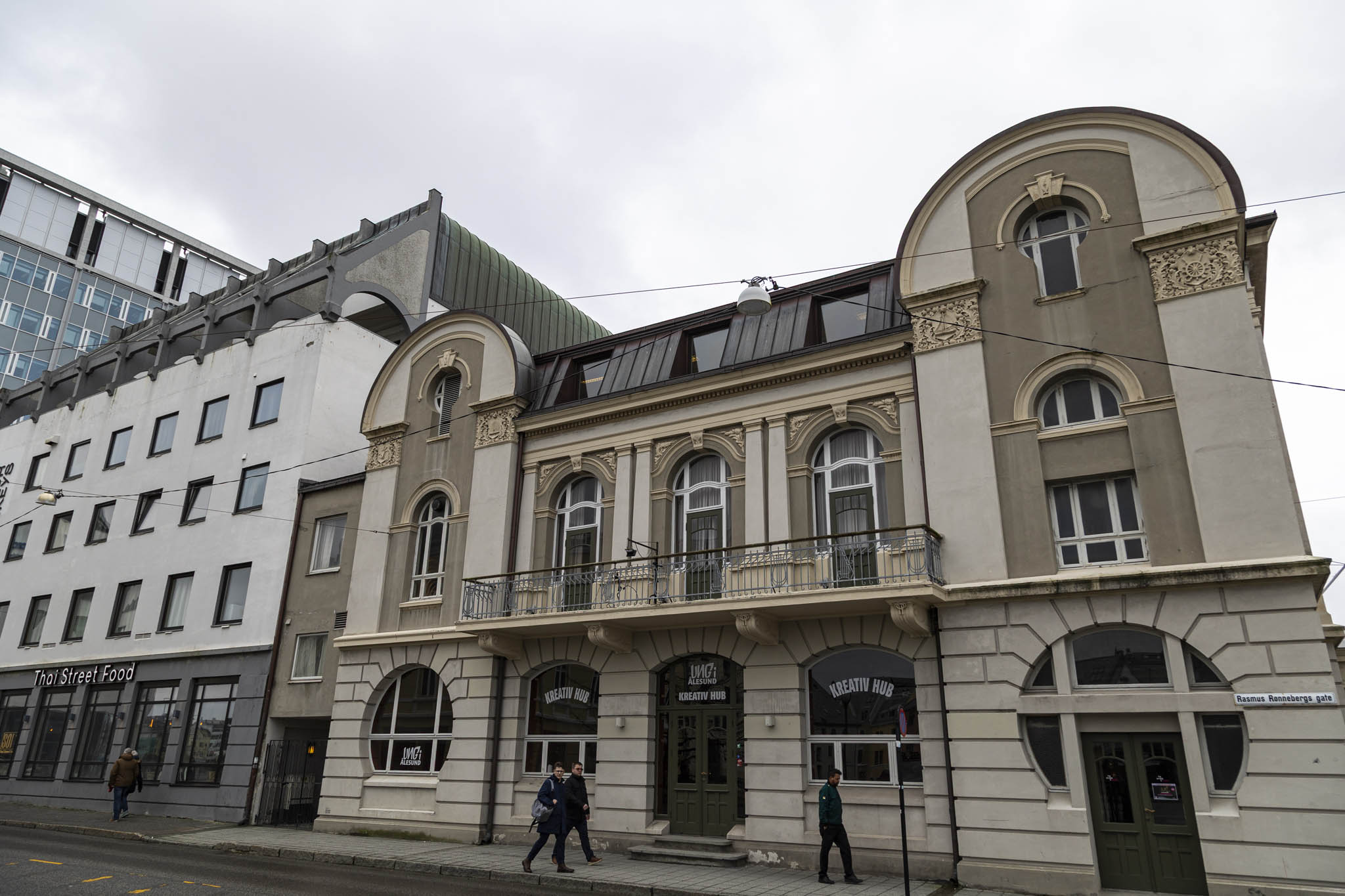
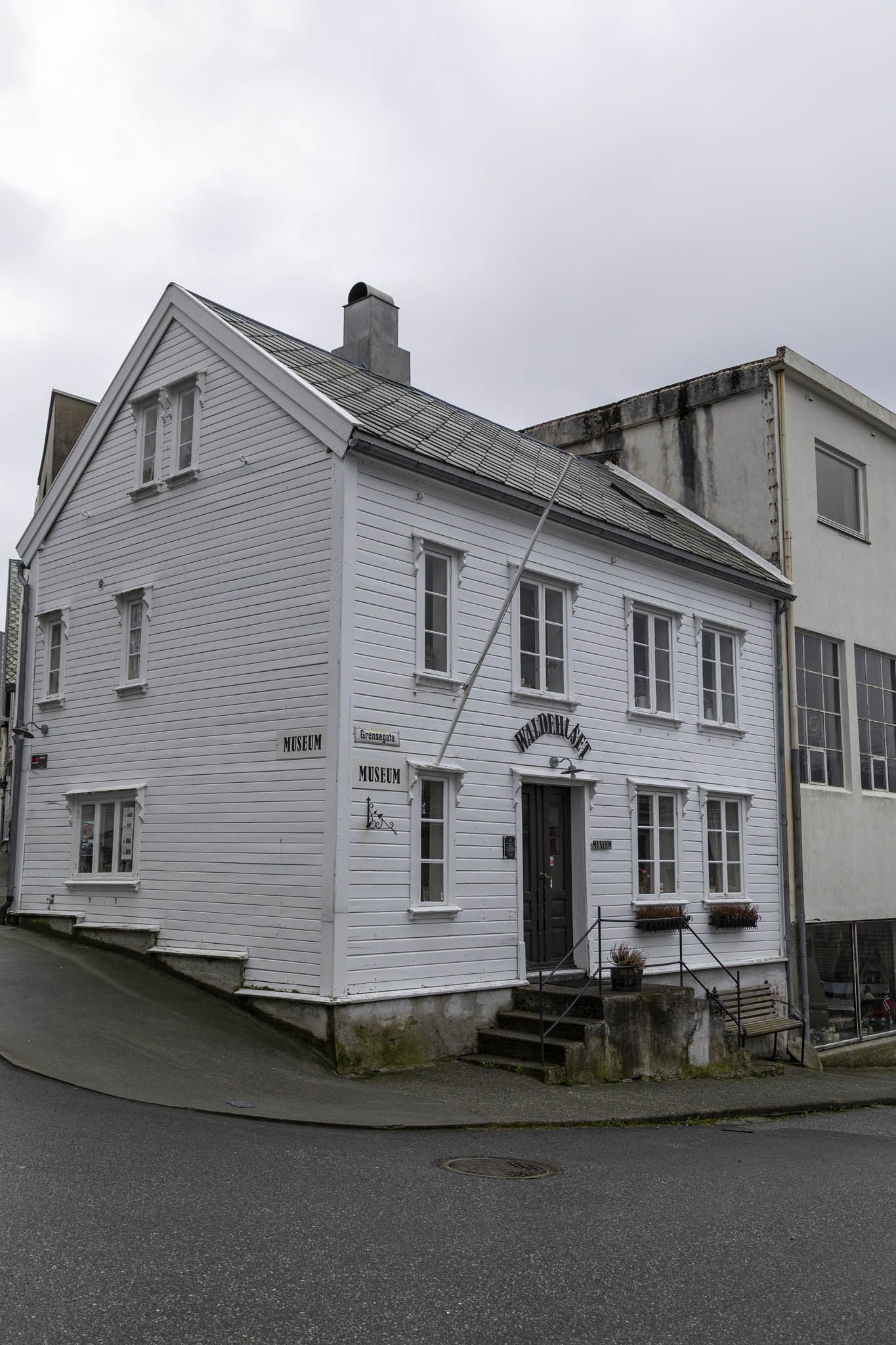
The second museum was also closed – and we weren’t the only people who walked up to it, tried the door handle, peered in the windows, and muttered “Bugger” – but since the building itself was the main attraction I did at least bother to take a photo.
Waldehuset is significant in that it was a building that did not burn to the ground in the 1904 fire that destroyed Ålesund and led to the rebuild in the Art Nouveau form of Jugendstil that’s prominent to this day. You can read a little more about that fire and the rebuilding in my write-up of the first time we visited this city a few years earlier: Ålesund And Some Architectural History. There’s a story attached to the building in that the owner was, ahem, visited by an angel the day before the fire and told the house would be spared from the inferno to come, but that he took furniture out of the house to be certain. While the house survived, all the furniture went up in flames as some sort of punishment for only partially trusting a vision. Sure, Jan. Forewarning of a fire by a celestial entity to a single person who then gives nobody else the heads up before their homes and belongings are burned to the ground is not the feel-good, makes-you-think-there’s-a-god-after-all story some people seem to think it is. It would’ve been nice to have had a look around, though, just to see what a rare nineteenth-century building in Ålesund looked like. Perhaps next time.
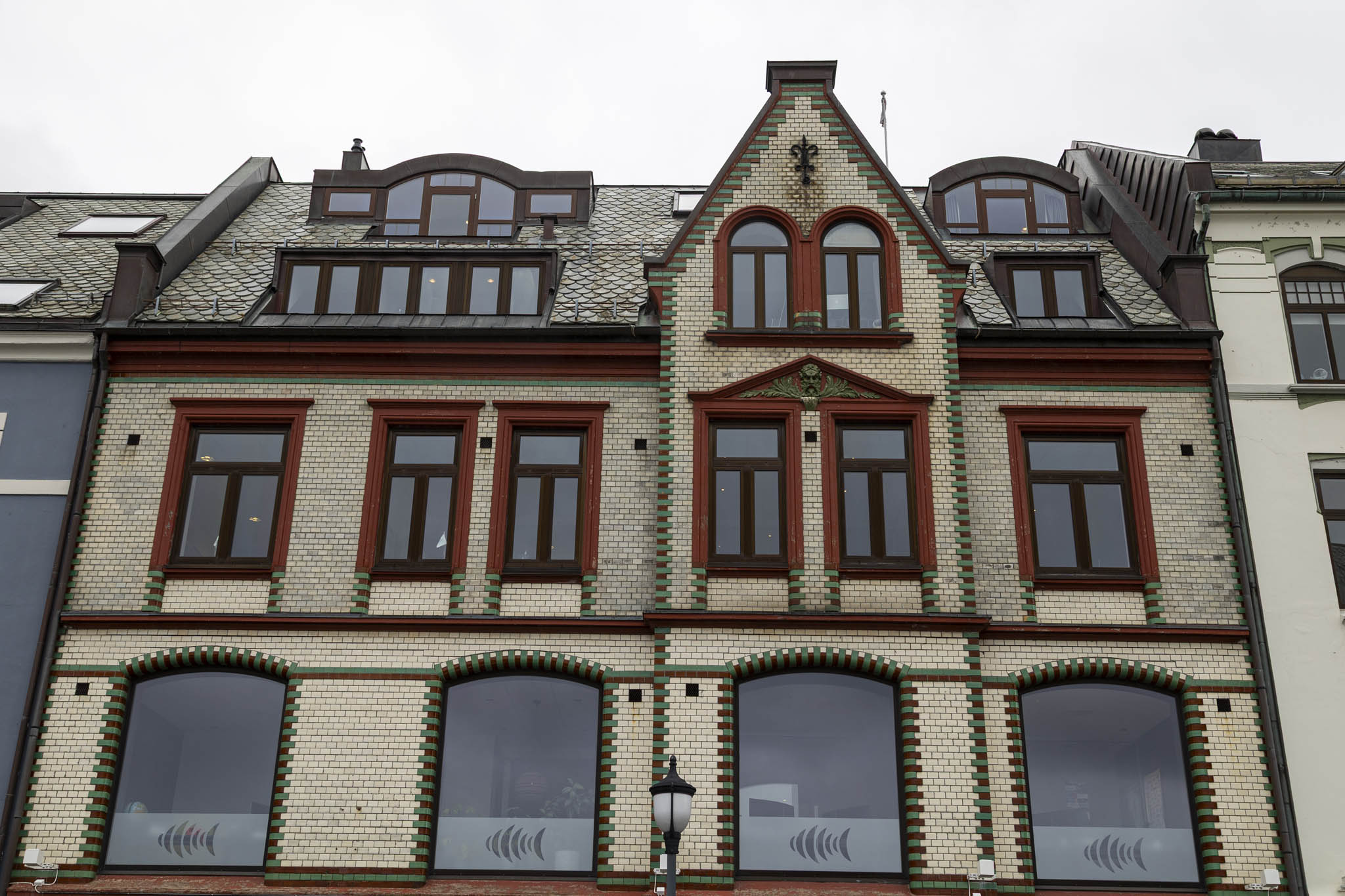
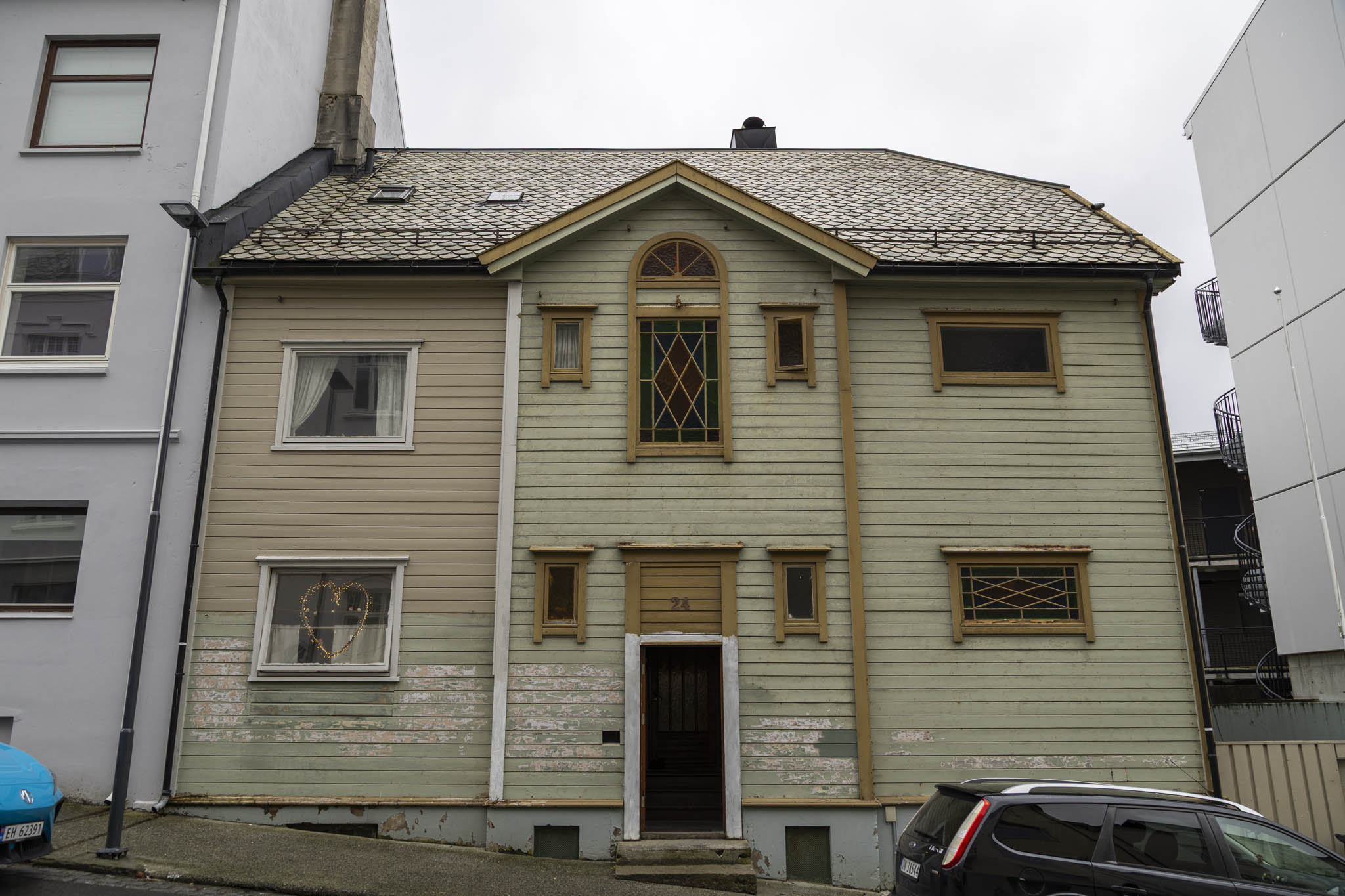
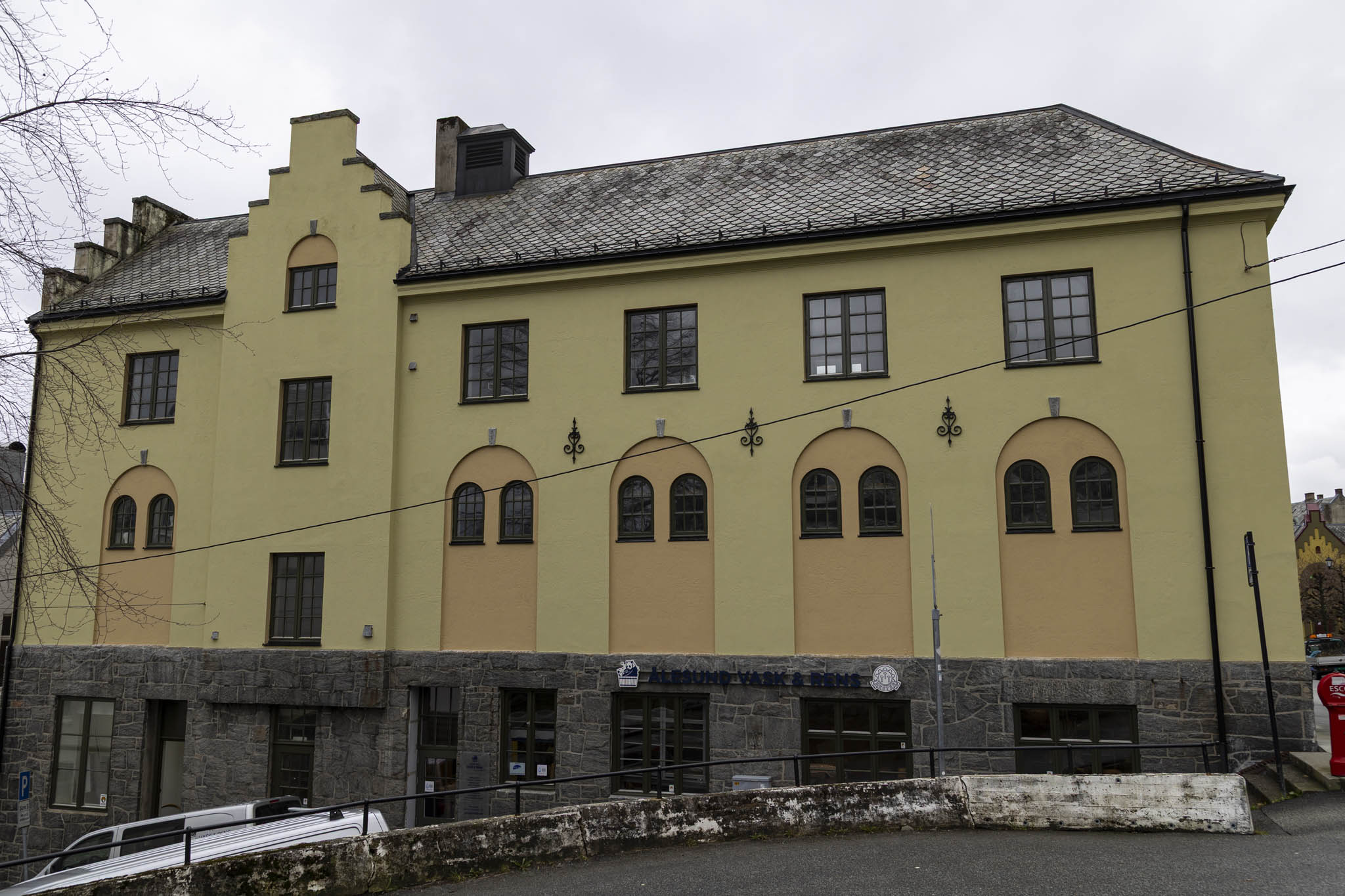
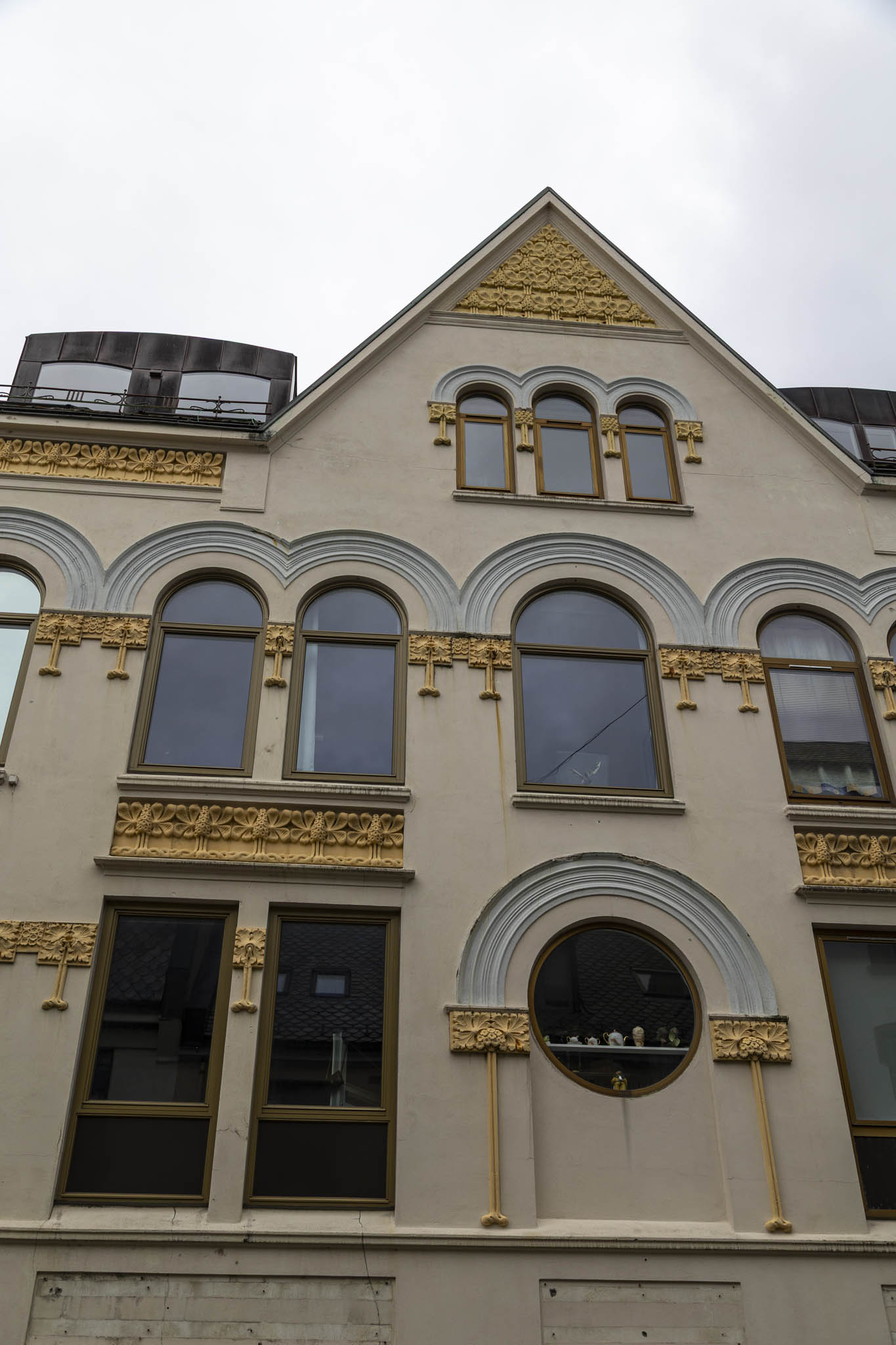
With no open museums to eat up our time we fell back to more street-wandering at a sedate pace plus a little bit of shopping. We like jigsaws and found a nice one – not a cheap one; that’s Norway for you! – of a cruise ship in the fjords that we had to buy. For the most part, though, we were picking streets at random and snapping photos of the more interesting-looking buildings or sculptures.
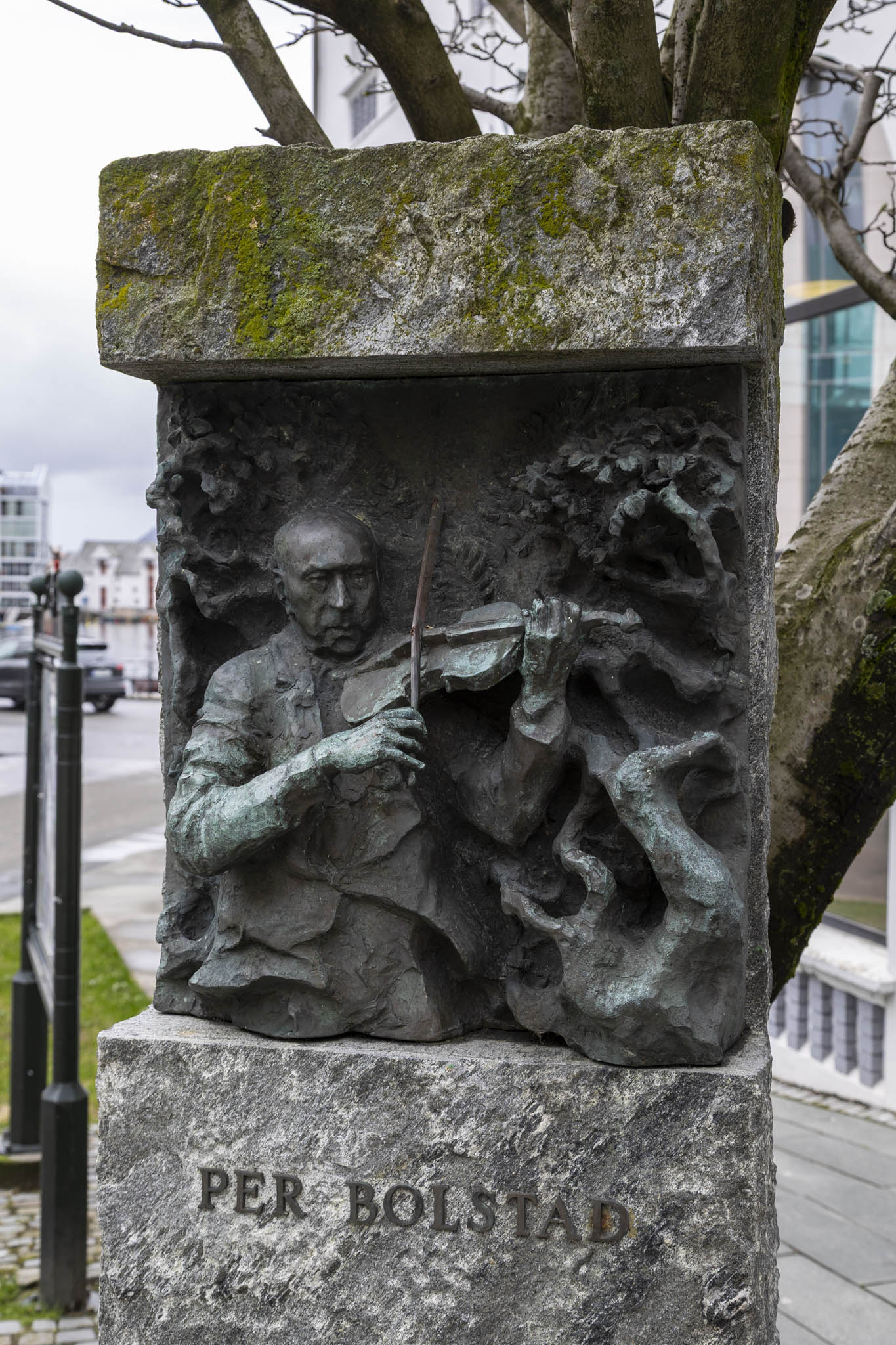
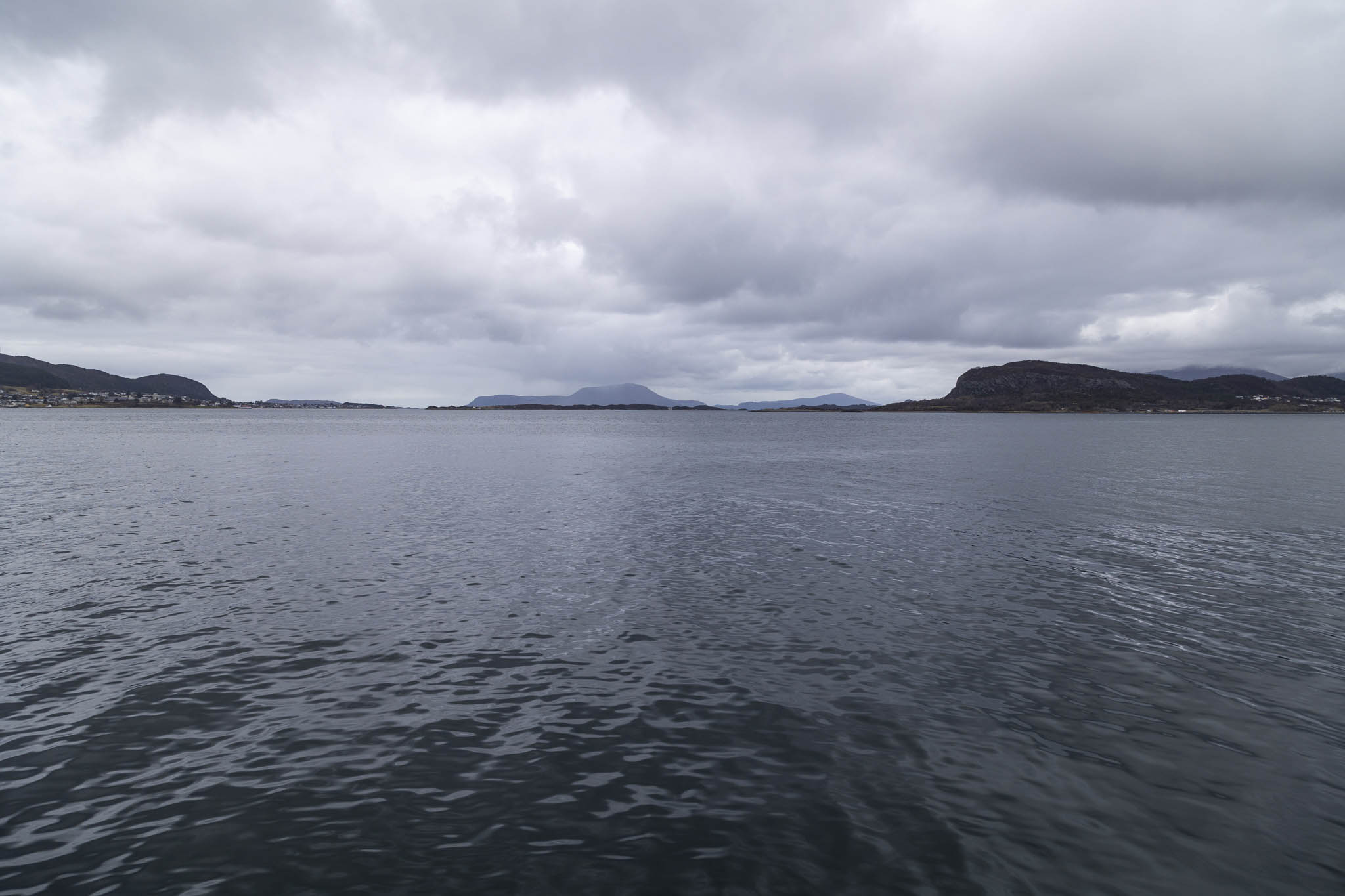
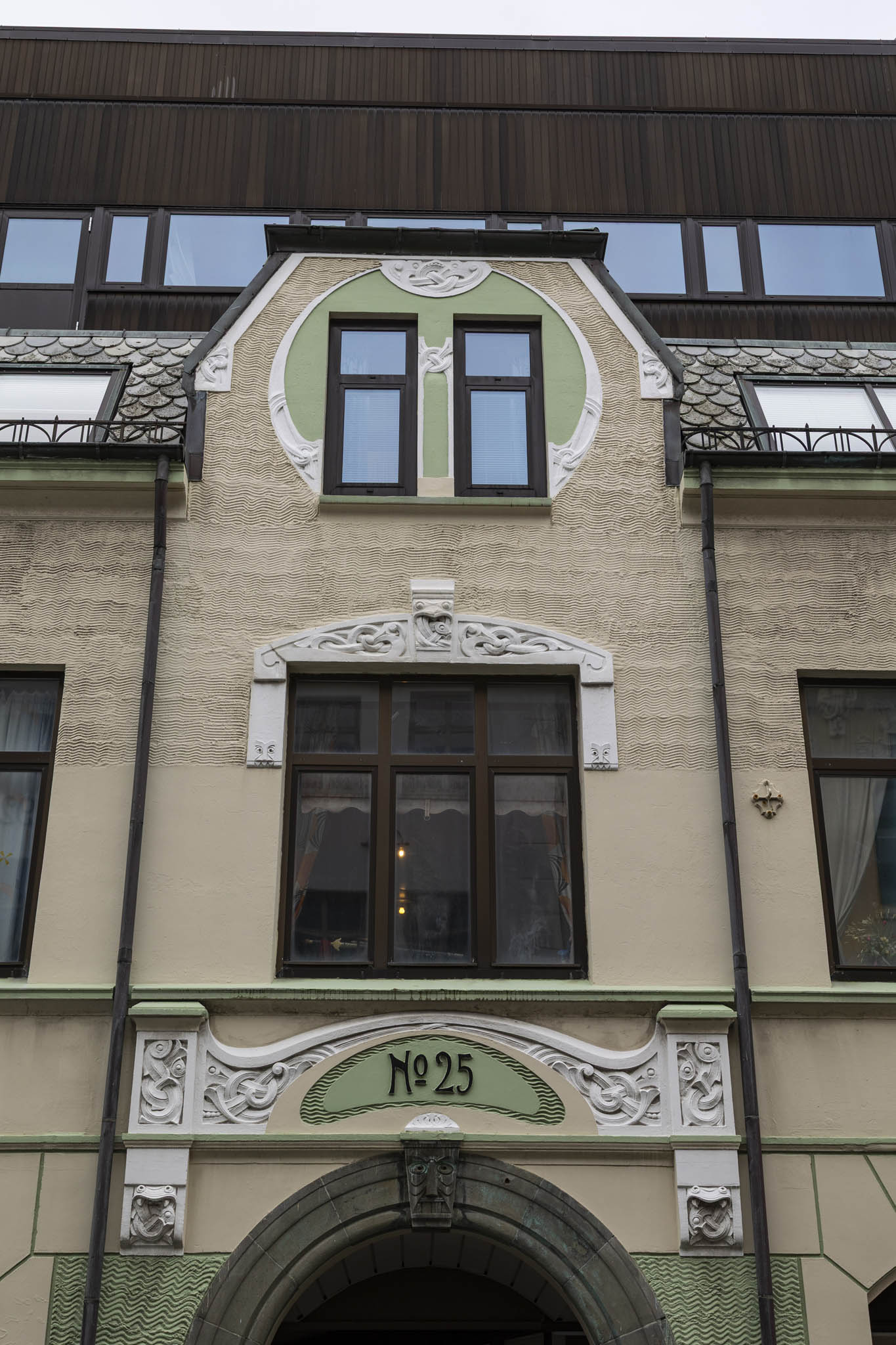
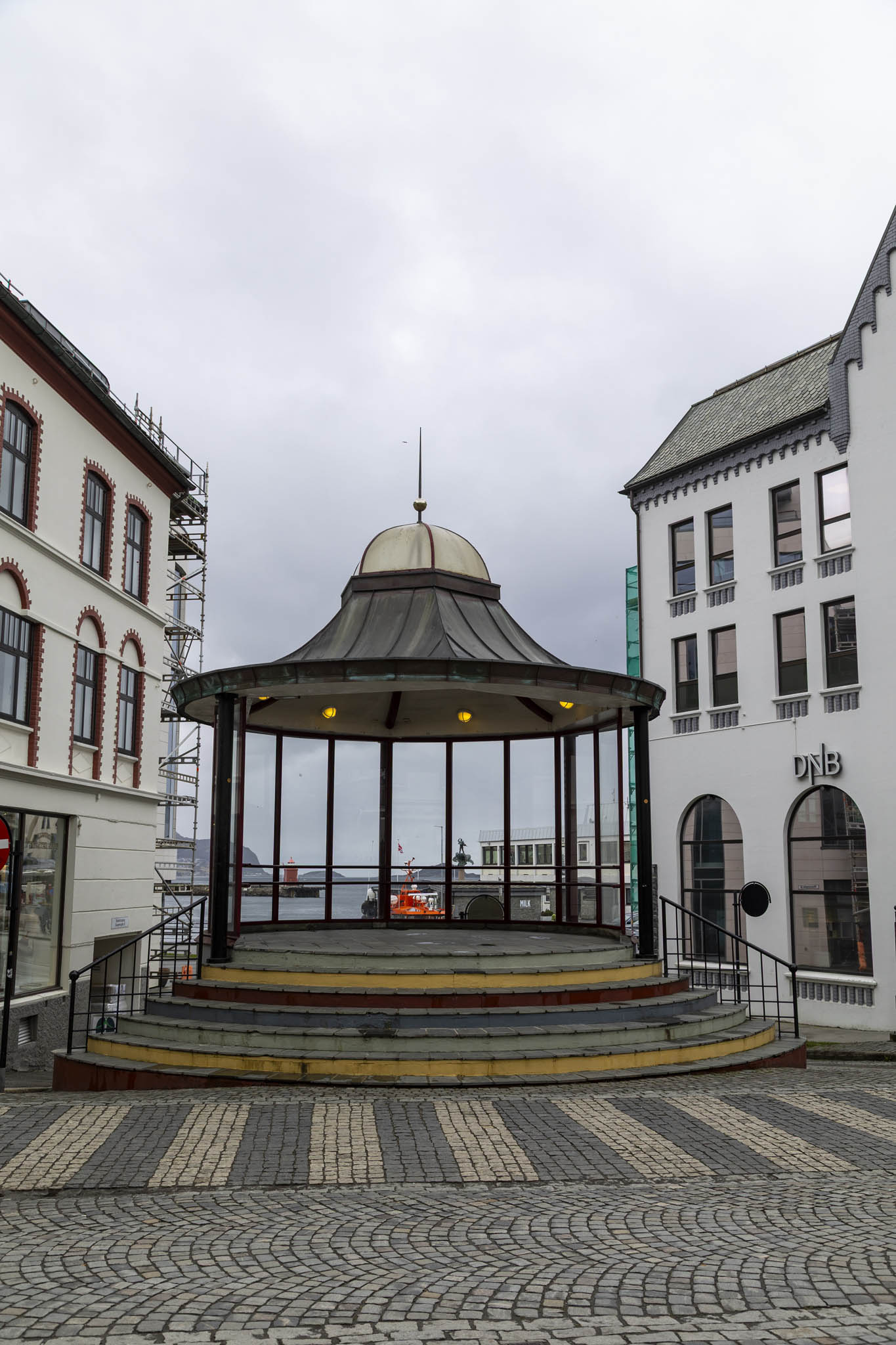
Behind the deer sculpture below you can see some steps leading up. These are known as The Thousand Steps because there are fifty-three of them. It makes sense if you’ve no understanding of how numbers work. Regardless of how many steps there were, we didn’t climb them as they would only have taken us to a hilly road we’d already strolled along when looking for souvenirs.
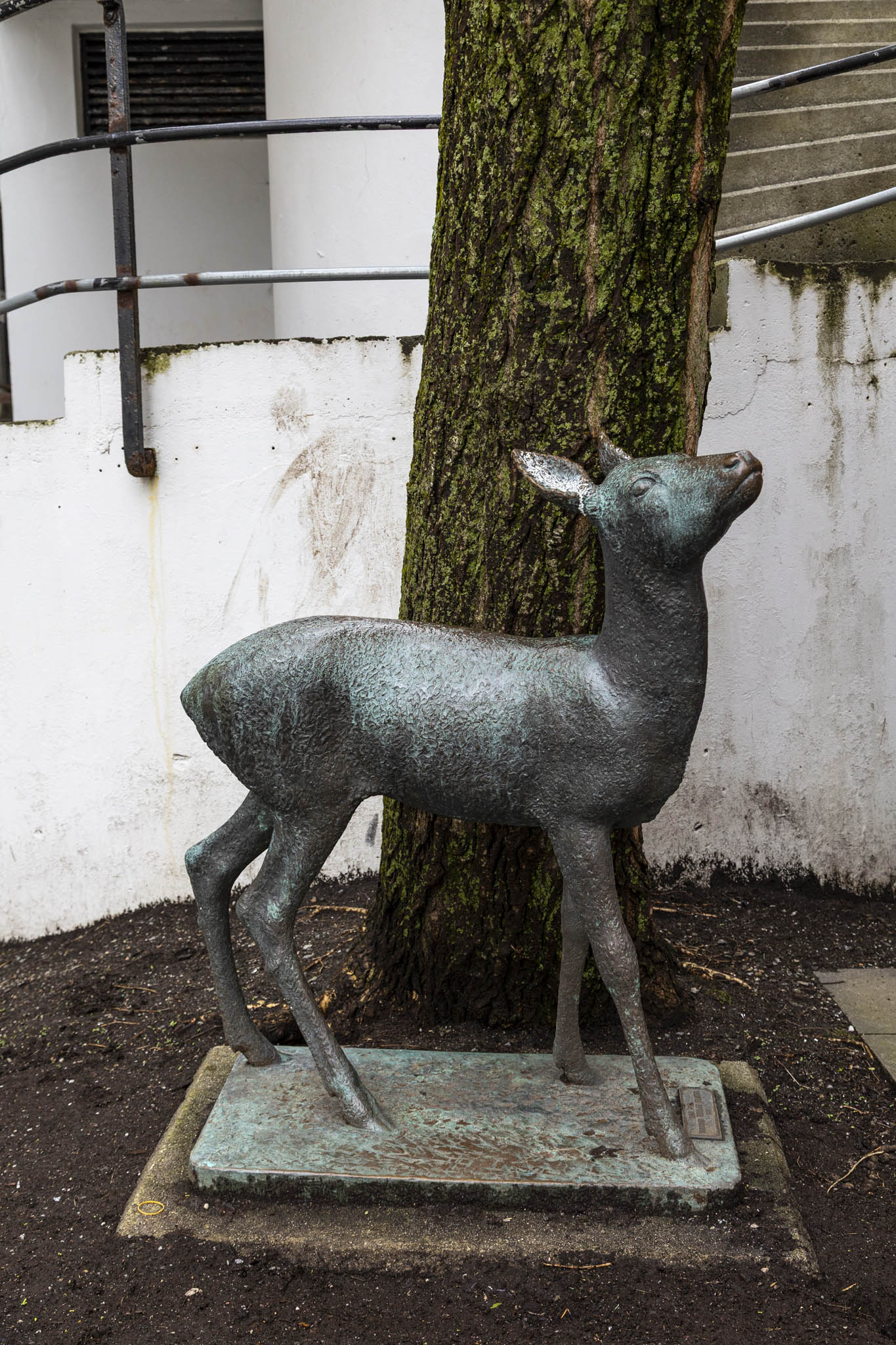
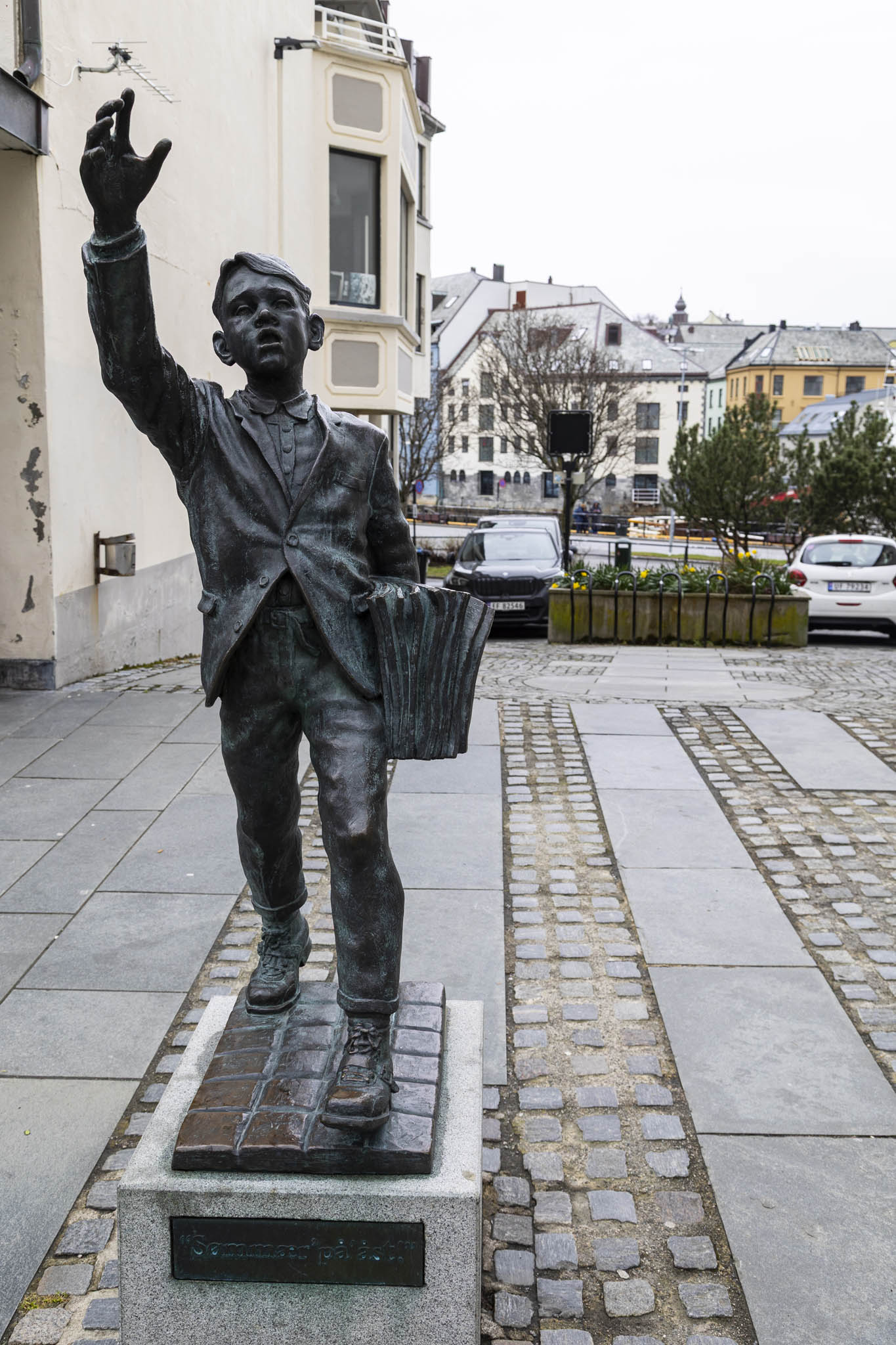
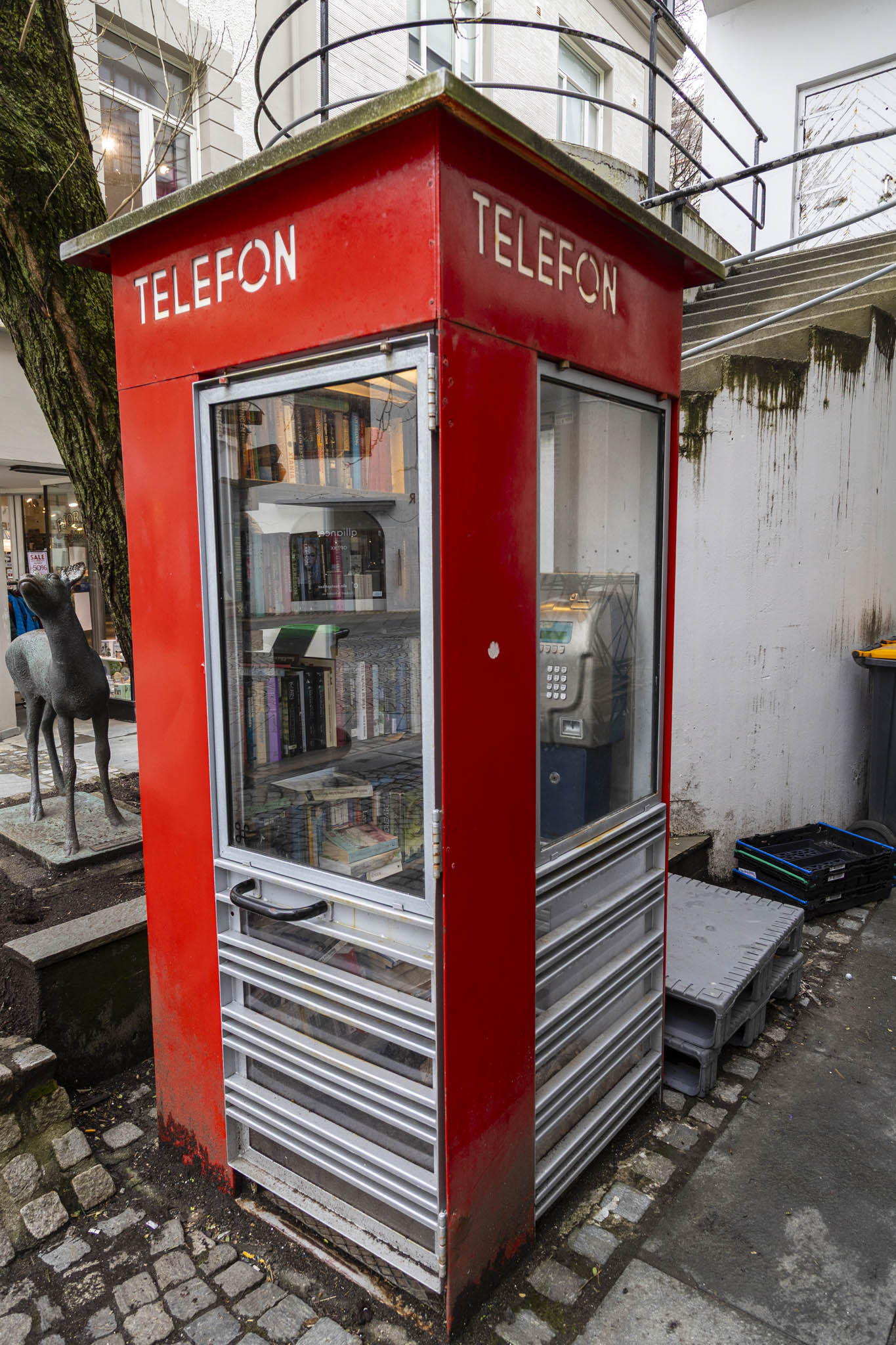
Eventually, enough time had passed that we could head towards the ship, but not to actually board it. The ship would still remain in port for another couple of hours and we had no rush to get back on. It’s not just a thirst for knowledge that we have.
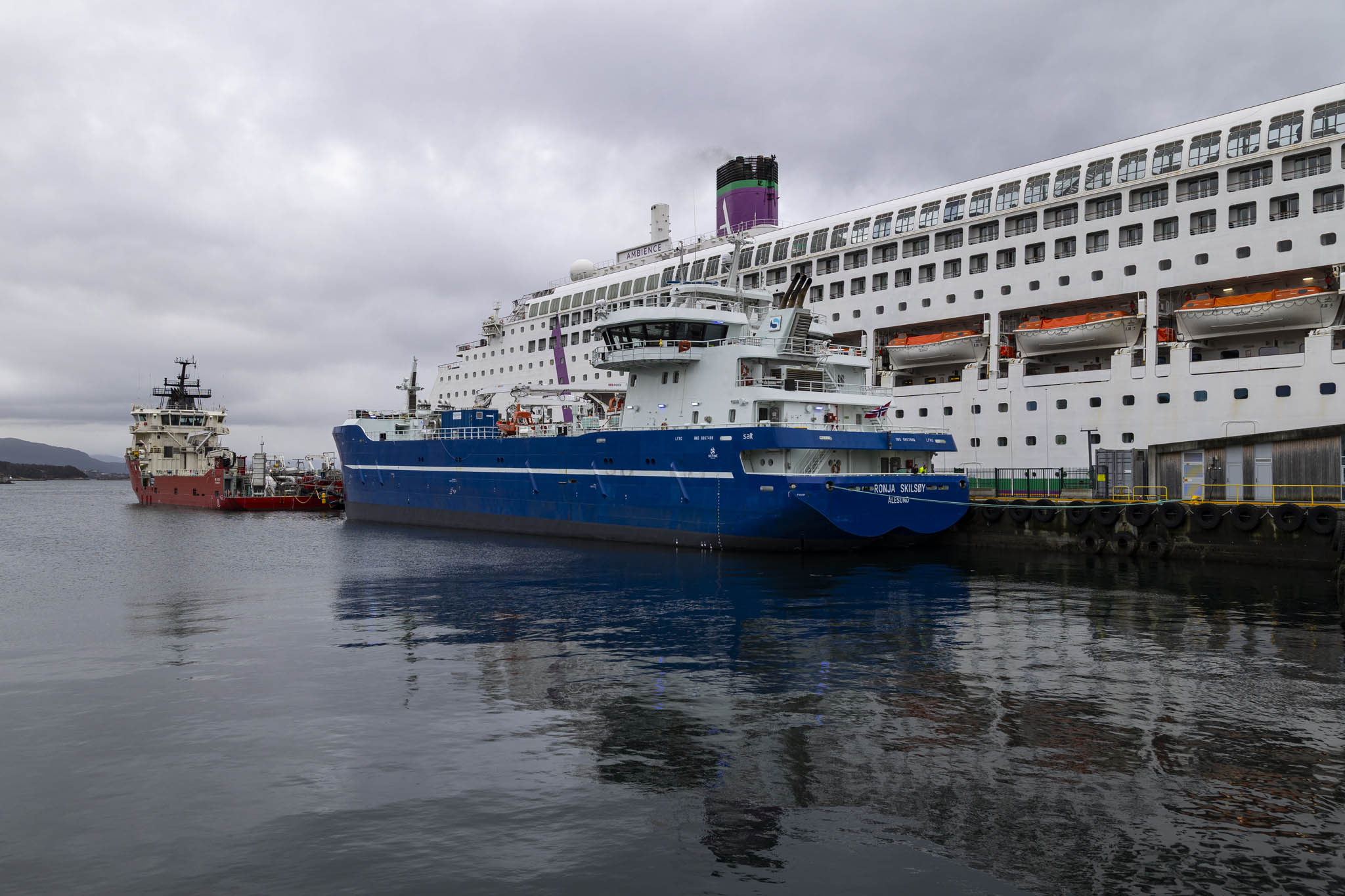
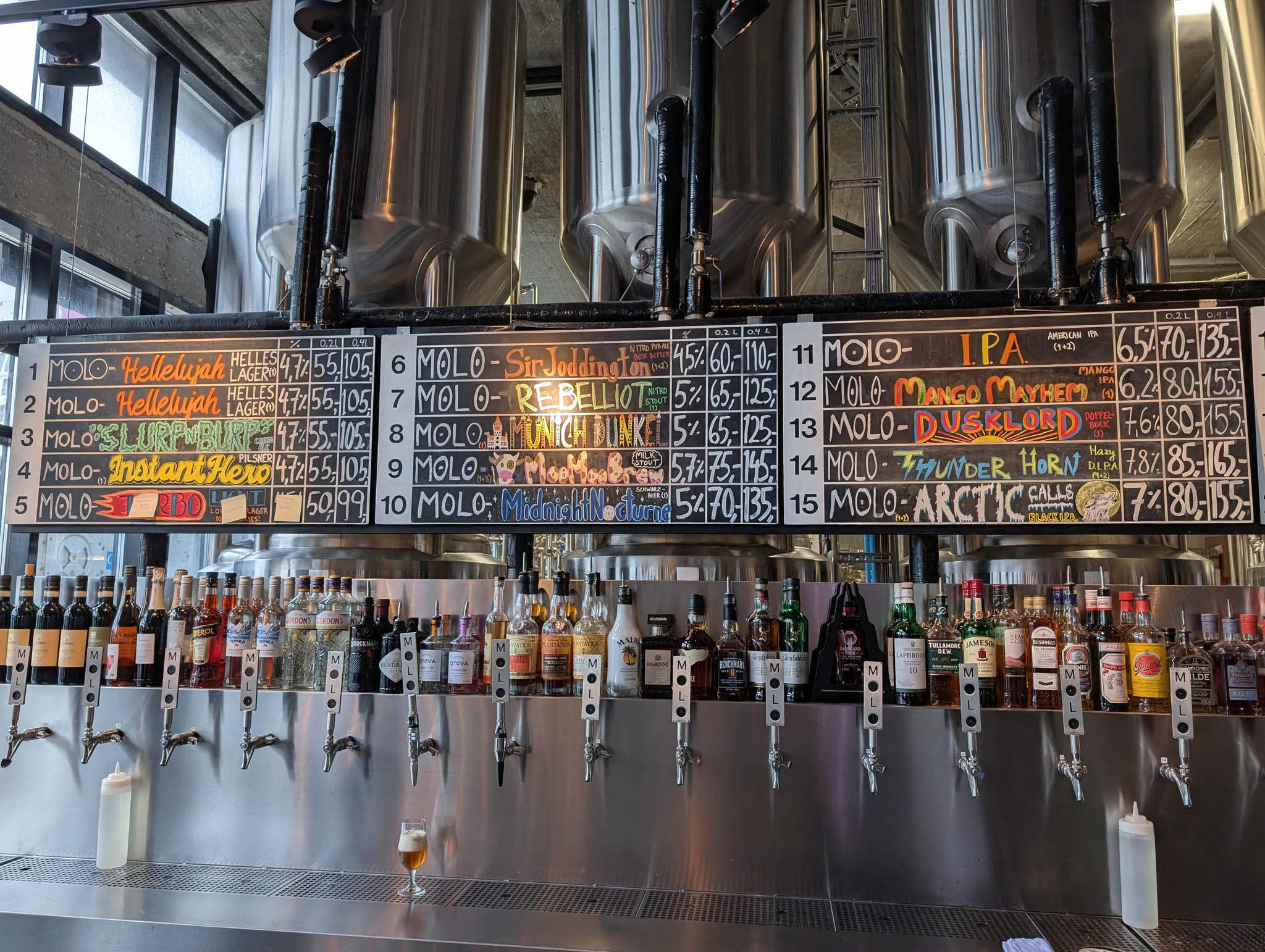
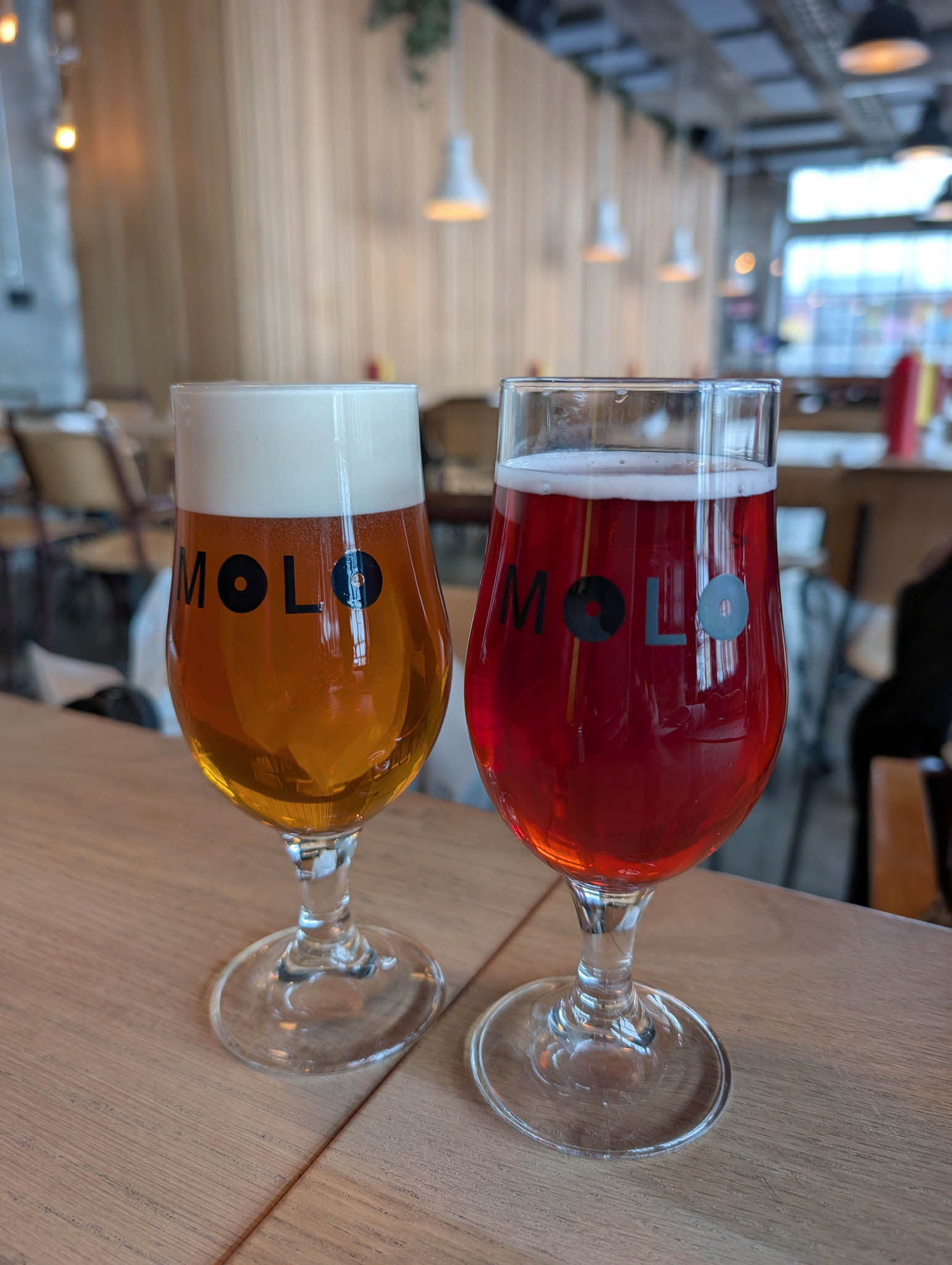
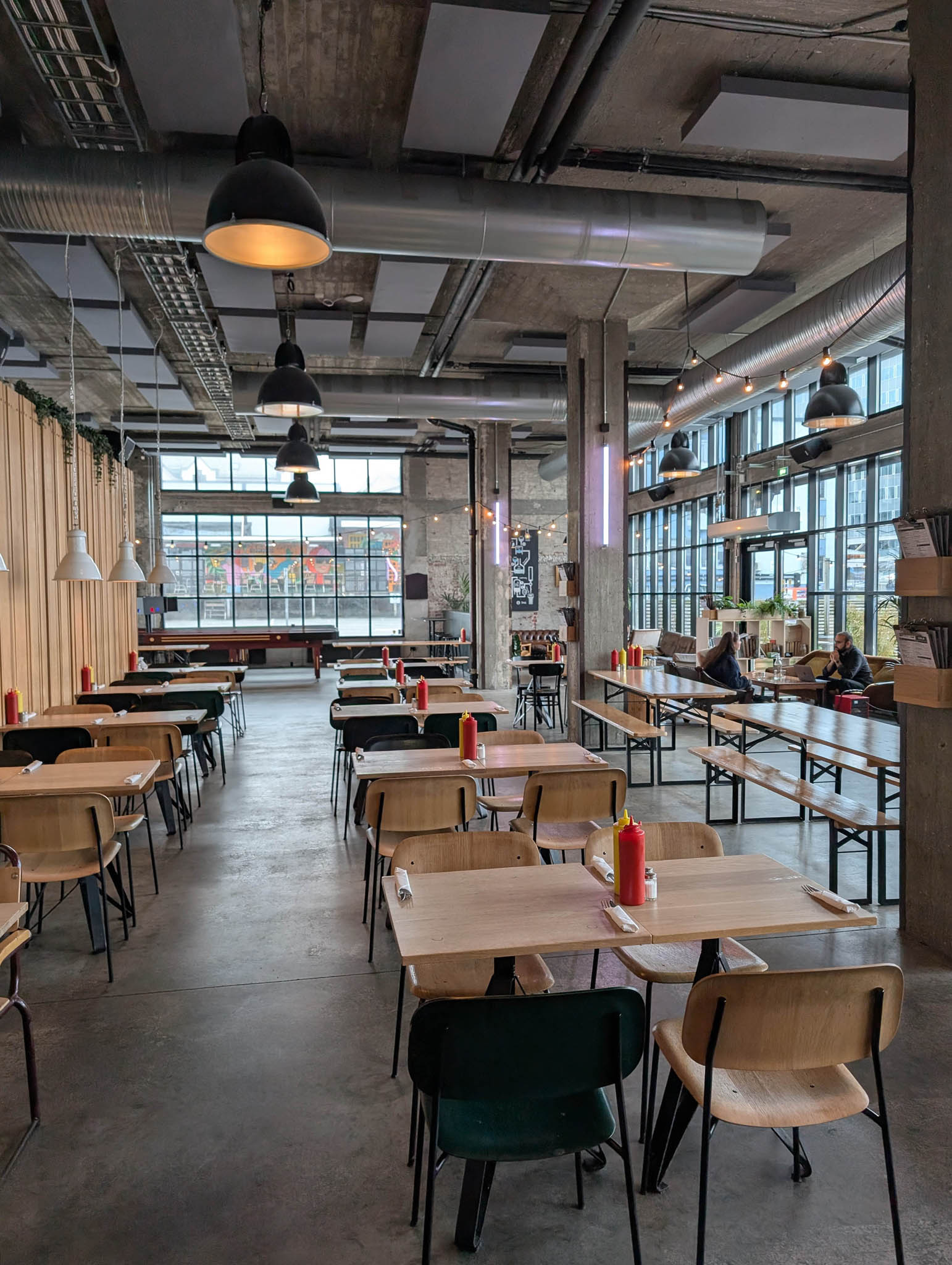
Incredibly close to where Ambassador Ambience was docked at Nørvøya, Ålesund, there was a brewery: Molo Brew. When we’d visited this port a few years earlier we’d hit a pub and tried some Norwegian beers, but they were mass-produced Norwegian beers. Fine at the time, but we’d overlooked that there was an actual brewery within shouting distance of where the cruise ships tie up. Craft ales is where our hearts lie and we were pleased to see that this sentiment was shared by about a dozen other passengers from our ship as we all filed into the large drinking space not long after it had opened. We stayed for a couple of pints each plus a pint glass of peanuts too (which was very nearly sensible of us). Lovely brewery, lovely beers, and a place we’ll hit again in Ålesund if we’re ever there and it’s open.
The next post in this cruise travelogue series will see us return to the ship, enjoy views of the sail-out from Ålesund, then try some speciality dining aboard Ambience in the evening.