We’d decided to do that rarest of things and actually hop off the Lisbon Hop-On, Hop-Off bus – nobody else seemed to be doing it – and the reason we did that outside the Palace of Ajuda was that we reckoned we could look around it, then walk to a few other places close by, including the Belém Tower which had been our initial intended destination. If you’ve read the previous post in this cruise travelogue series then you’ll already know that we wouldn’t be getting to that tower after all and that was because we ended up spending far more time at the palace than we’d expected. The palace was an absolute wonder.
1755 was a transformative year for the city of Lisbon. The massive earthquake, tsunami, and fires led to a huge loss of life and destruction, including that of the royal family’s residence of the Ribeira Palace. The effects weren’t just physical as the King, Joseph I, developed claustrophobia and a fear of living under stone that could collapse on him, having survived the terrible events in the city as the family had been staying elsewhere. He and his family took to living in a wooden building in the Ajuda area of Lisbon but after his death and a subsequent fire that burned the new royal residence down it was decided to build something more permanent.
Construction of the Ajuda Palace was a drawn-out affair, starting in 1795 but not being considered complete until close to a hundred years later. This was largely due to political and economic upheaval of the early 1800s. Napoleon had invaded, the royal family had fled to Brazil, the British had turfed out the French and been effectively running Portugal, then a revolution had begun in the country to take back control and force the royal family to return to mainland Europe rather than being run from abroad, and the new post-revolution, constitutional monarchy was more severely restricted in its expenditure.
By the time the palace was complete and had become the new permanent residence of the royal family its architectural style had drifted and taken on elements of the end of the Baroque trend and adapted Neoclassicism giving it a unique style of its own. But it was the interior of the Palace of Ajuda that we would be most impressed by and that can largely be attributed to the eye for style of Maria Pia, Italian princess of the House of Savoy and wife of King Luís I from the House of Braganza. With the help of her favourite architect, Possidónio da Silva, she designed most of the rooms and sourced most of the items that would fill them.
Okay, that’s the history of the Palace of Ajuda and the reason for how it looks the way it looks so now let’s get on with our visit, and one thing to note is that we mostly had the entire building to ourselves. It was shocking to us just how few people were here on this day. The bus had filled with people at the port and a few had got off in the city centre but everyone else had ignored this stop. To be fair, we’d not been considering it either but I’m so glad we did. There were probably only half a dozen other visitors to the palace which is possibly due to it being a little out of the way, not right on the coast, not near the city centre. It’s a place definitely worth making some time for, though.
The palace is spread out over two floors with most of the “smaller” rooms downstairs and the larger rooms for functions upstairs. I’ve indicated rooms where they’re known and highlighted some of the pieces within but mostly you can now just enjoy the pictures – hopefully – and add this place to where you’d like to visit for the next time you are in Lisbon.

The Hall of Order was where the king typically performed official duties on Thursdays.

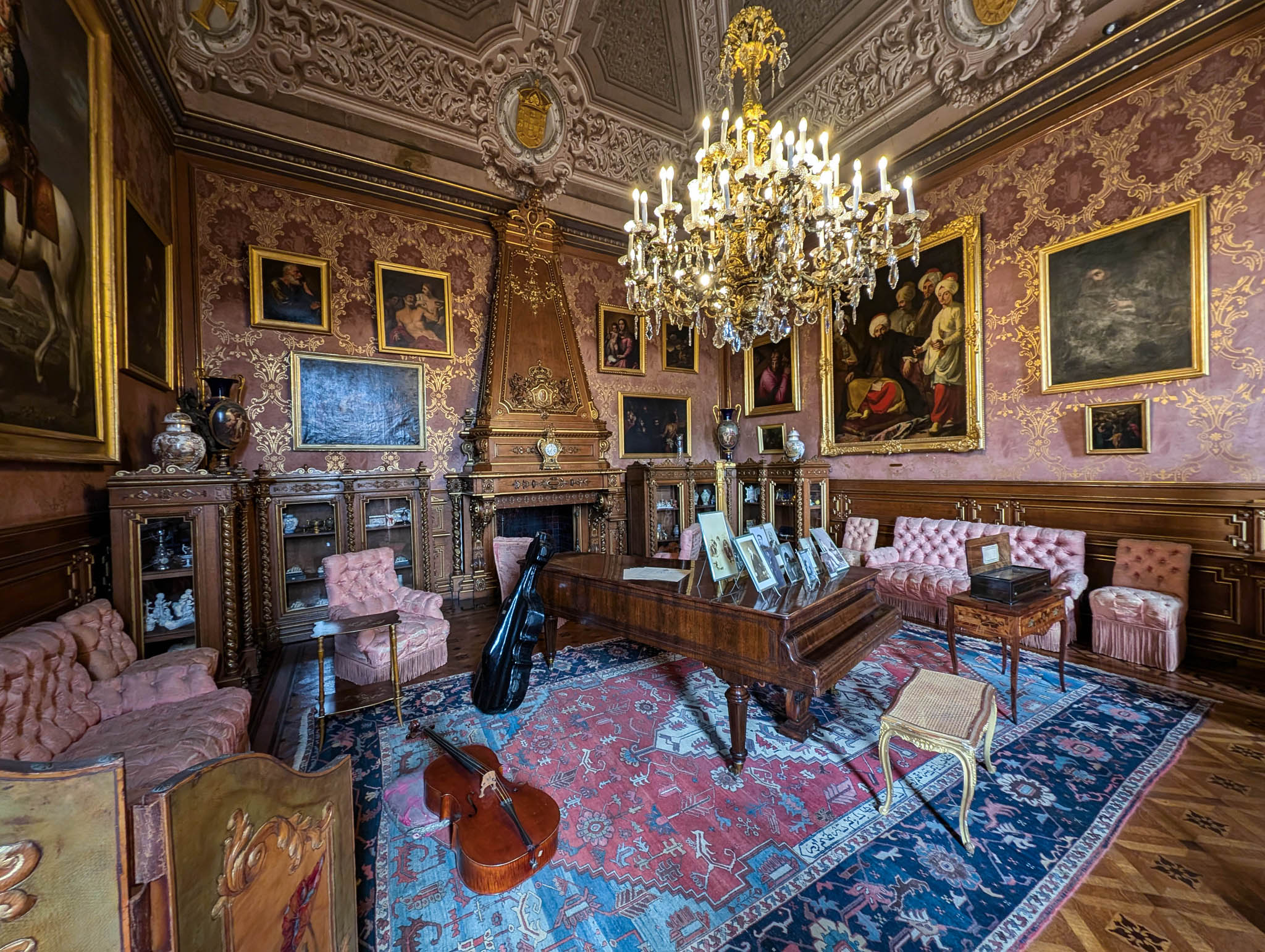
In the Music Room below you can see a few musical instruments. Maria Pia was a pianist and King Luís apparently sang baritone accompanied by the cello.
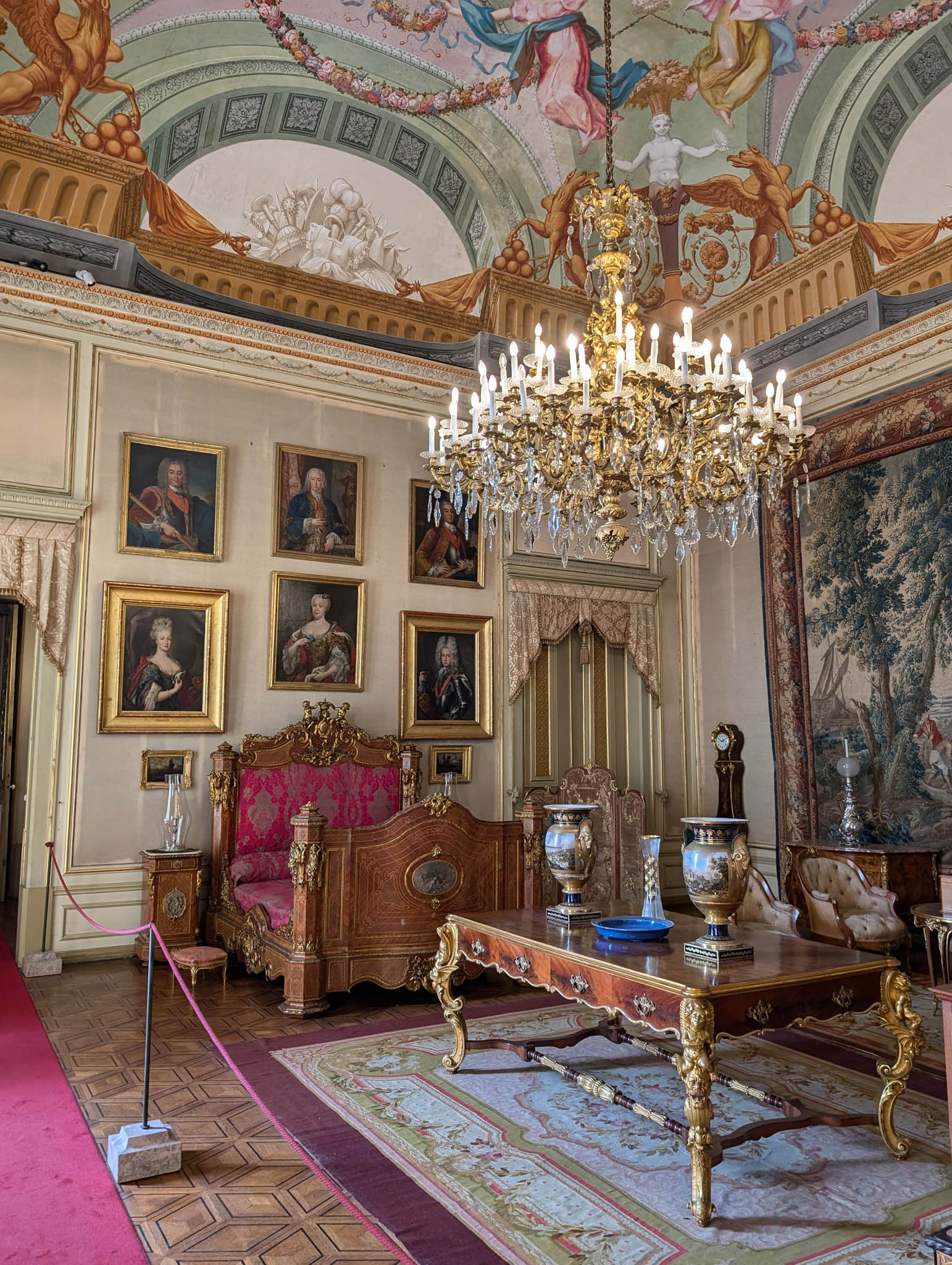
The King’s Bedroom contains the nuptial bed of Pedro V, Luís’s father and predecessor to the Portuguese throne. The portrait above the bed to the right is not Brian May but rather that of King João V who ruled Portugal until 1750. The vases on the table date from the period when the royal family fled to Brazil and are decorated with images of the Monastery of Batalha and the aqueduct.

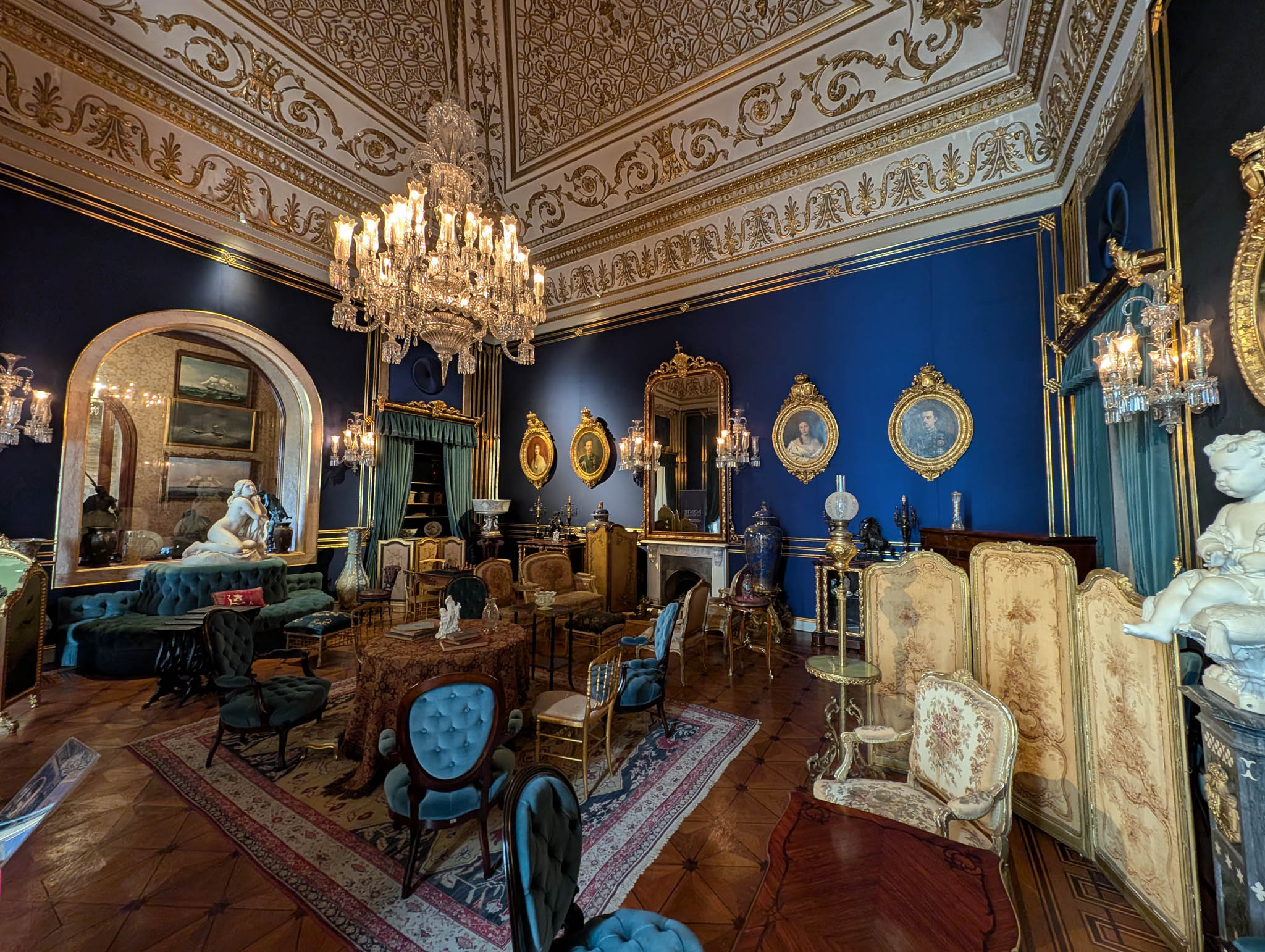
The Blue Room was remodelled between 1863 and 1865 to be a sitting room to the queen’s taste and had a large arch installed to afford a view into the adjoining room. The queen had requested a chandelier with no metal so an all-crystal one was produced by the Royal Factory of Glass and Crystal of La Granja.
Luís I and Maria Pia had two children, the princes Carlos and Afonso. Carlos would be crowned king in 1889 and would subsequently be assassinated in 1908. The sculpture in marble on the right of the picture below is of Carlos as a baby playing with toys and dates to 1865, created by Italian sculptor Cesare Sighinolfi.
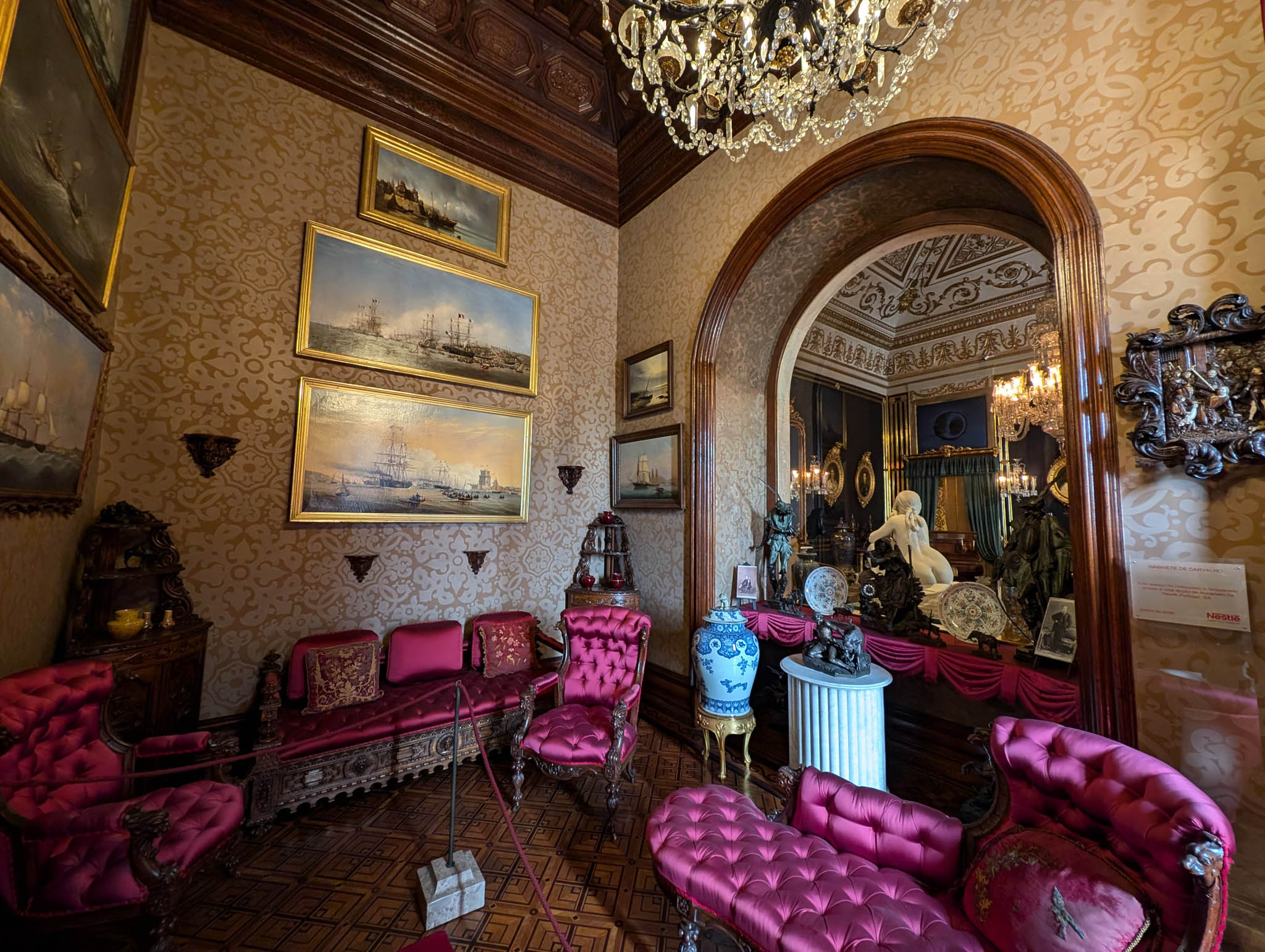
While the Blue Room had been designed with the queen in mind, the adjoining Oak Annex was more for the men, used as a smoking room, and decorated with paintings of the king’s favourite ships. To the left of the arched window below there’s a small painting of the brig, Pedro Nunes, which the then-prince Luís commanded on an 1858 voyage to Gibraltar.
The strangest room in the Ajuda Palace had to be the Winter Garden. The stone that covers the walls, floor, and ceiling was a gift from the Portuguese Viceroy to Egypt and the room brings the outdoors inside with a fountain, bronze sculptures of birds, potted plants, and two large bird cages. The cage that’s partly obscured by the fountain in the photo below was made in 1872 and was designed to look like the Palace of Mafra. This room was sometimes used for dinners and parties when tables would be set up around the fountain.

The Pink Room has a lot of German influence in it with early eighteenth century furniture manufactured in Meissen (later reupholstered then given to the Portuguese royal family in 1864, probably as a wedding present) and the chandelier’s main body made from Meissen porcelain too. The sculpture of a man on a horse is that of King Umberto of Italy and was made by Stanislau Grimaldi, a Sardinian calvalry commander and amateur sculptor.

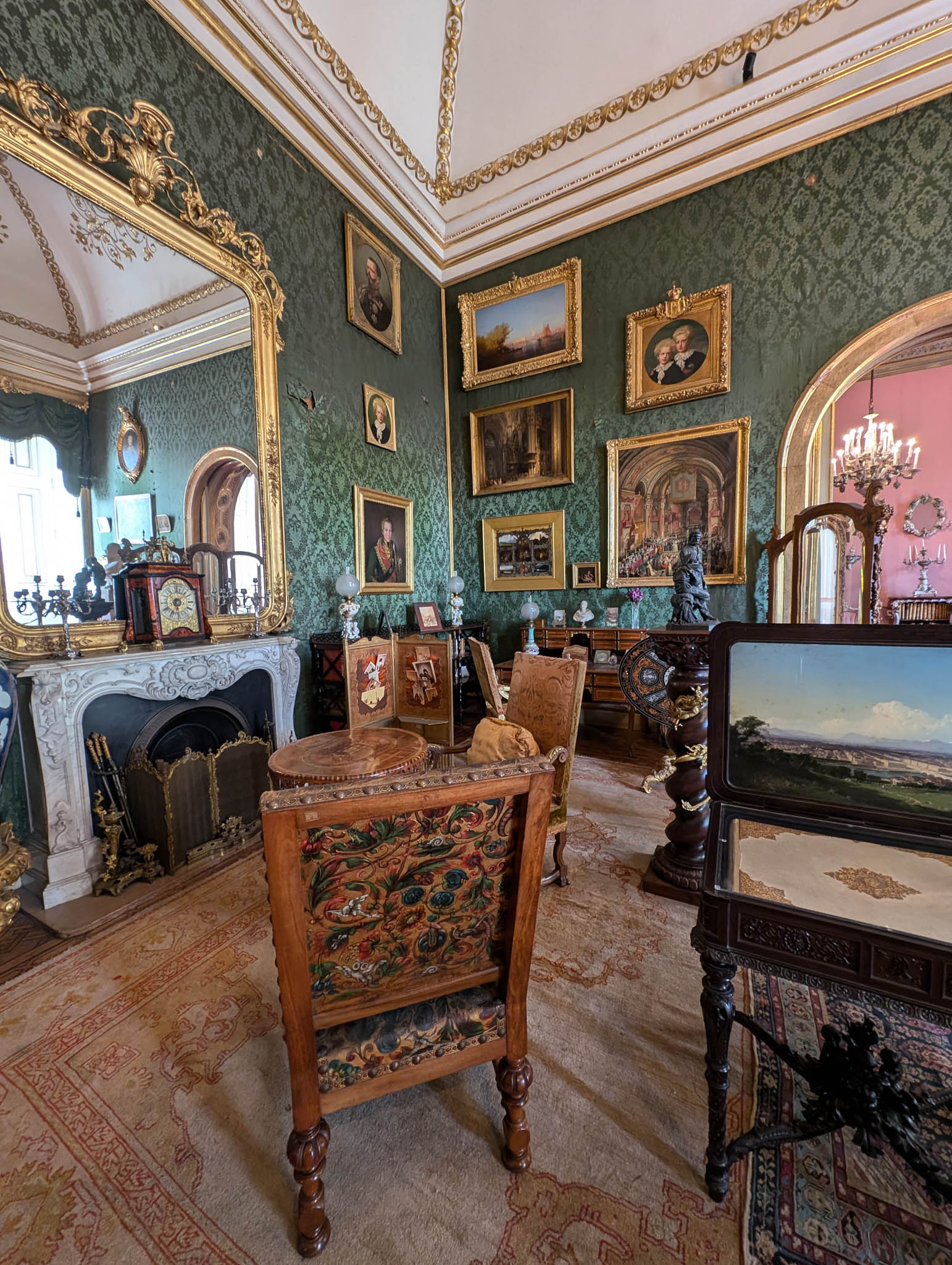
The large painting on the wall of the Green Room dates to 1876 by Joseph-Fortuné Layraud and depicts King Luís I, Queen Maria Pia, and the two princes in the Palace of Queluz gardens. The writing desk in Louis XV style (like a lot of the queen’s furniture) was crafted by her favourite cabinet maker, Paul Sormani.

The silk damask walls of the Saxe Room are woven with the mottos of the Houses of Braganza and Savoy. The painting on the right wall was a gift to the queen from the artist, Francisco José de Resende, and the girl in prayer is believed to be his daughter. The portrait of Victor Emmanuel II in hunting outfit may be based on a photograph. The desk against the right wall contained papers of the Queen related to everyday duties such as expenses, her dressmaker, charities she was connected with, and articles about the princes.

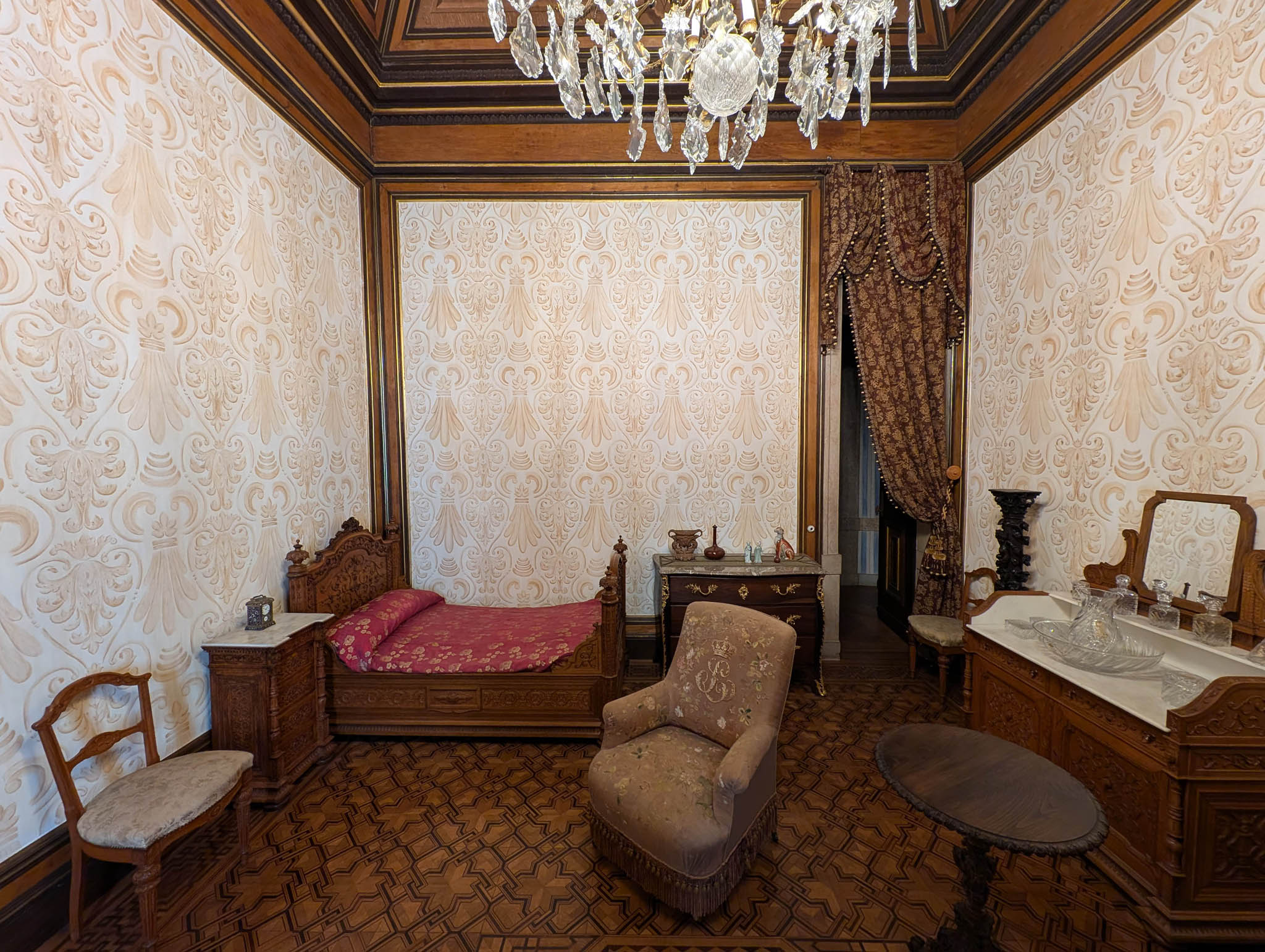
A three-year-old Prince Carlos makes an appearance in a portrait to the right of the gorgeous Napoleon III-style canopy bed in the Queen’s Bedroom.

The adjoining room served as a dressing room for the queen and included a bathroom towards the rear that featured some of the latest hygienic additions of the time, influenced by trends in Britain.

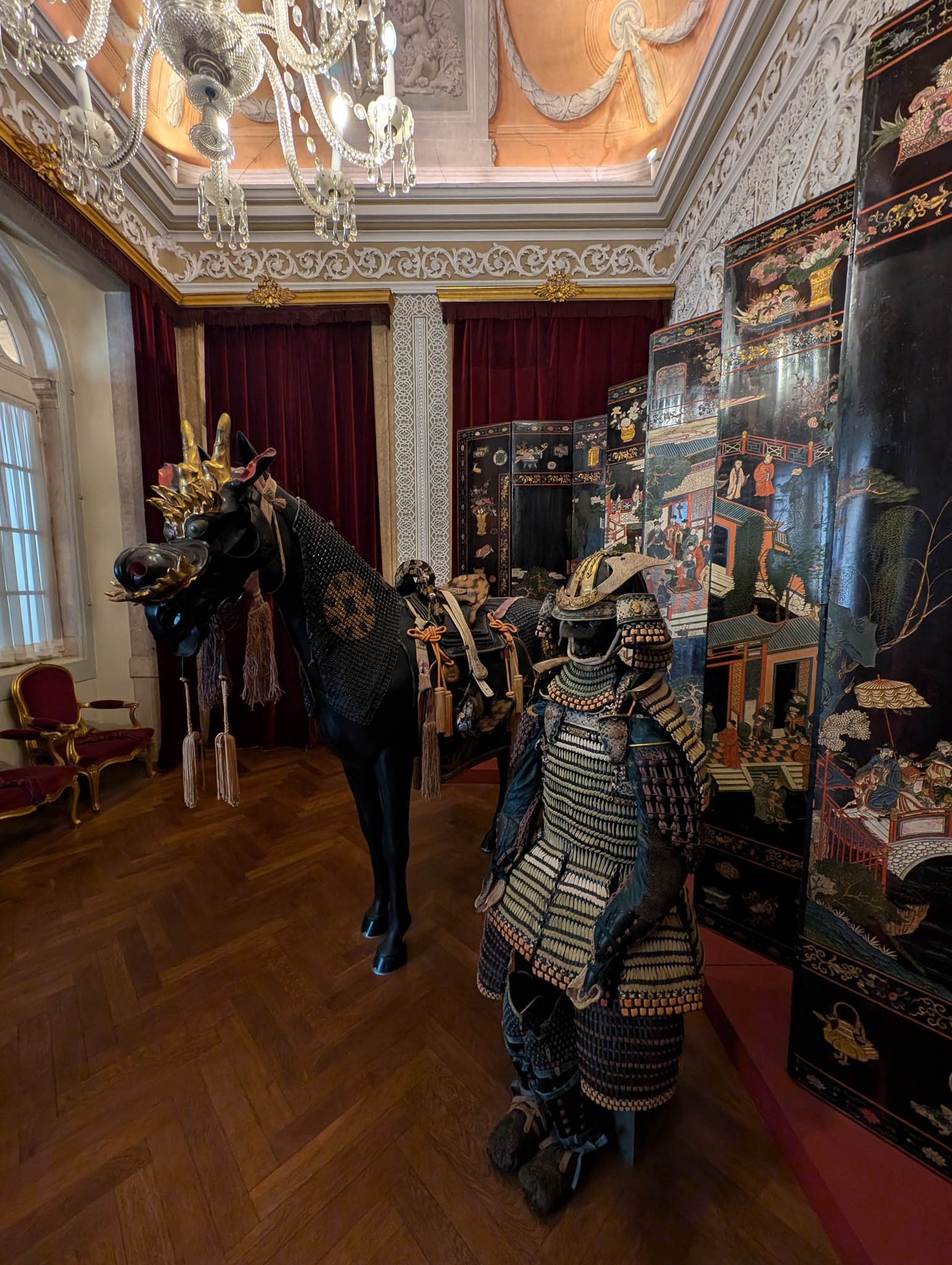
You can usually expect to find Asian influences in royal residences and stately homes particularly if the country they’re in engaged in a little bit of colonialism in its past. One room contained Samurai armour and a horse harness with the latter dating to the seventeenth century and the former a century later. The twelve-panel folding screen here is Qing Dynasty, dated from 1622-1722.


The commemorative jar on the table below, dated 1887, is for the “Friendship and Trade Treaty” between Portugal and China regulating sovereignty of Macao.

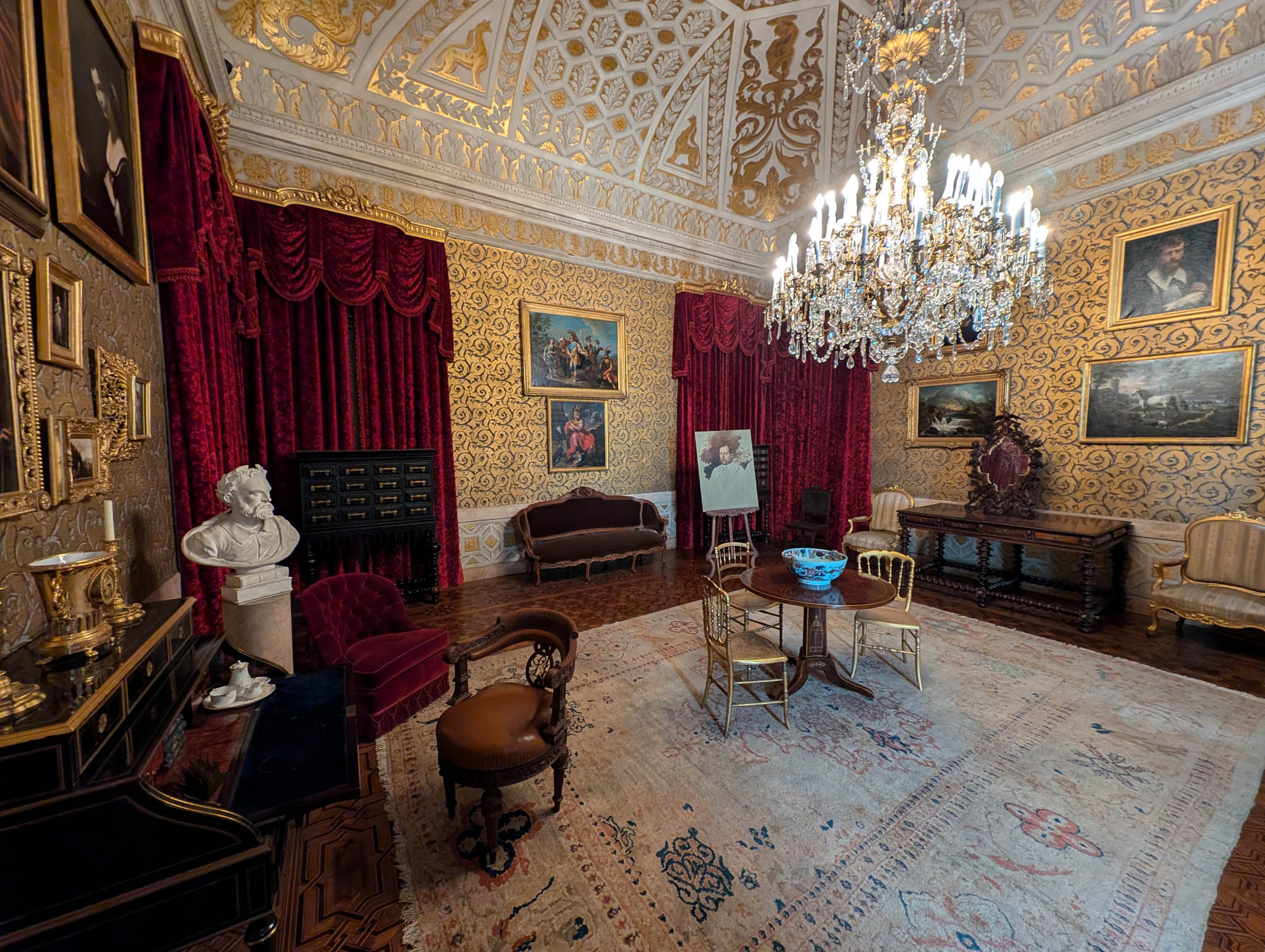
The seating in the room below is Brazilian rosewood and was made by Napoléon Quignon, cabinetmaker and supplier to the French imperial house.
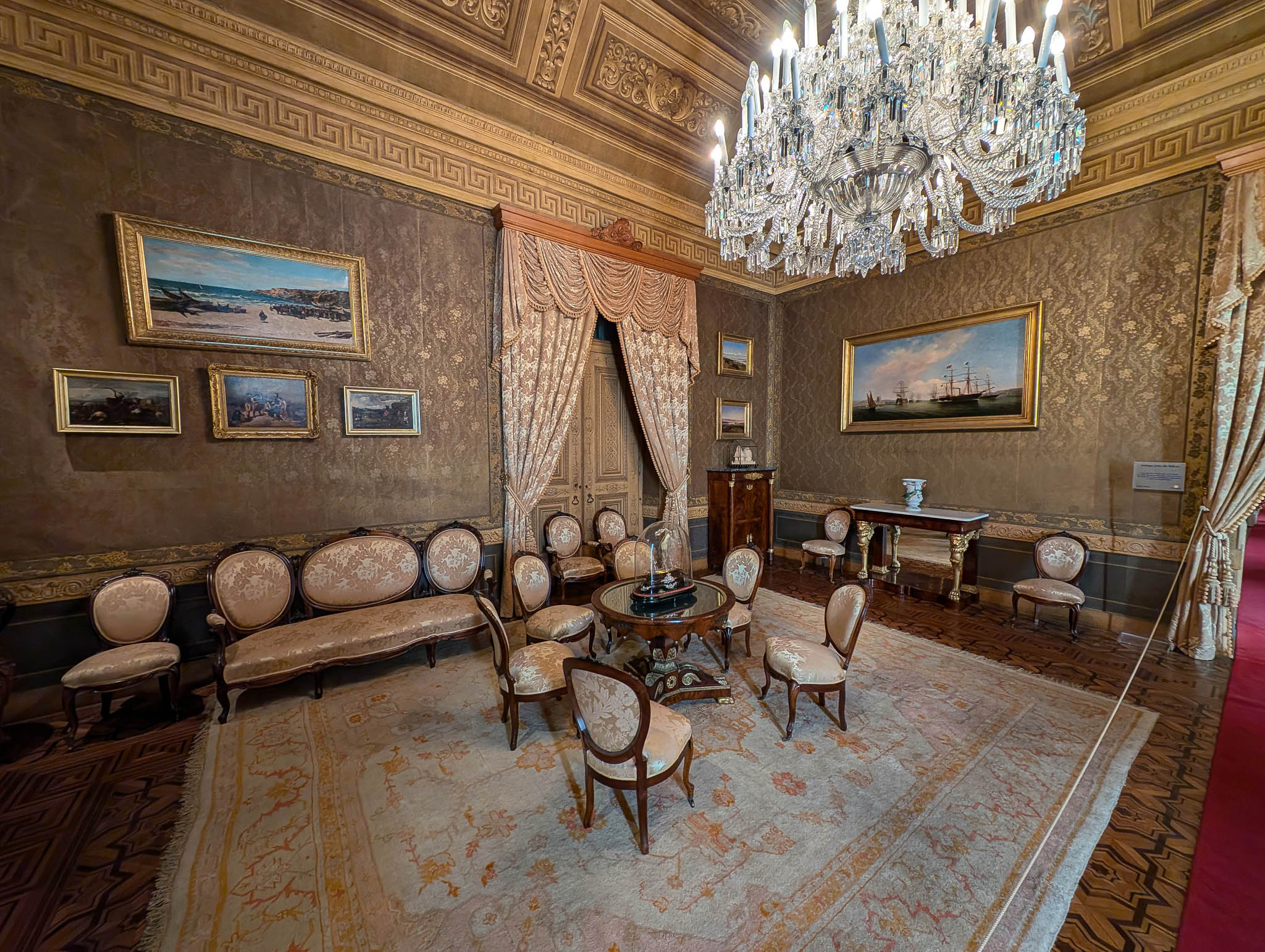
An 1880 portrait of Queen Maria Pia dominates the wall in a room filled with 18th century furniture with sea motifs including dolphins, anchors, and shells. It’s believed, but not confirmed, that the furniture was aboard the Principe Real, the ship that took João VI to Brazil in 1807 when the royal family fled to Brazil to escape Napoleon.
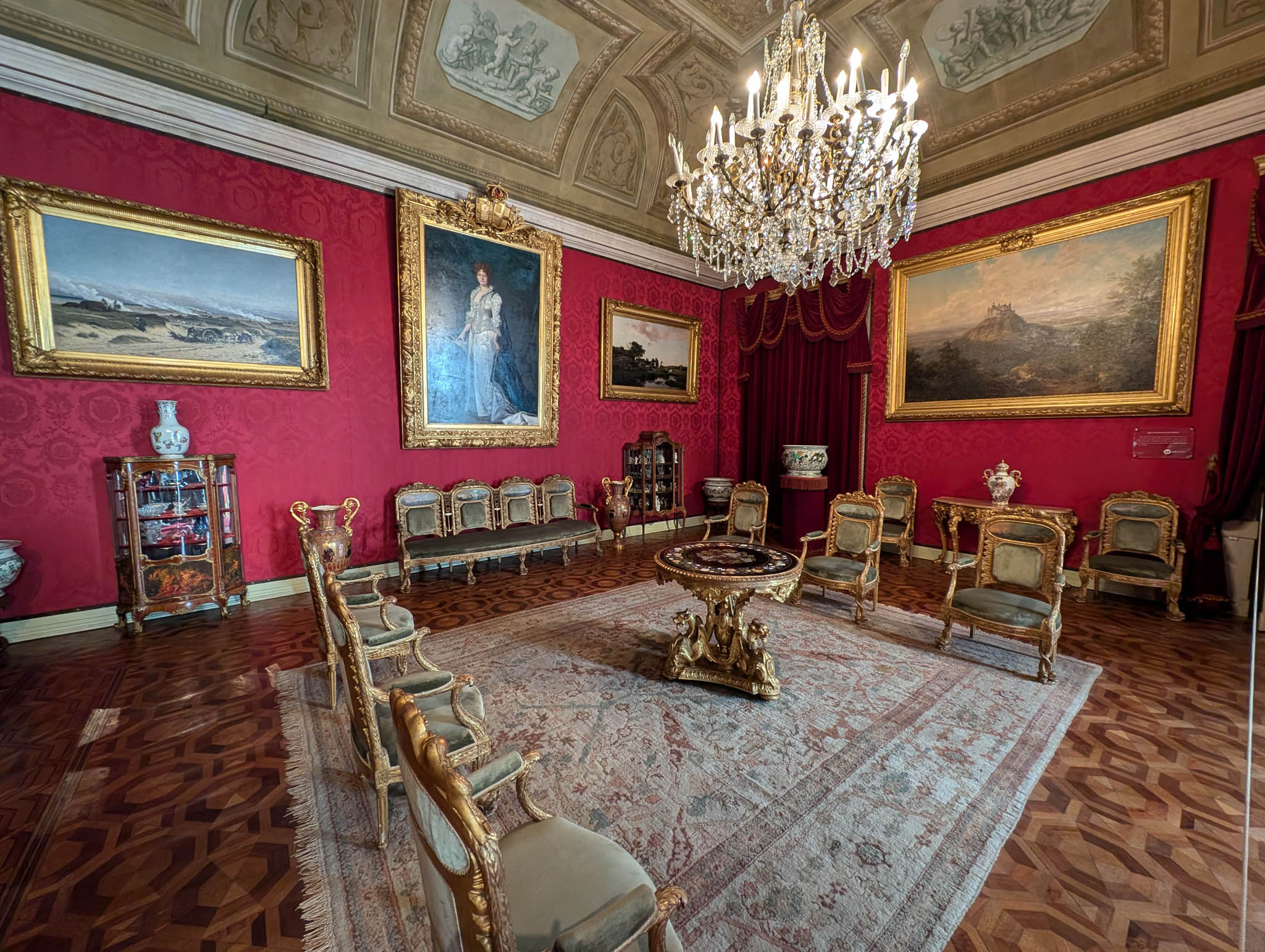
A couple of interesting paintings here. On the left is a Zouave, an Algerian soldier fighting in the Imperial French Guard under Napoleon III against Austria, and considered a romantic character in art at the time. Opposite is a rare portrait of Emperor Pedro II of Brazil.

The only known surviving set of four tapestries from the Turkish Customs series adorn the walls of the room in the Aduja Palace below. The portrait on the wall is that of Pedro V when he was sixteen during a visit to England. The chandelier has a main stem made from a bronze amphora with four handles.

The four vases you can see in the following image are two pairs of Qing dynasty pieces, dated 1715-1720.

We now reached some of the grandest of spaces on the upper floor of the palace, starting with the Throne Room. A 180-lamp chandelier dominated the room. The two thrones are eighteenth century, made from chestnut, and gilded.

The Banqueting Hall was a very clean, light space, absolutely fitting for dining and entertaining in style. The one hundred and eighty chairs were ordered in 1903 by King Carlos I for a visit of Britain’s King Edward VII.

The remaining cavernous rooms were used for various official functions and balls.

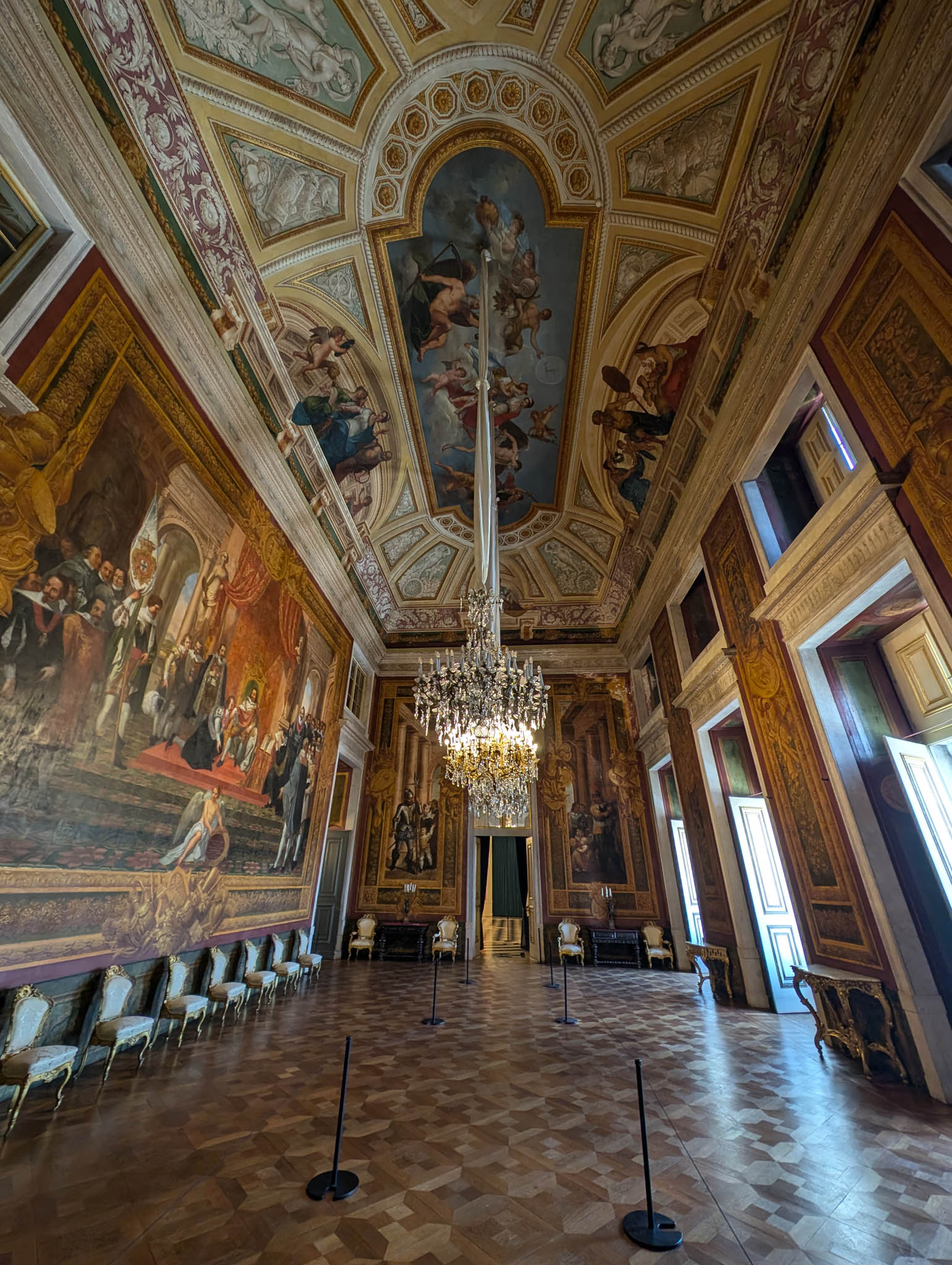
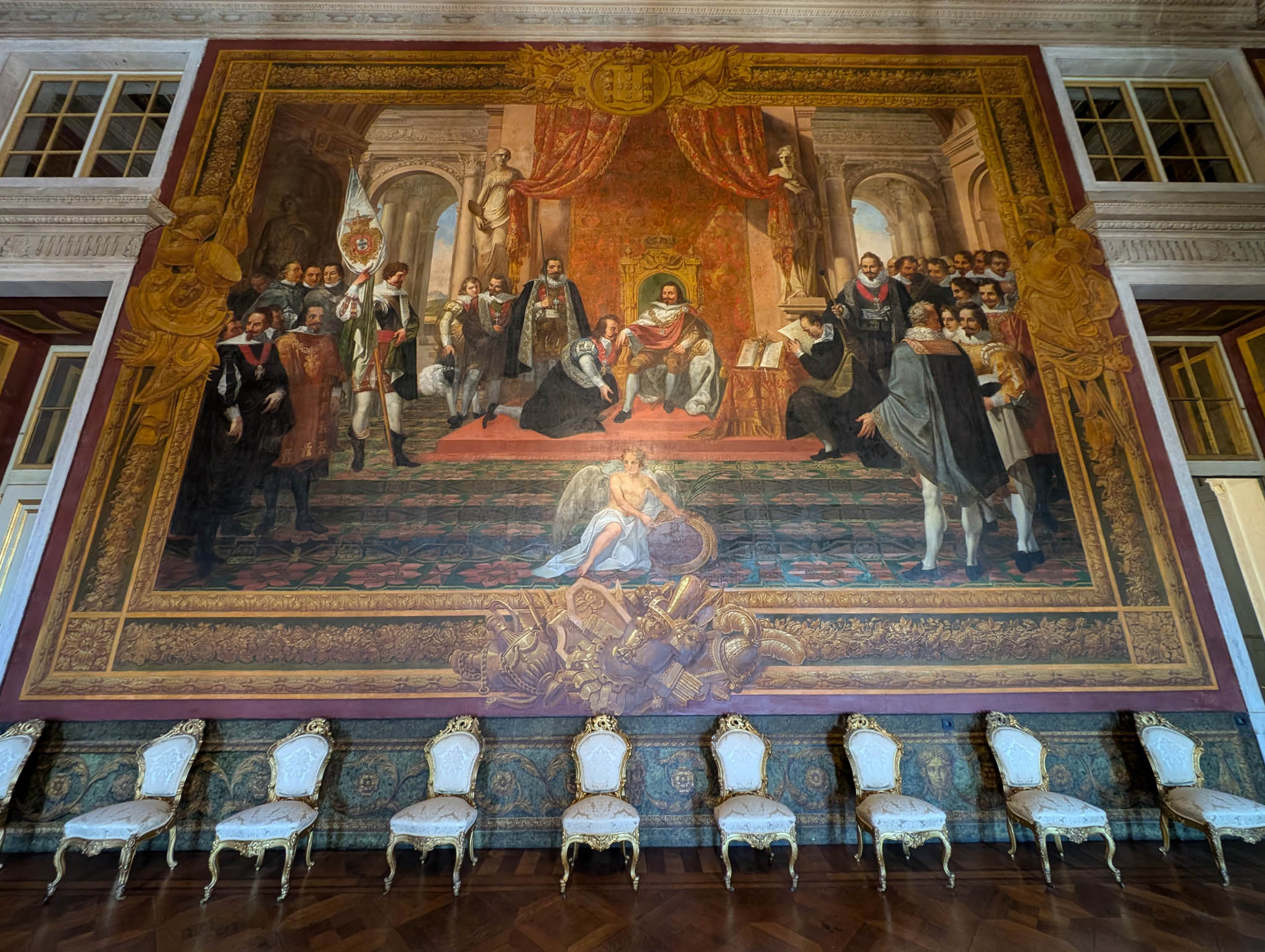
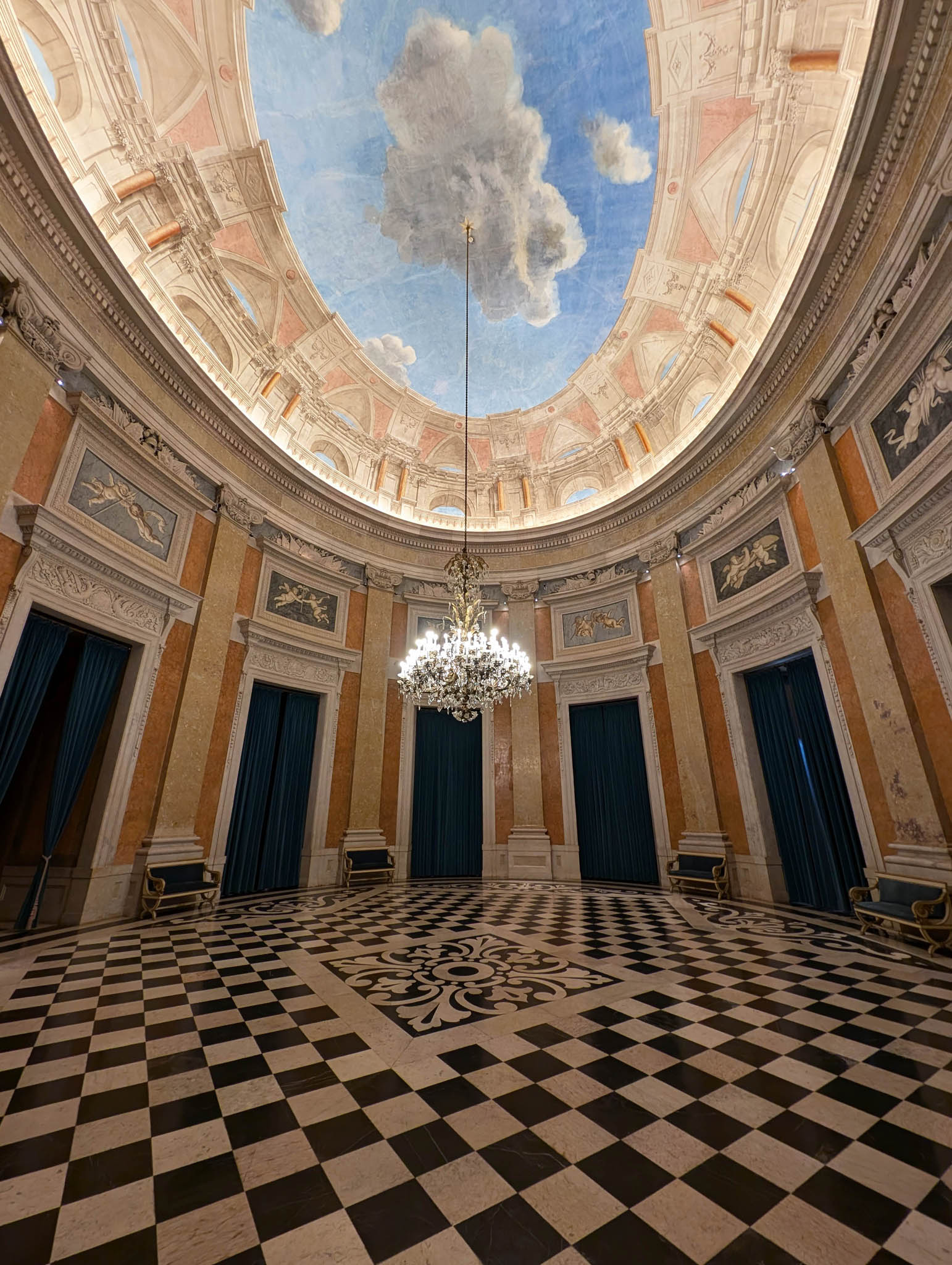

And that brought most of our visit to the Palace of Aduja to a close, and hopefully you’ll agree that it looks absolutely stunning and is well worth a trip to see if you’re ever in Lisbon. However, since 2022 you can now also pay to pop next door and see the Portuguese Crown Jewels in the Royal Treasury Museum, and we did.
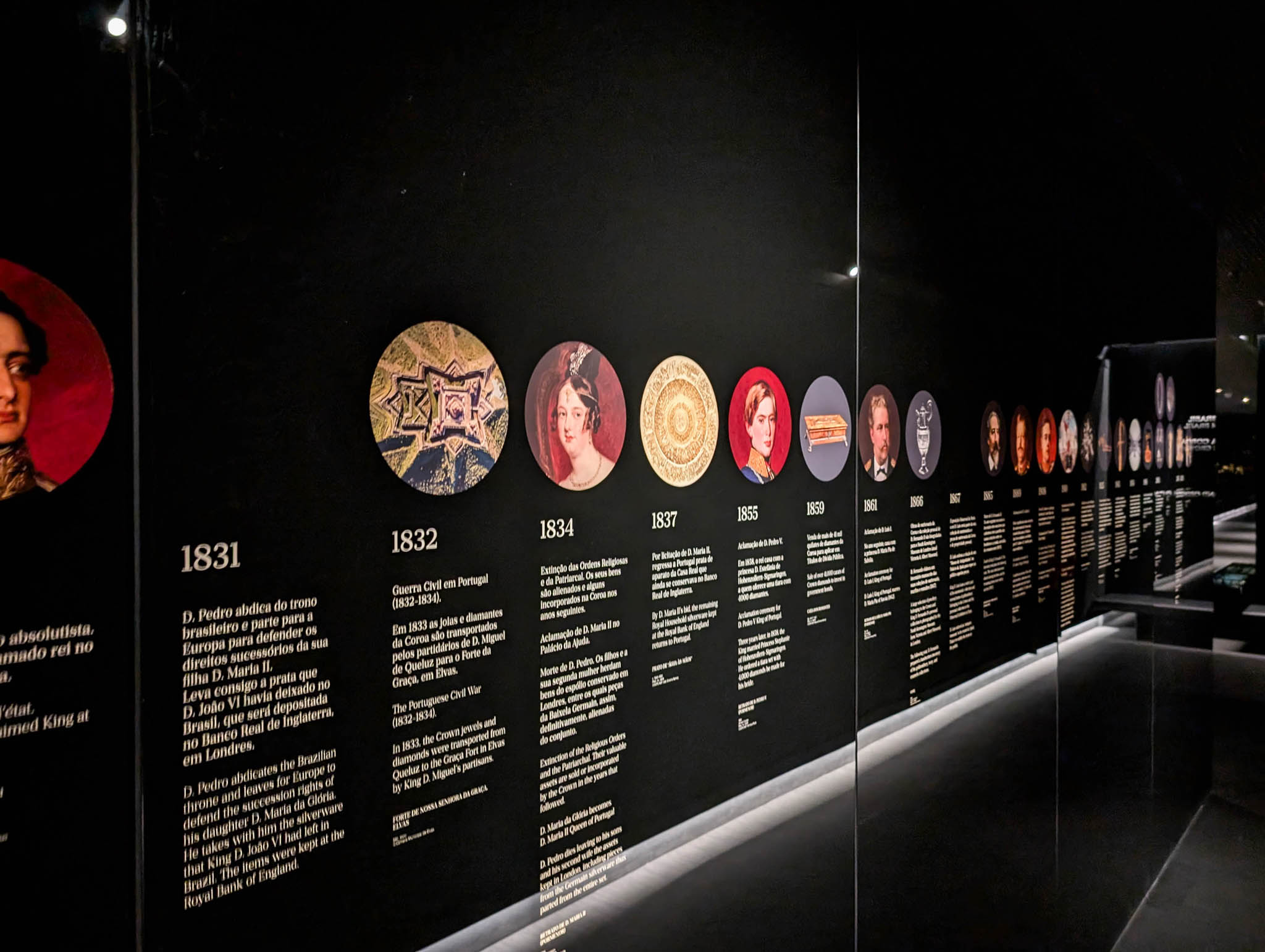
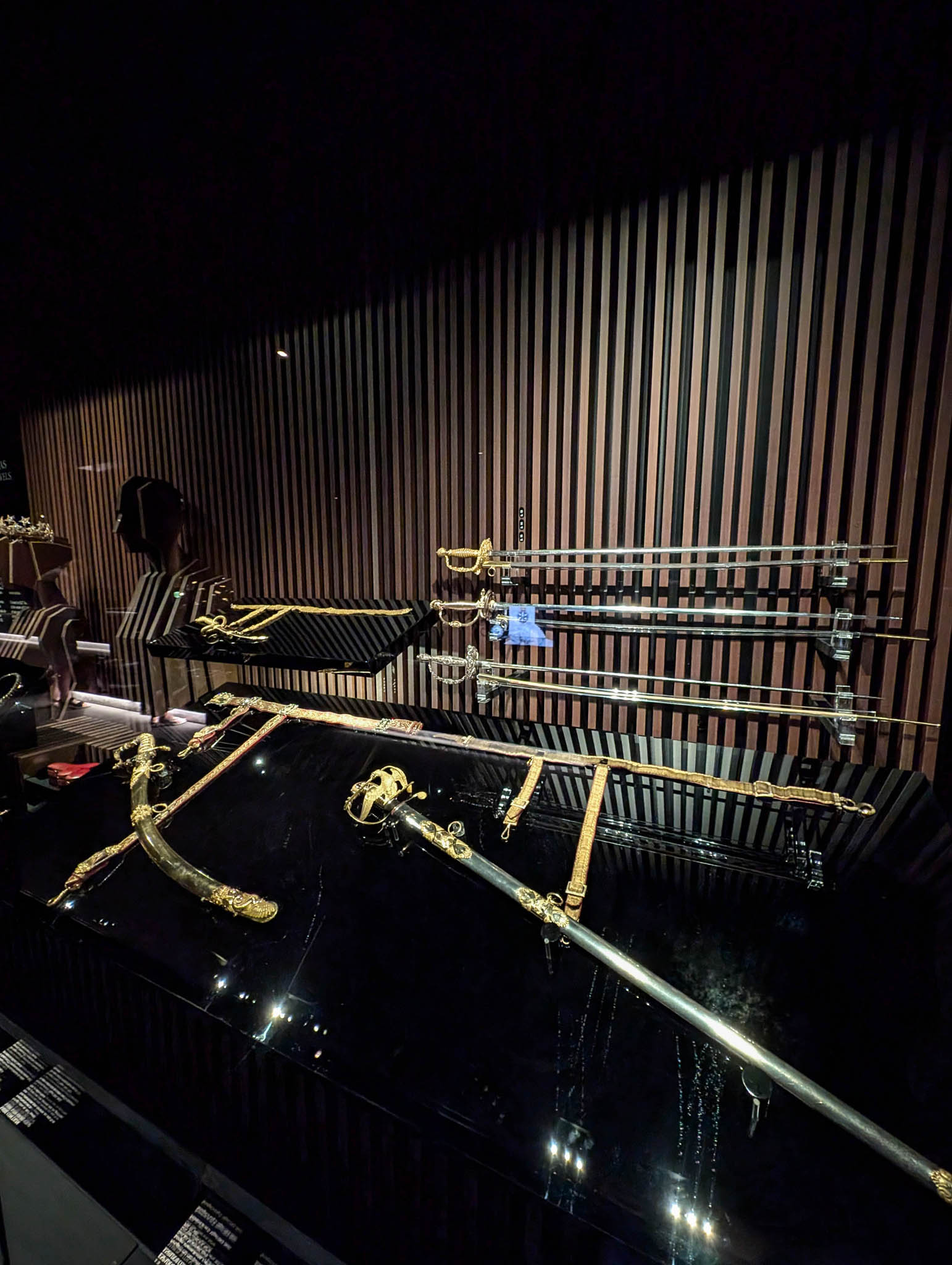
One of the most interesting aspects of the museum was how very modern it was, deeply contrasting with the palace’s elegant and historical feel. Blacks, chromes, ramps, lots of security (understandably), and some lovely pieces of jewellery and silverware. Most of the jewels on display were those produced during the reigns of João VI and Luís I. A lot of crown jewels had been destroyed or stolen during the 1755 earthquake and in 2002 six of the most important jewels were stolen during a robbery at a museum in the Hague where they were on loan.

My wife was very taken with the emerald bow. Her wedding ring is an emerald and it would have worked well with the bow, I’m sure, but no, we can’t afford it, as I made clear at the time.

The Diadem of the Stars and the Necklace of the Stars were commissioned for Maria Pia.



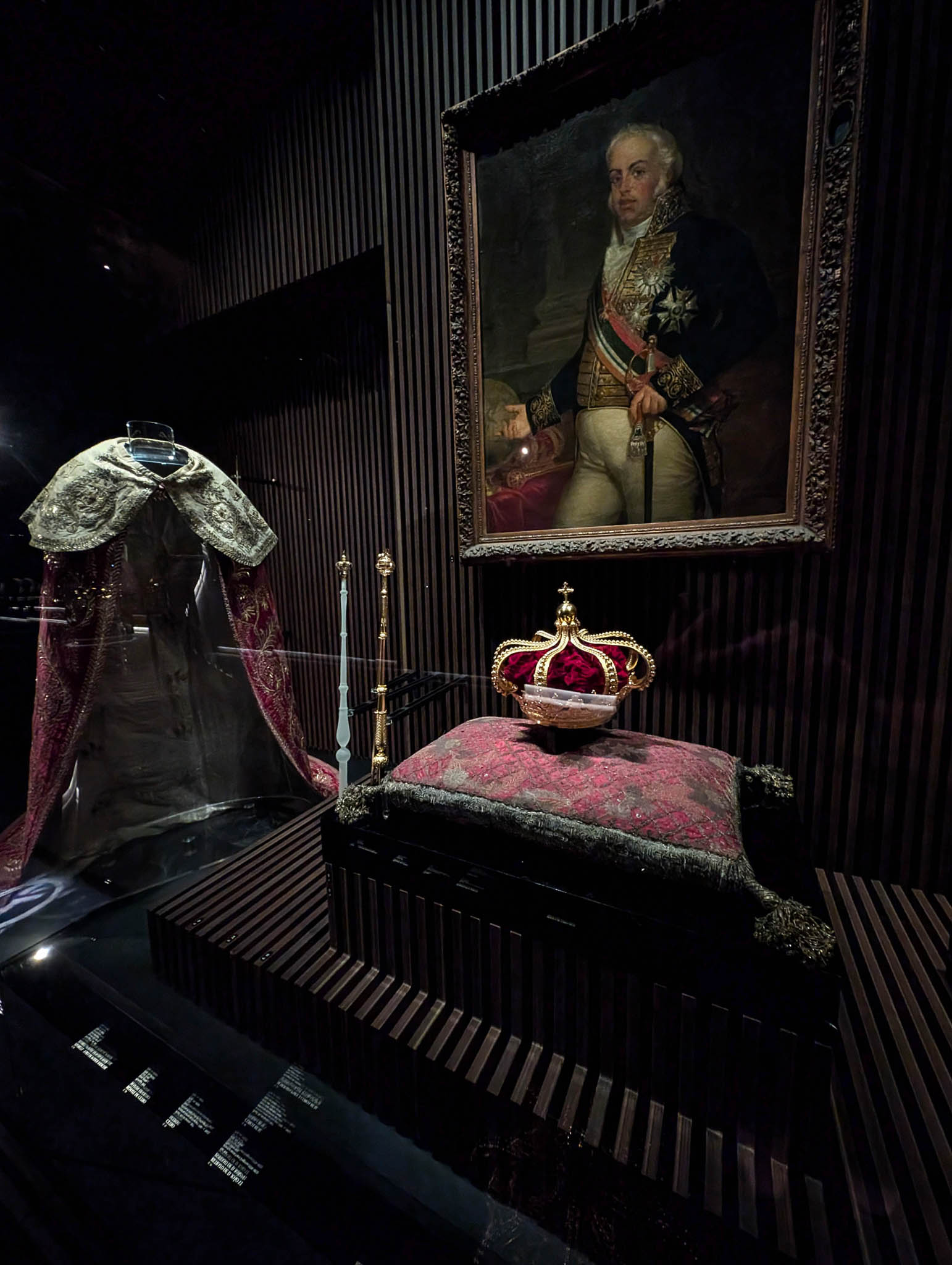
The Crown of João VI is the only surviving Portuguese crown, made in 1817, present at the coronations of subsequent kings, but never actually worn. In fact, no monarch of Portugal ever wore a crown following the consecration of the crown as a symbol to the Virgin Mary in 1646. You can also see the Mantle of João VI below.


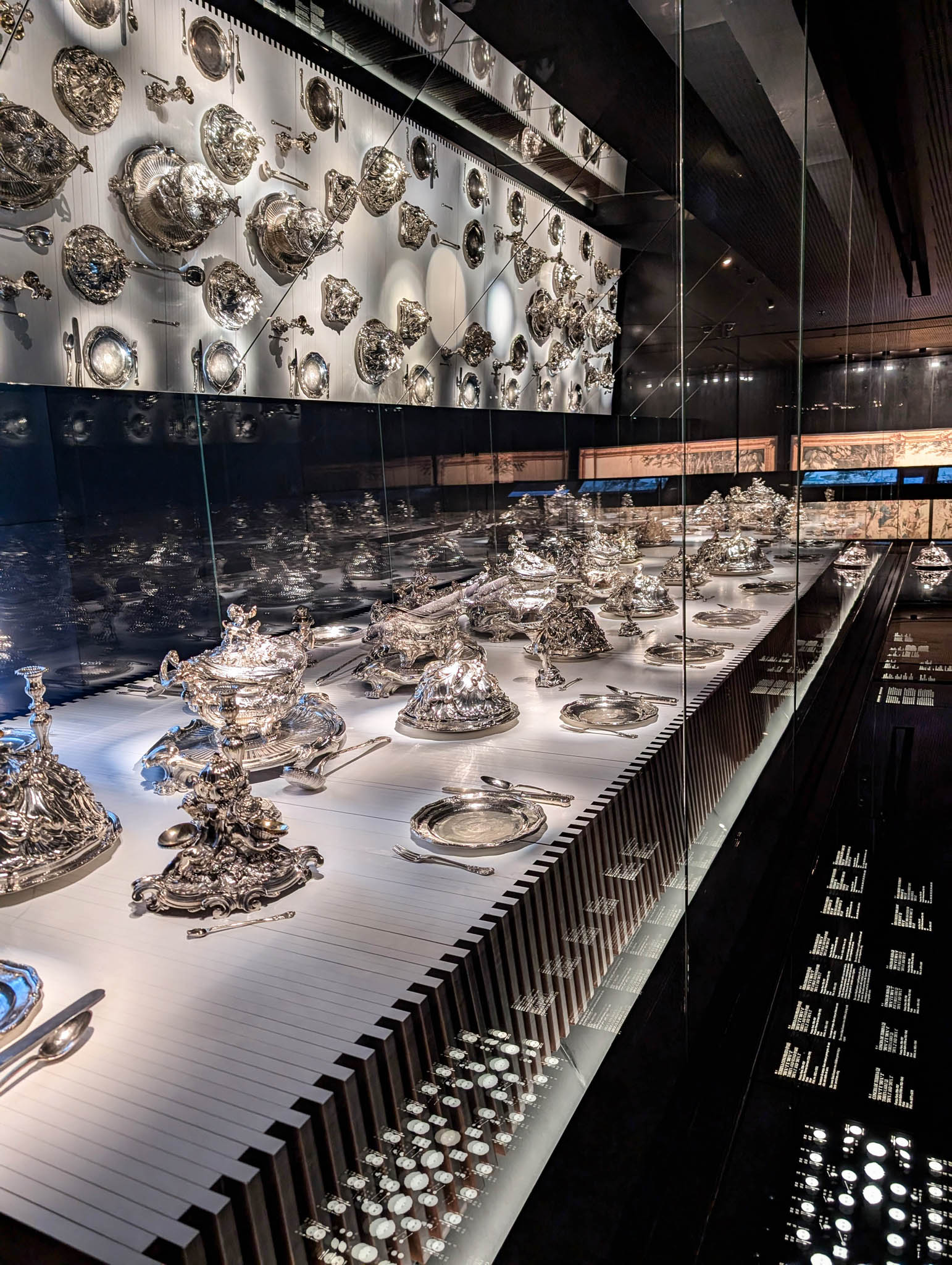
Something my wife was also very interested in was all the silverware, taking plenty of photographs. This was mostly just to send to her dad who collects antique silver items and that was largely just to make him jealous.


In the next post in this series we’ll make a little more use of the Hop-On, Hop-Off bus and plenty of use of our feet as we make our way back to the ship along the shore of the River Tagus.