When you think about Bogart and Bergman then you think Casablanca. When you think about misquoted movie lines then you think Casablanca. When you think about crowded drinking establishments filled with more than their fair share of loud-mouthed, small-minded people trying to push right-wing ideologies and make life miserable for foreigners then you think Wetherspoons, but you also think Casablanca.
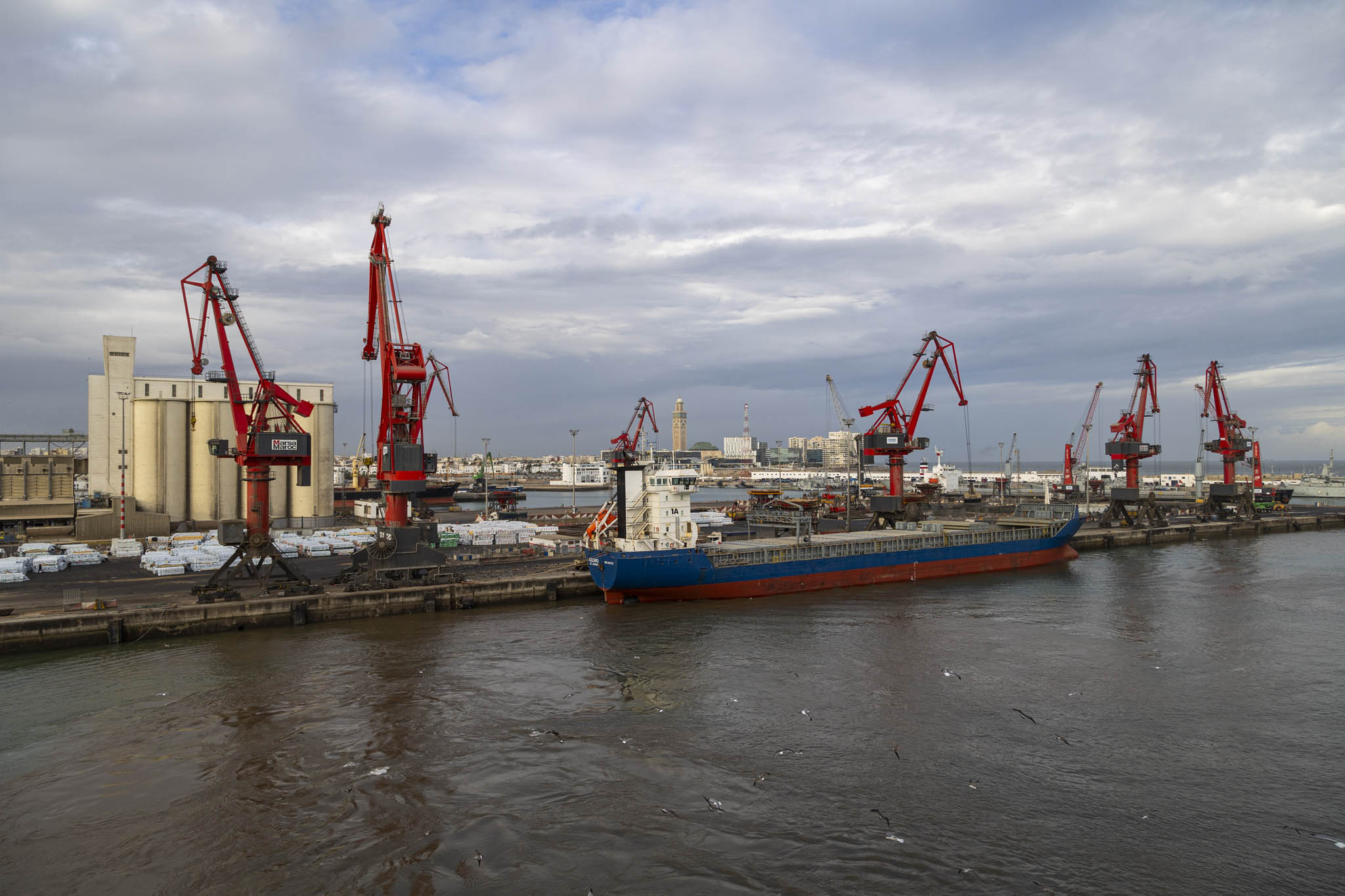
This, though, was no movie. We drew back the curtains to our cabin – after we were dressed; you only make that mistake once – to the industrial port of Casablanca.
My wife and I don’t mind an industrial port when we’re cruising, especially if it’s one with brutalist buildings or any loading and unloading activity. Look, we’ve all got interests that other people think are weird. What about you and that thing you do when you think nobody’s looking? Yeah, exactly. We are perfectly happy to sit and watch the cranes move, and listen to that little buzz of commercial enterprise that keeps the world ticking by, content to read a book and glance up at a distant clang and clatter of metal on metal signifying who-knows-what. However, this was a new port for us, and a new country for my wife, and also a new continent for my wife too, and so we had plans away from the hustle and bustle.
The closest my wife had come to Africa before had been views of it from a distance. Once from atop the Rock of Gibraltar, and once a little nearer while cruising through the Suez Canal. I had not only been to Africa before but it had also been Morocco on holiday in the 1980s, but Casablanca itself would be new to me, and even if it hadn’t been then enough decades had passed that it would have felt like it.
We’d booked an excursion through Princess Cruises as we wanted to make the most of our time in Morocco and didn’t want to risk any issues with getting back to the ship as we’d heard that traffic could be problematic. It would be. Our plan for the day would take us to see some highlights of Casablanca but to start with we would be heading north along the coast to Morocco’s capital city where in addition to a tour we’d be having a traditional Moroccan lunch.
First off, we needed to walk through part of the commercial port area of Casablanca to find our tour bus and there was actually a point of interest there for me to photograph. No, not a crane or a truck being filled with grain. I mean, I do have those photos but despite all the evidence to the contrary I do employ some level of editing for this website.
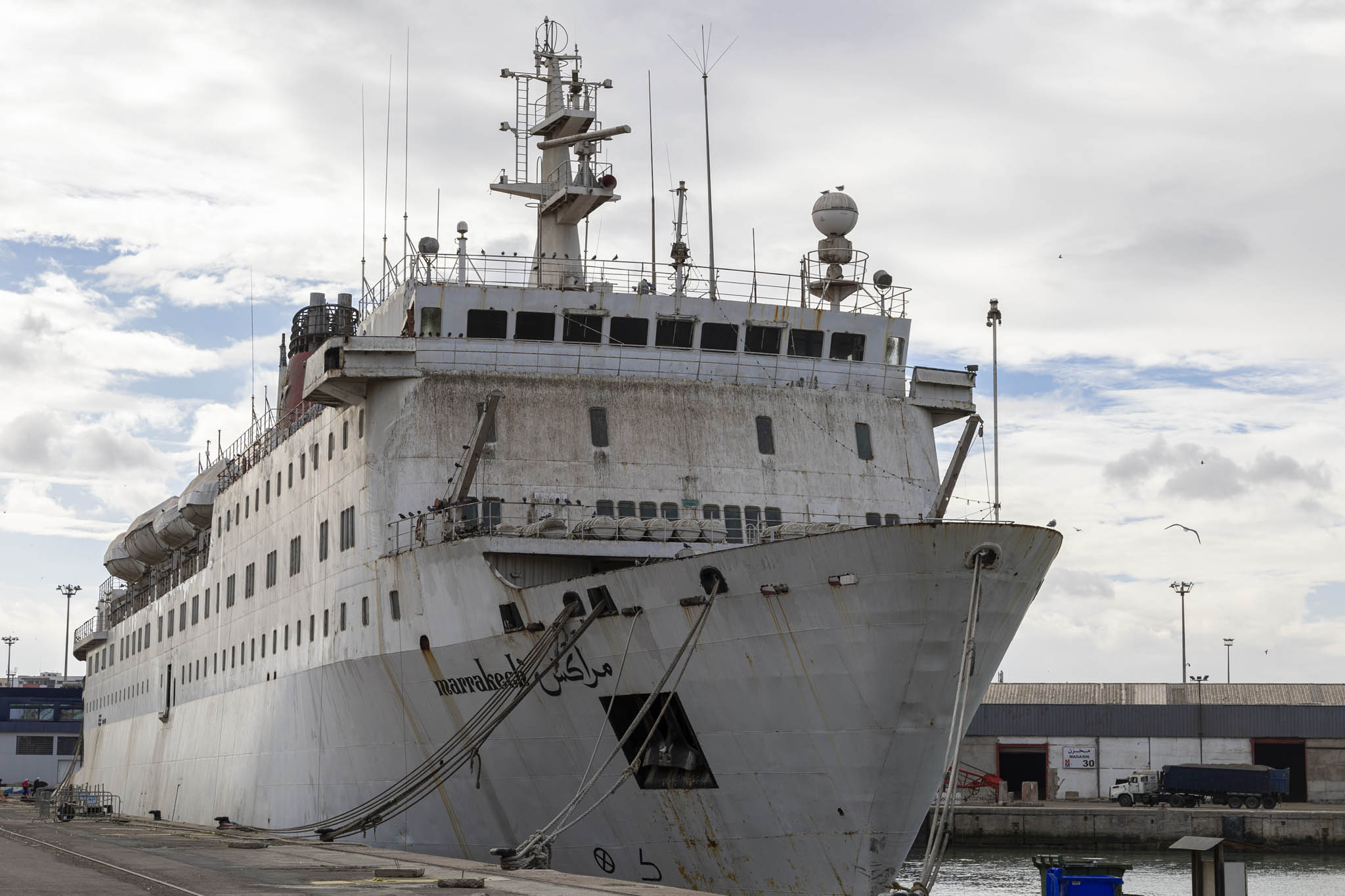
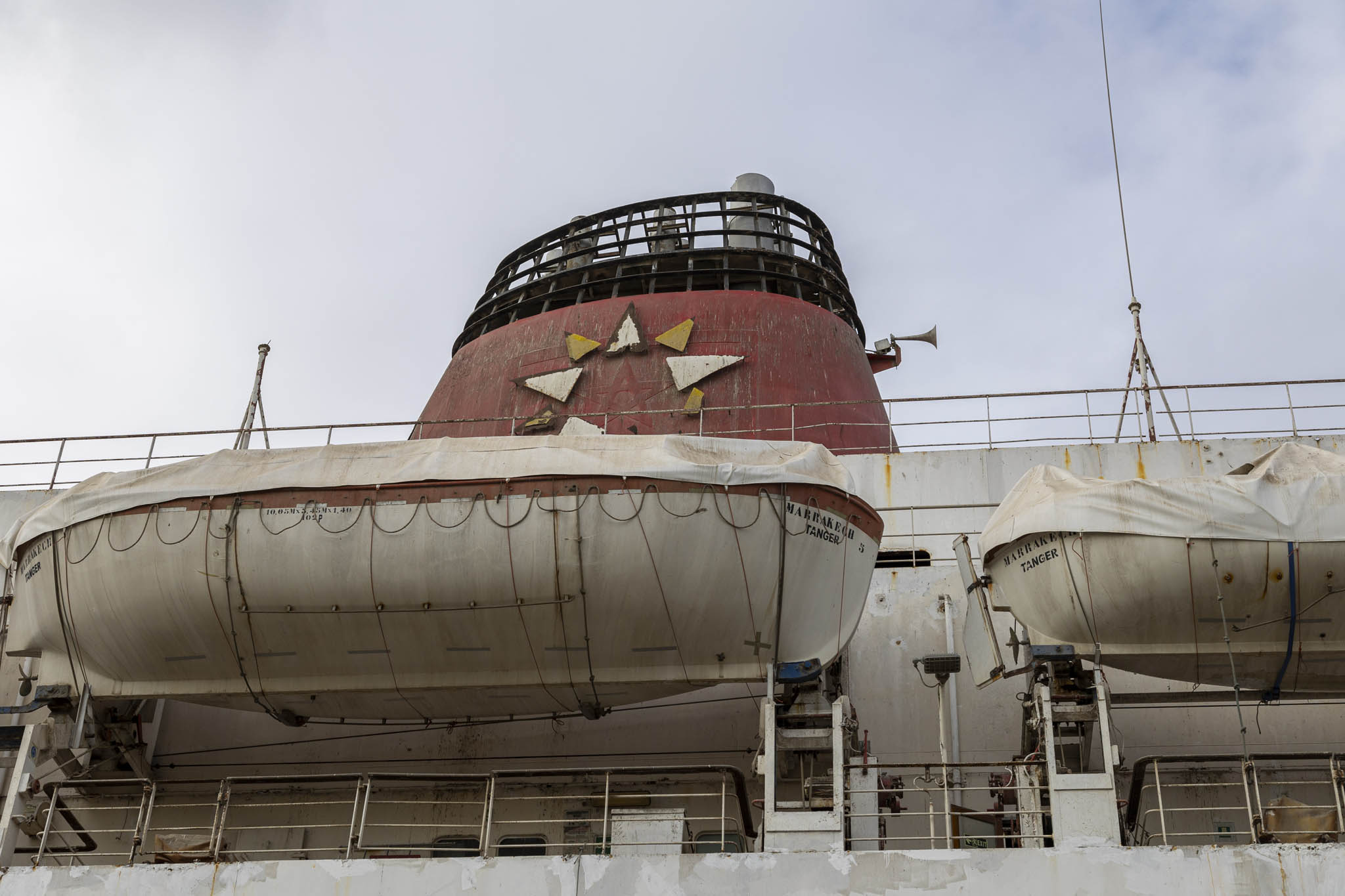
The decrepit hulk of the Marrakech caught our eye as we walked from Caribbean Princess to the port entrance. The ferry was purpose-built in the mid-80s to meet increased demand for a France to Morocco car and passenger service and, when the occasion warranted it, to act as the royal yacht of Morocco. She was built by the French shipyard of Chantiers de l’Atlantique which has also built ships for most of the major cruise lines at some time or other. Despite the apparent small size of her she was capable of carrying over 200 cars and 600 passengers when she operated, which she did up until 2013 when her parent company went into administration. She was sold at auction and moved to Casablanca where clearly some plan was in mind for her but she’s largely rotted in situ since then. This 2011 account about a trip aboard Marrakech from Sete to Tangier is absolutely fascinating for both the experience and the photos of the ferry’s interior spaces which look more 1980s than 21st century.
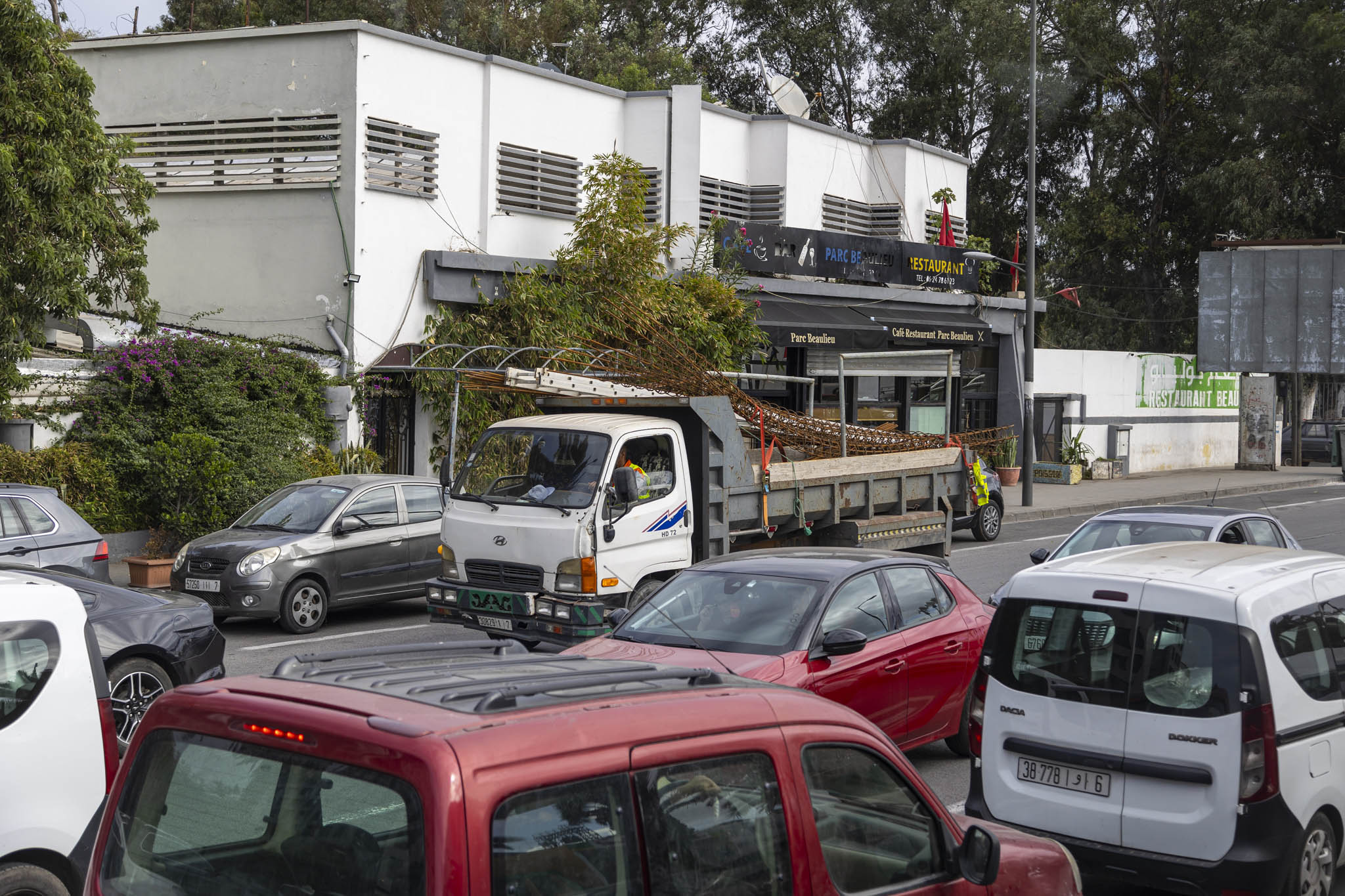
We found our bus, boarded, and set off for… the traffic of Casablanca. It was gridlock for long periods and at one point we saw one guy get out of a car at a junction then stand in the middle of the road to halt other vehicles largely paying not the slightest bit of attention to lights or road markings until such point as the driver of his car could move. He’d clearly got fed up of waiting for someone to show some consideration and common sense. We at least had the luxury of knowing that our bus was bigger and tougher than the cars around and they eventually moved out of the way enough for us to get to some more open roads.
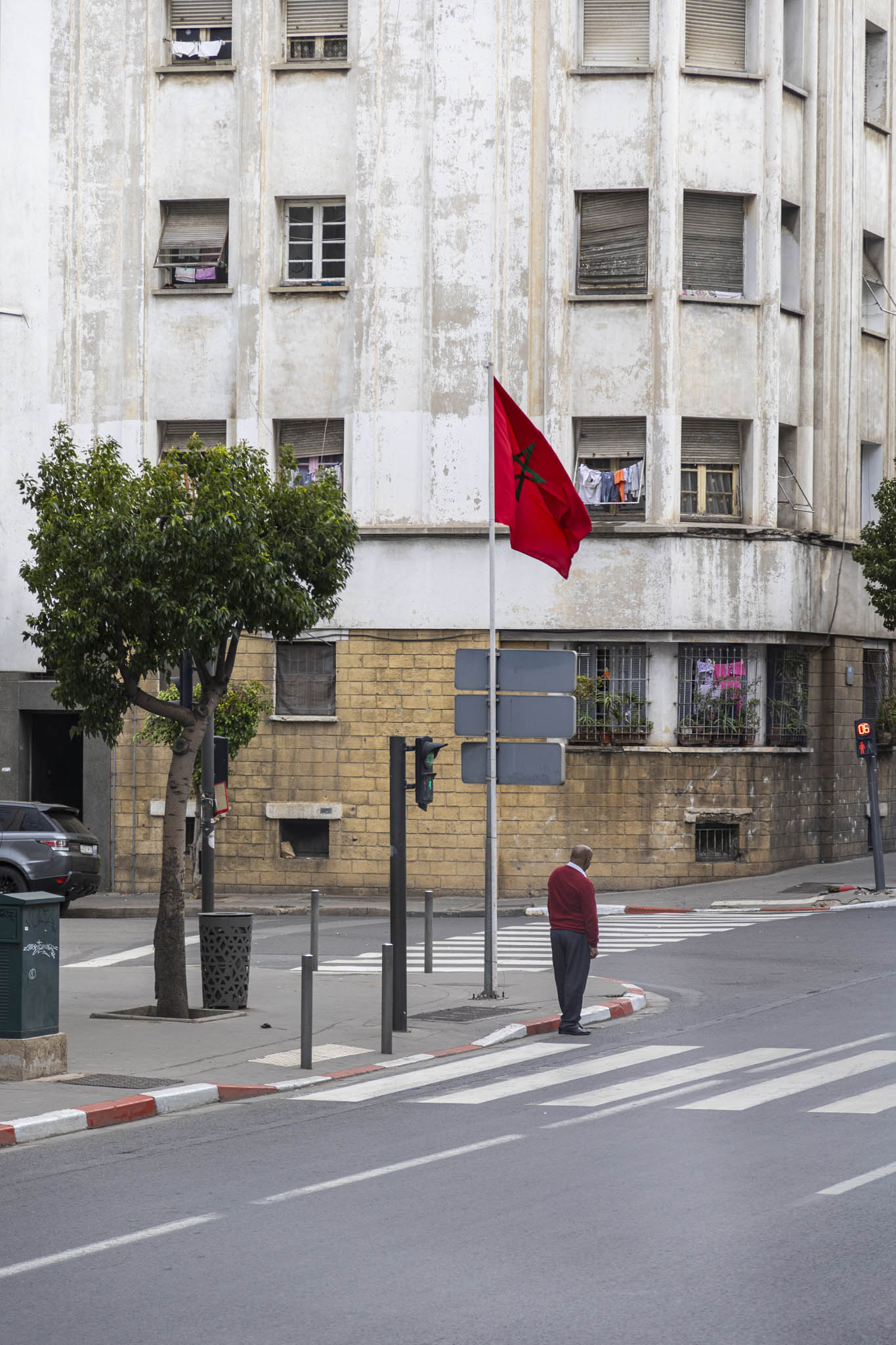
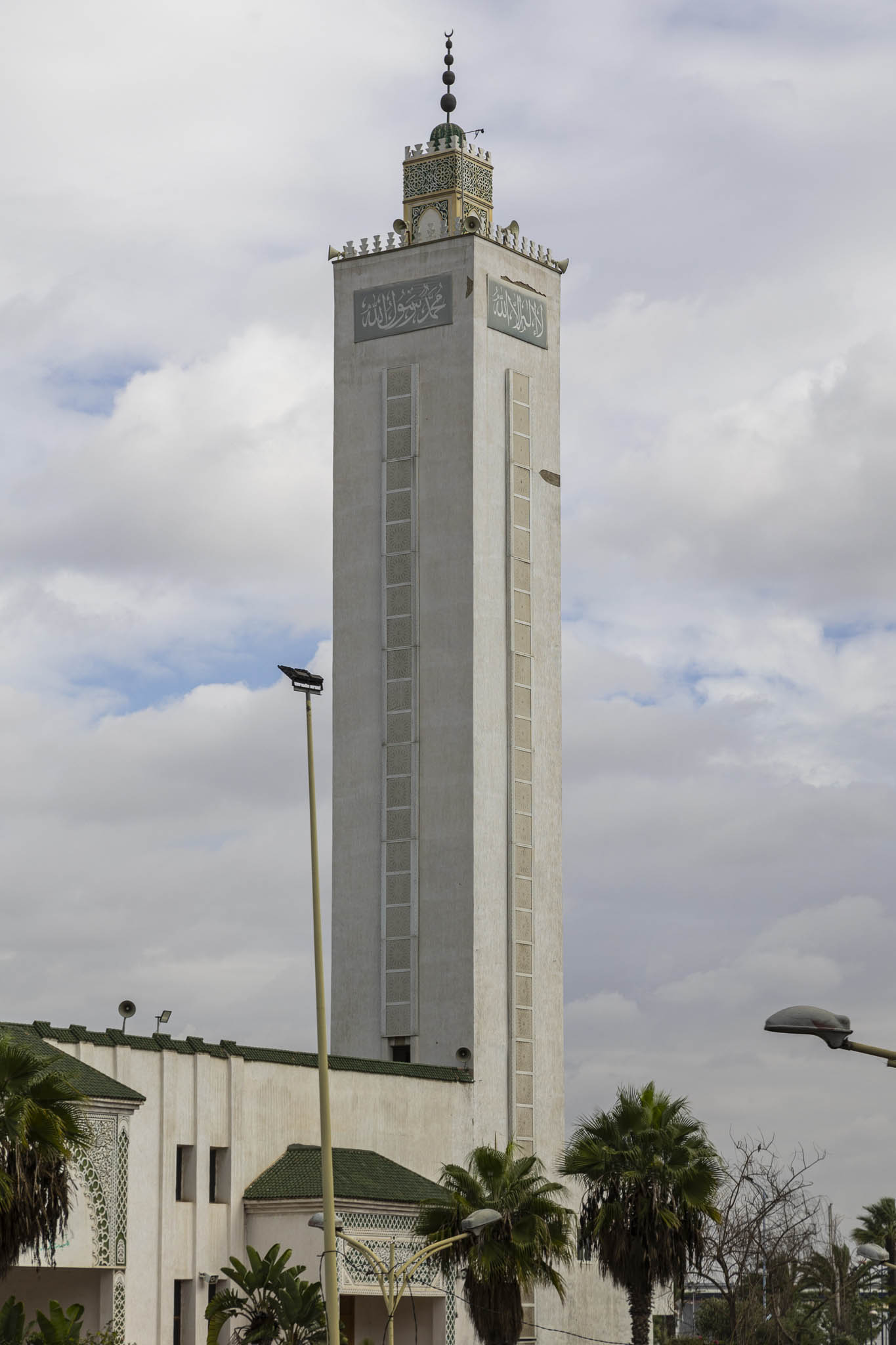
Things were far more sedate in terms of car numbers by the time we reached Rabat and there was a far cleaner feel to the environment. Our guide had explained that a lot of work had been taking place for the Africa Cup of Nations but Rabat is also just considerably smaller than Casablanca despite being the capital since 1956.
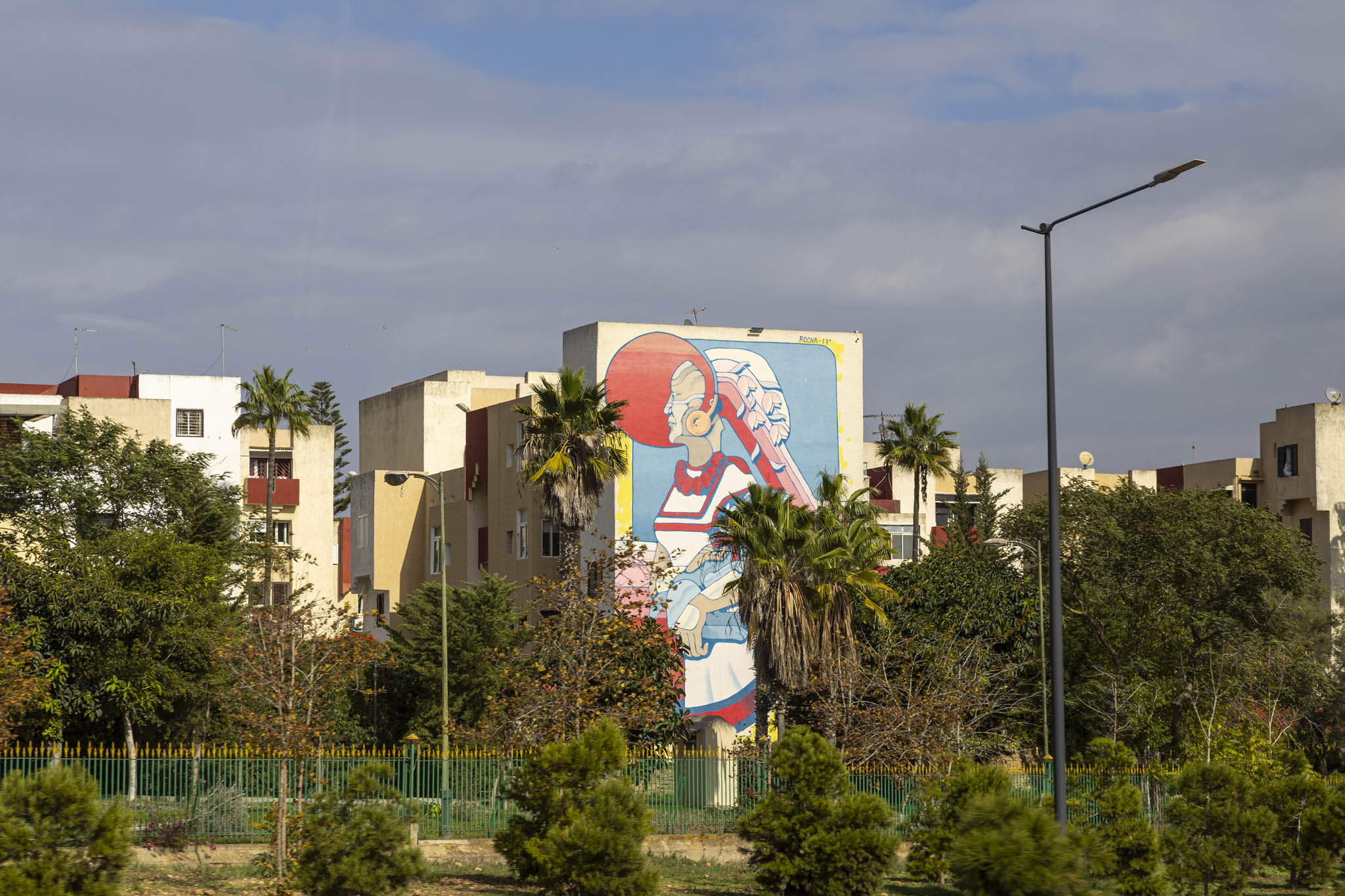
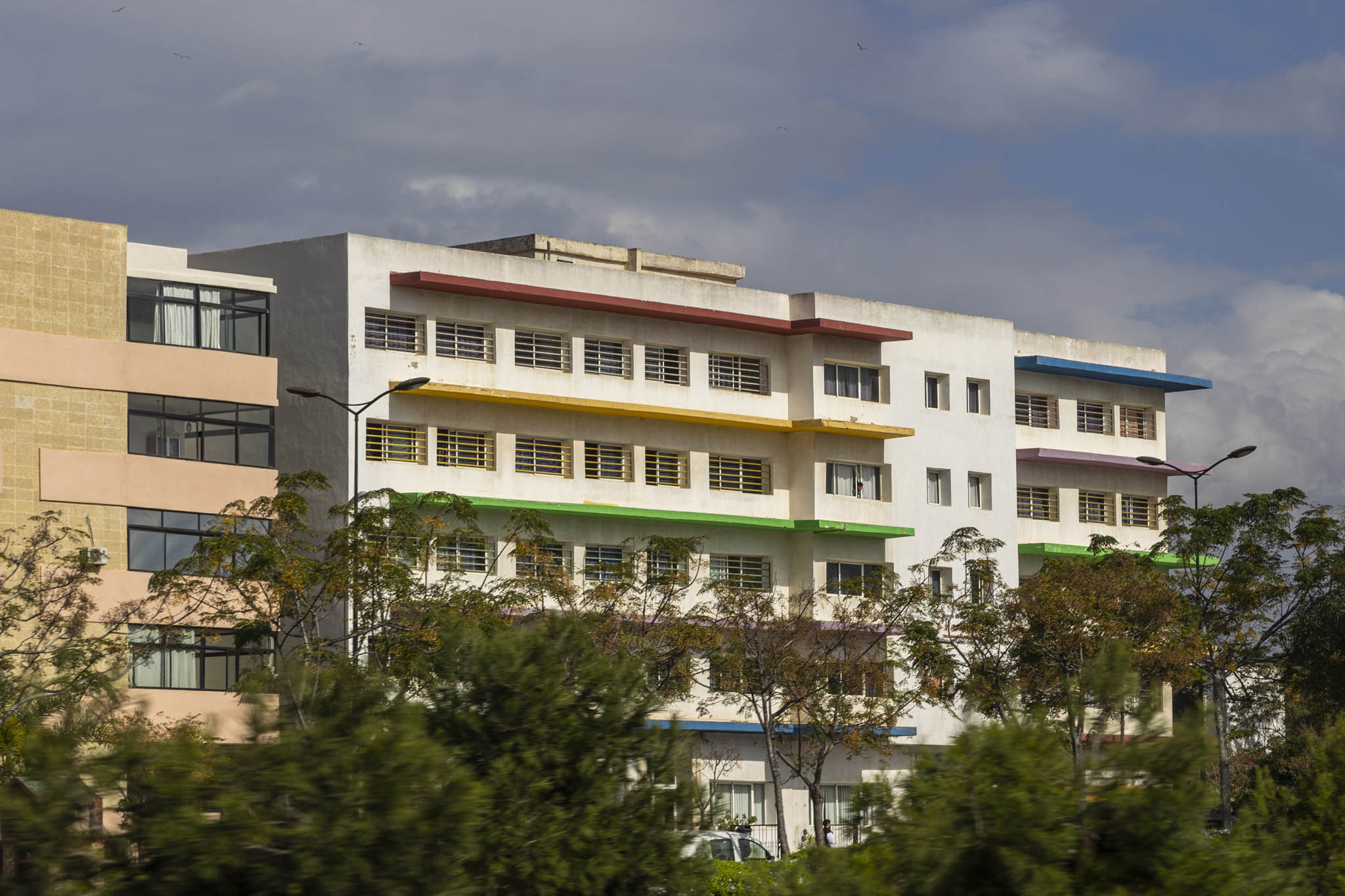
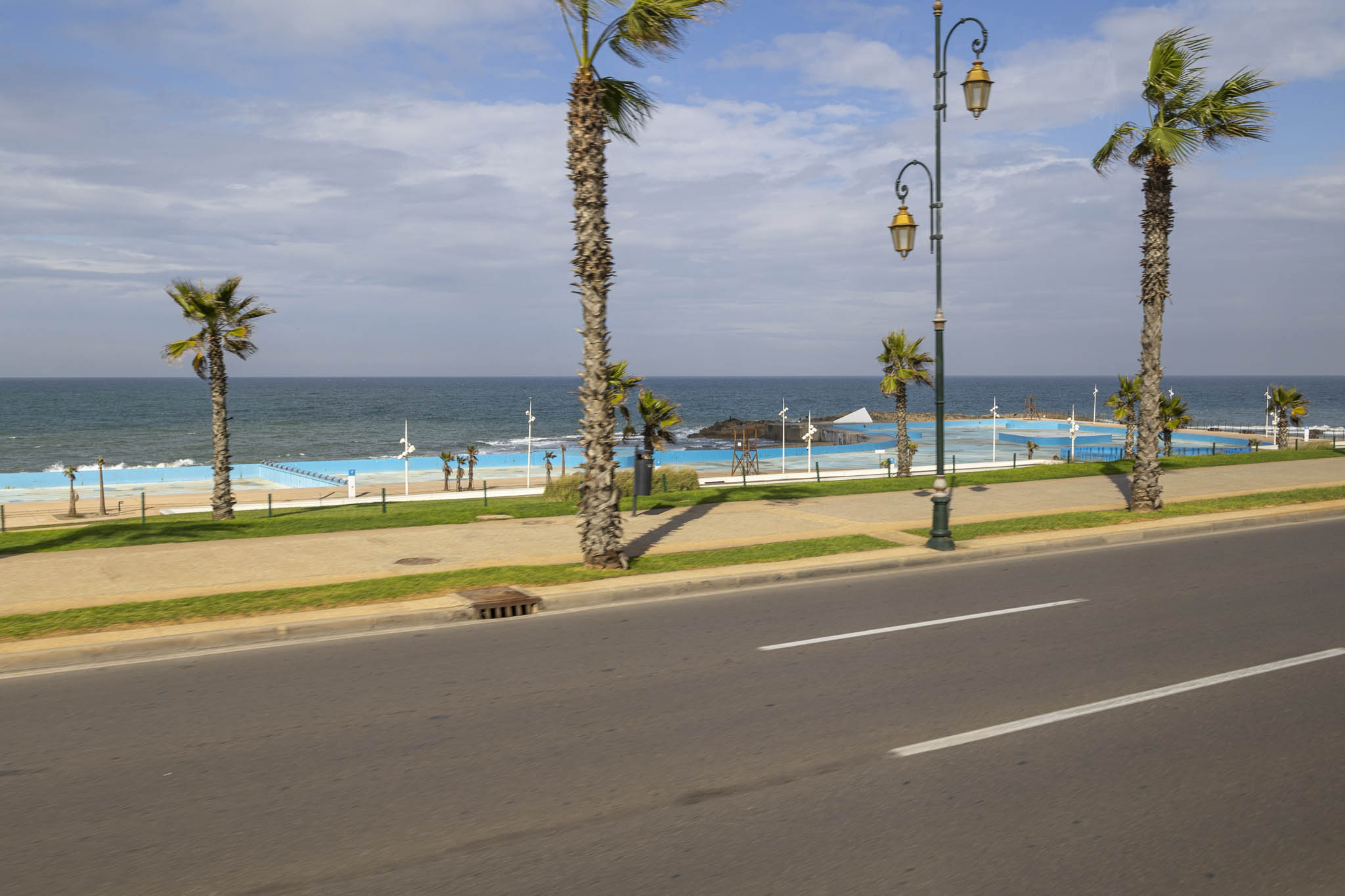
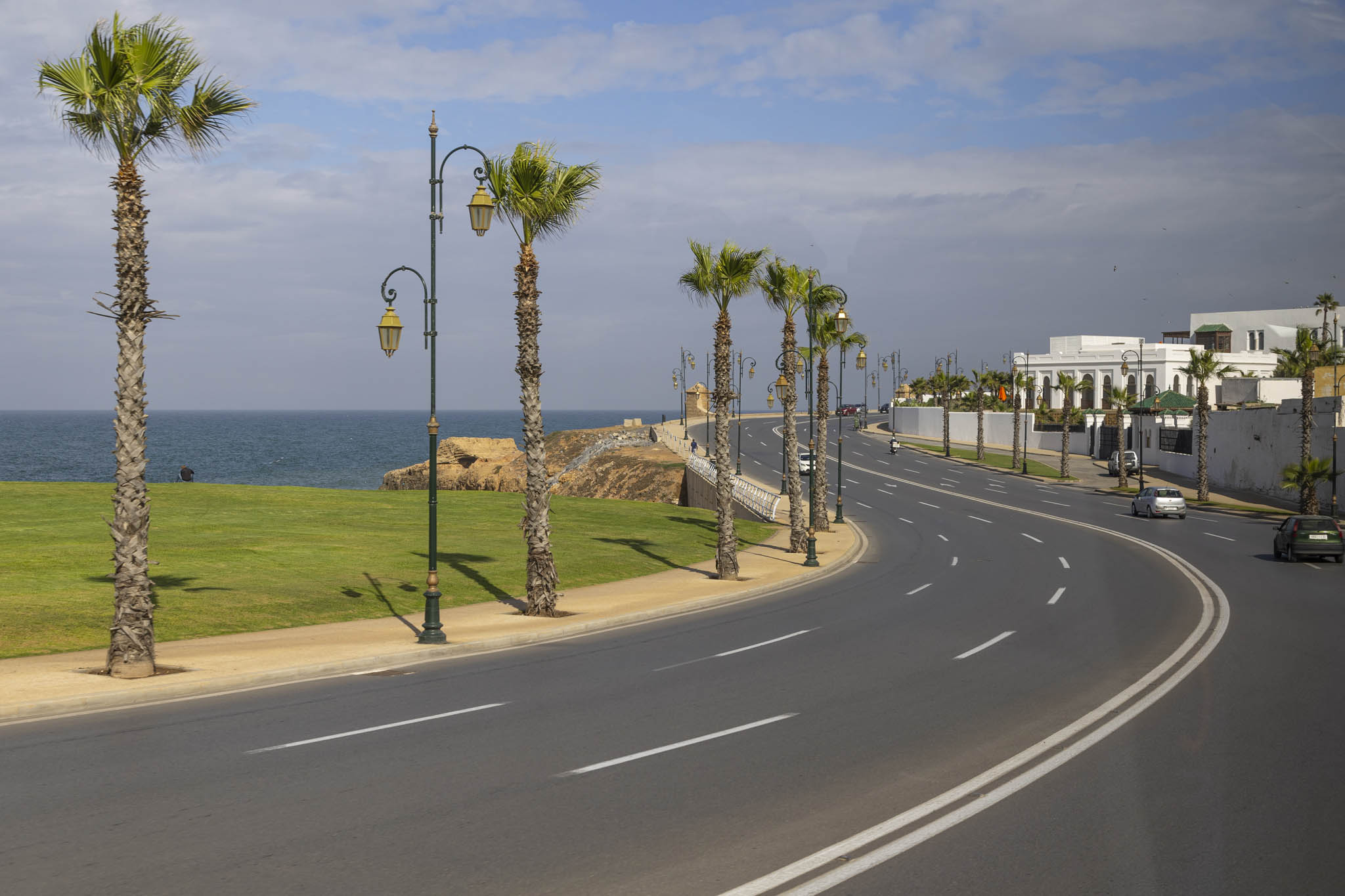
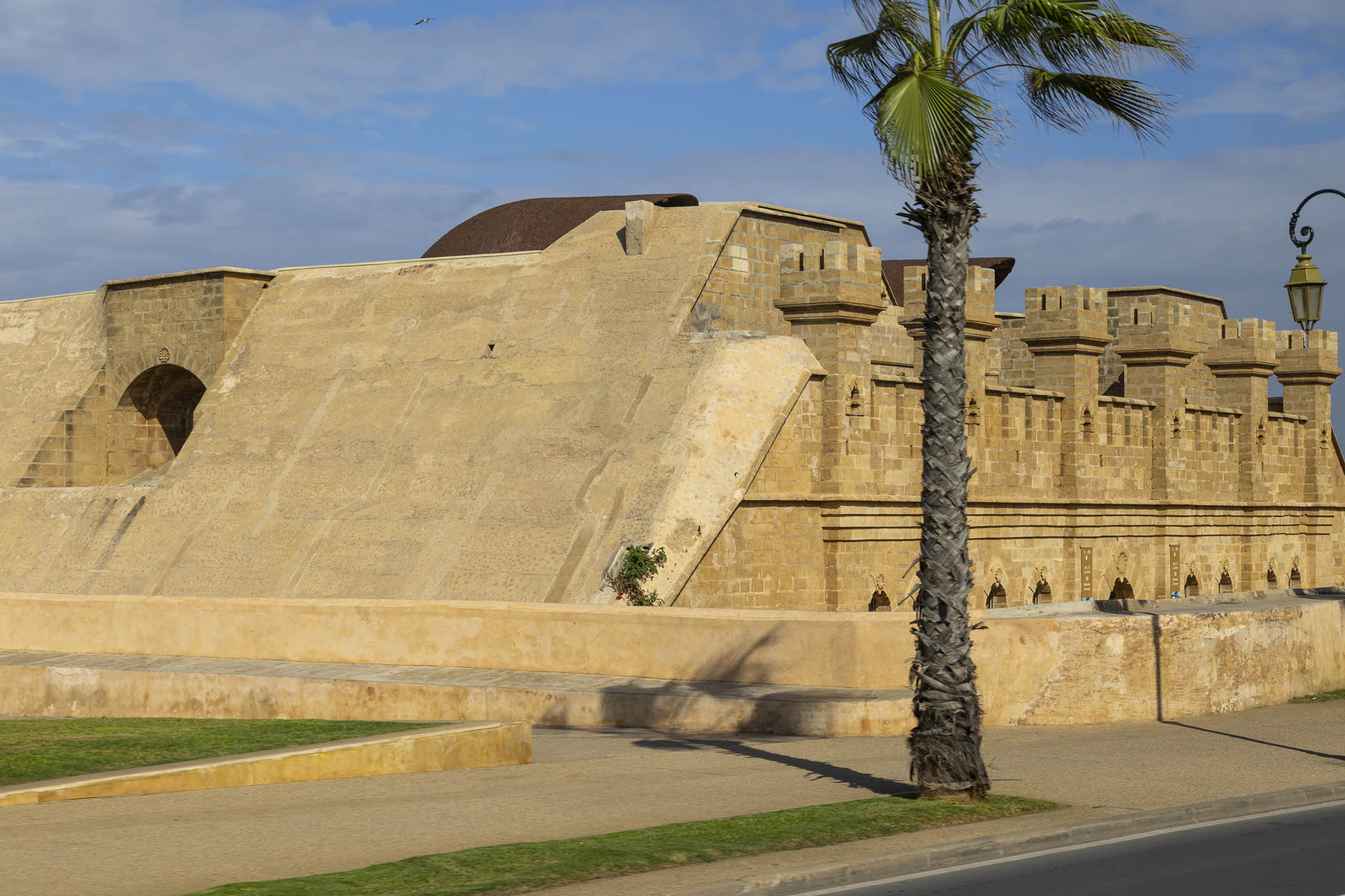
For part of the drive to Rabat we’d been hugging the coastal road, along which there was a small fortress which Morocco neither needed nor wanted but which the French and Germans still squabbled over. This was Fort Rottembourg, after the German engineer who oversaw the late nineteenth and early twentieth century building’s construction, also known as Fort Hervé after an early French casualty in World War I. The fortress served no real purpose and was a persuasion project by the Germans at the time to try to keep a hand in Moroccan affairs while the French were doing similar things elsewhere. The guns were never fired in anger and the fort’s usefulness if it had needed to be utilised is generally considered to be next to nothing. The fort is now the home of Morocco’s National Photography Museum.
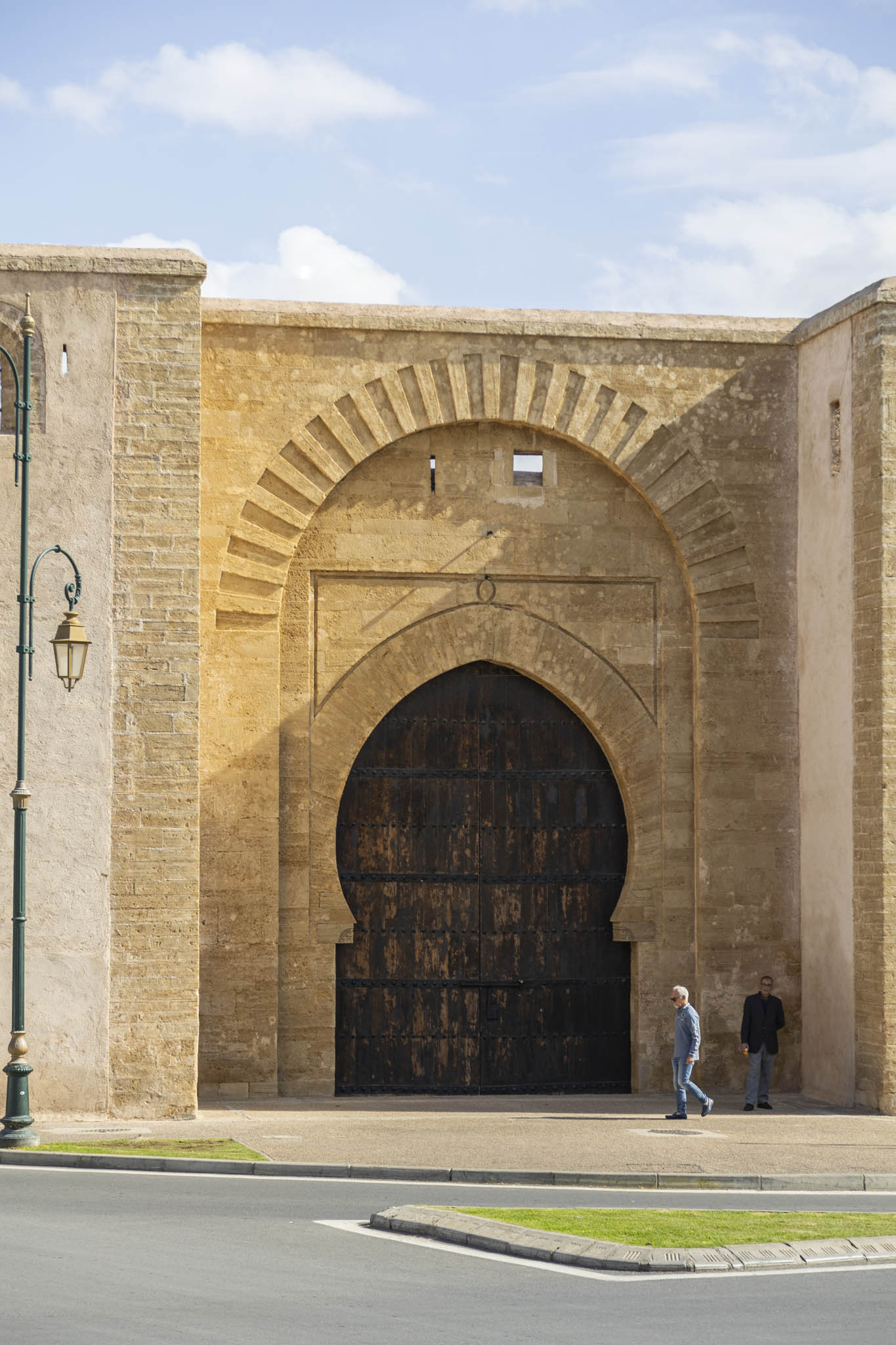
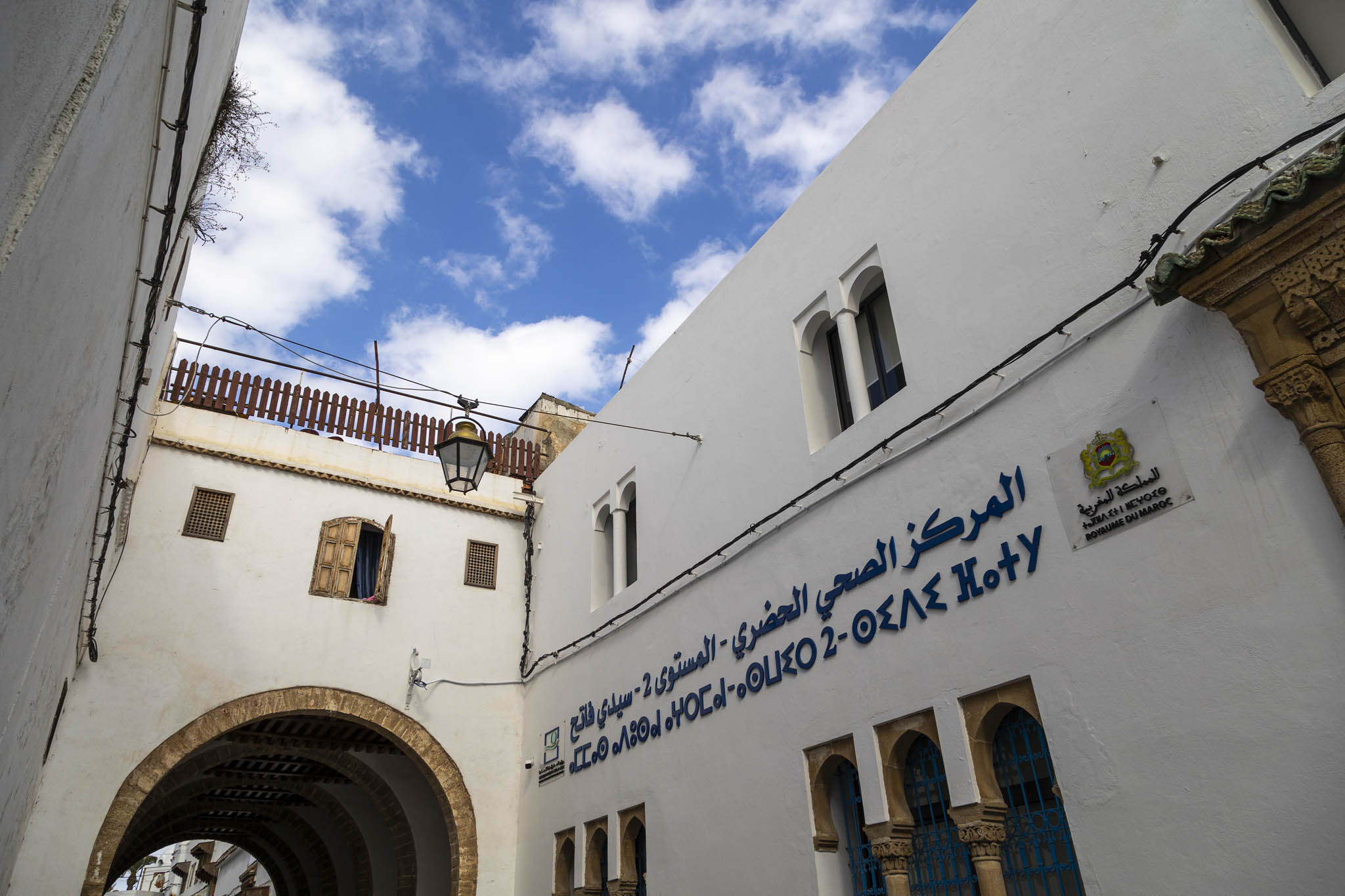
We arrived at the medina of Rabat, the historic walled city district, and passed one of the original doors to it.
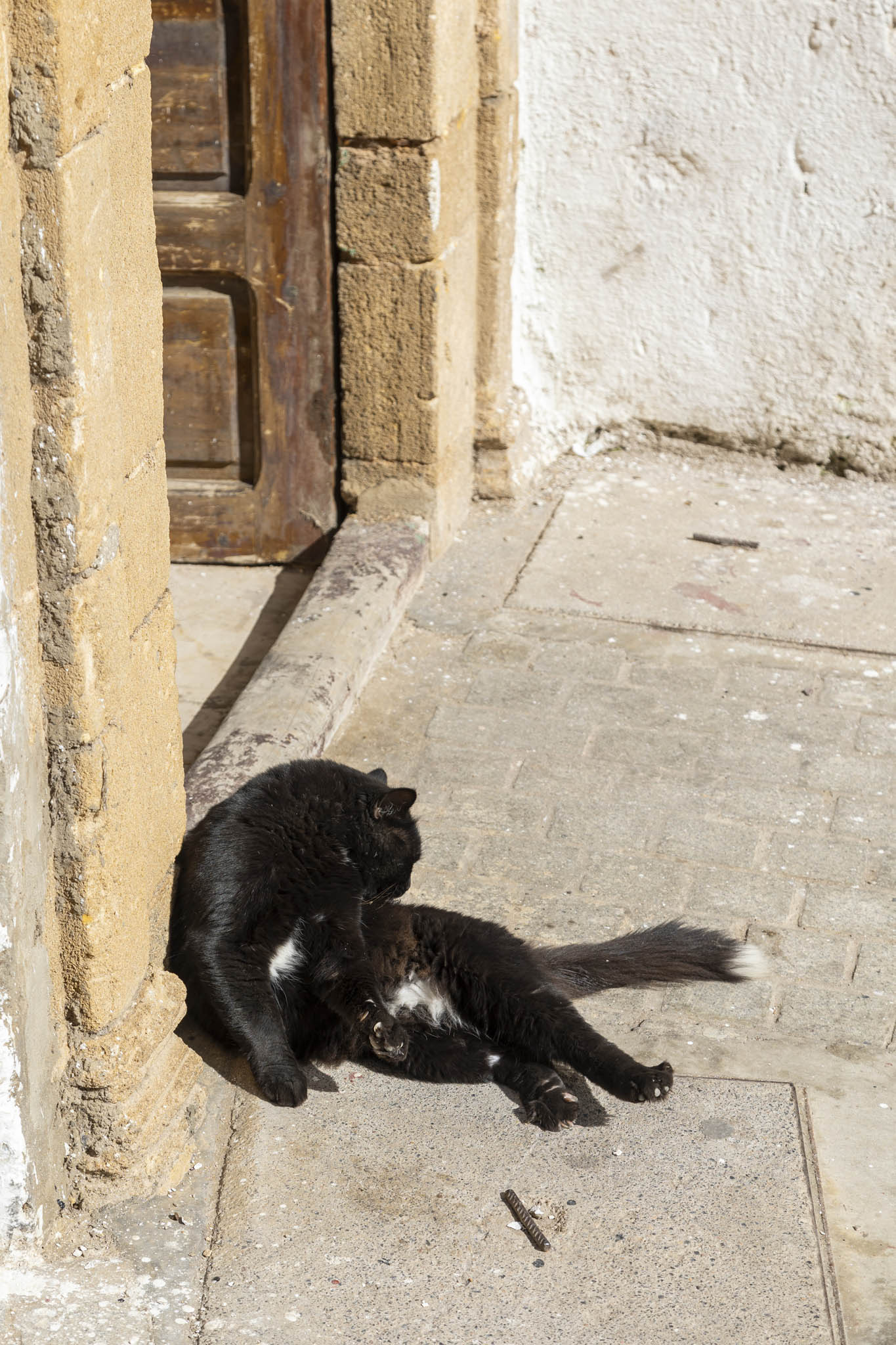
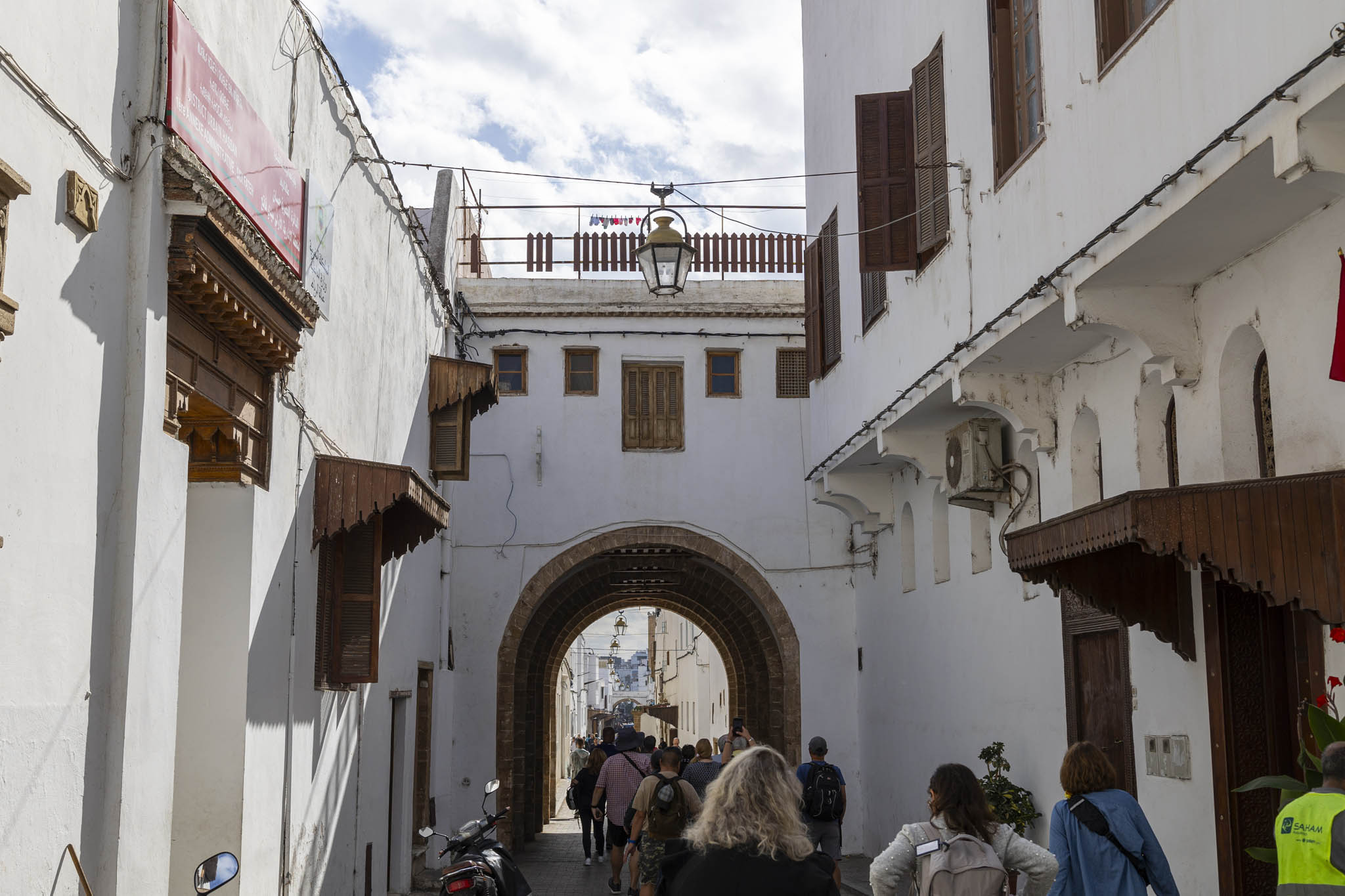
And then it was time for a short walk through just a small part of the medina to the riad hosting the restaurant that we would be dining at. If you like cats then you’ll like Rabat. If you don’t like cats then you should seek help.
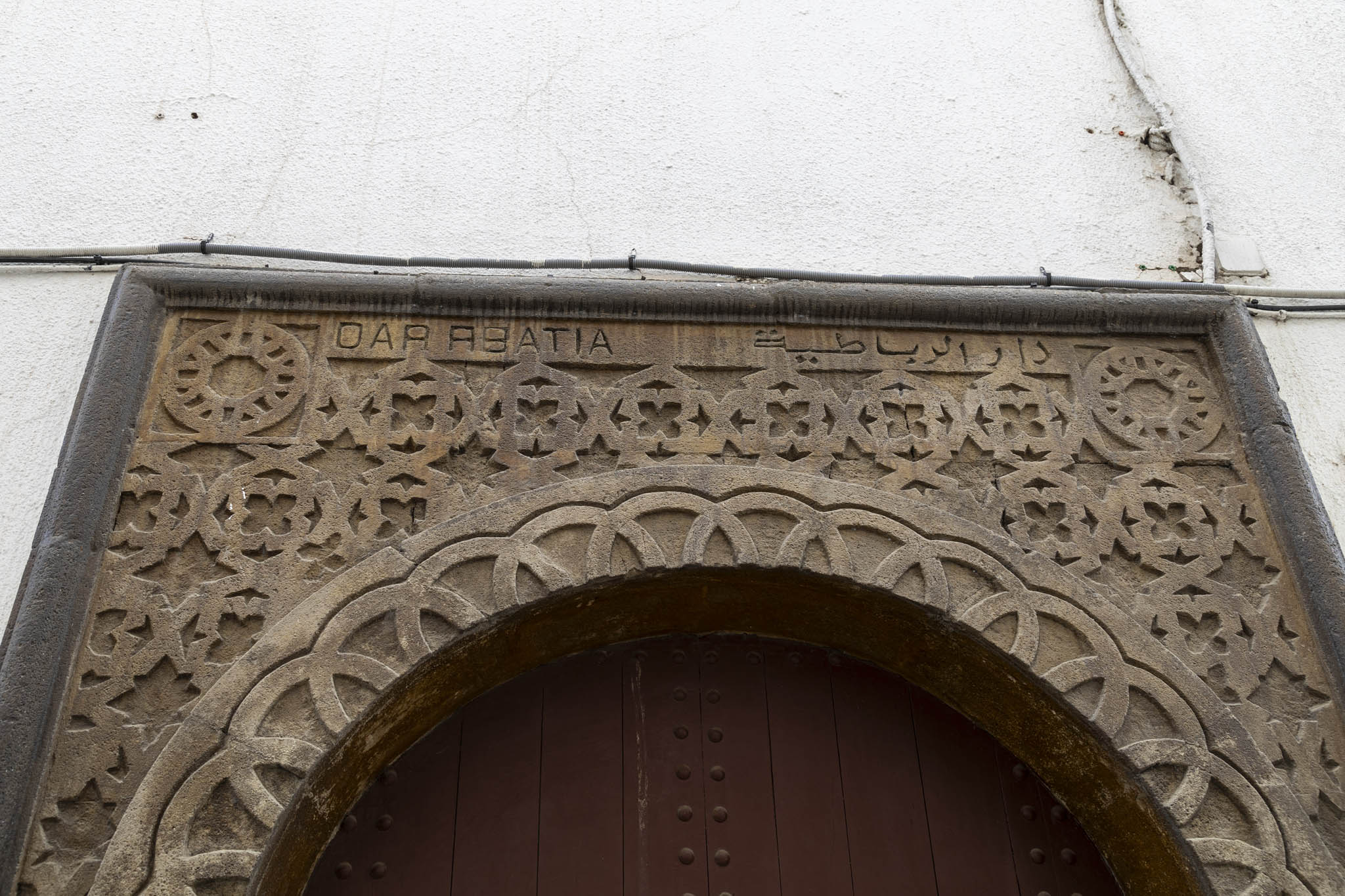
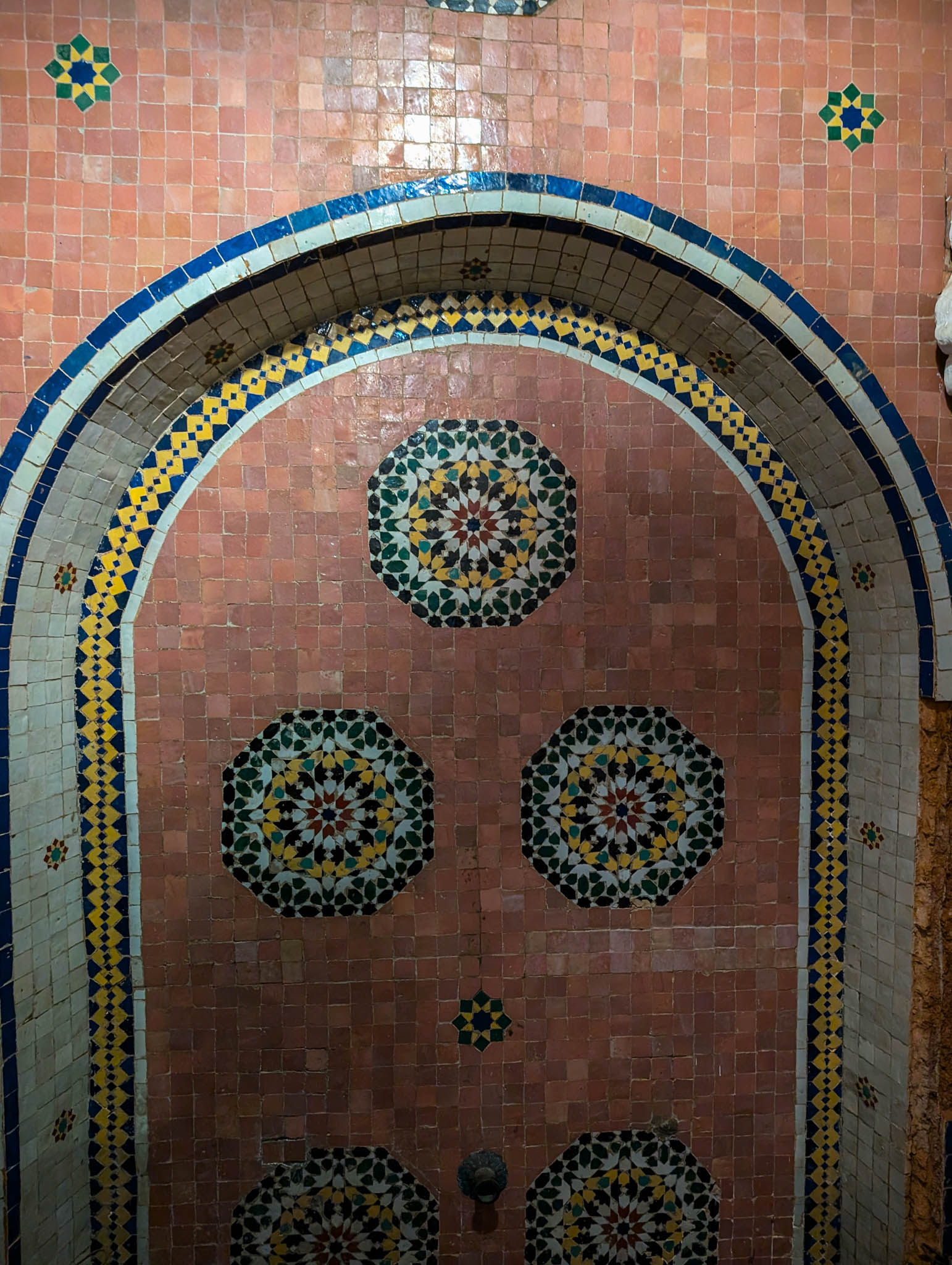
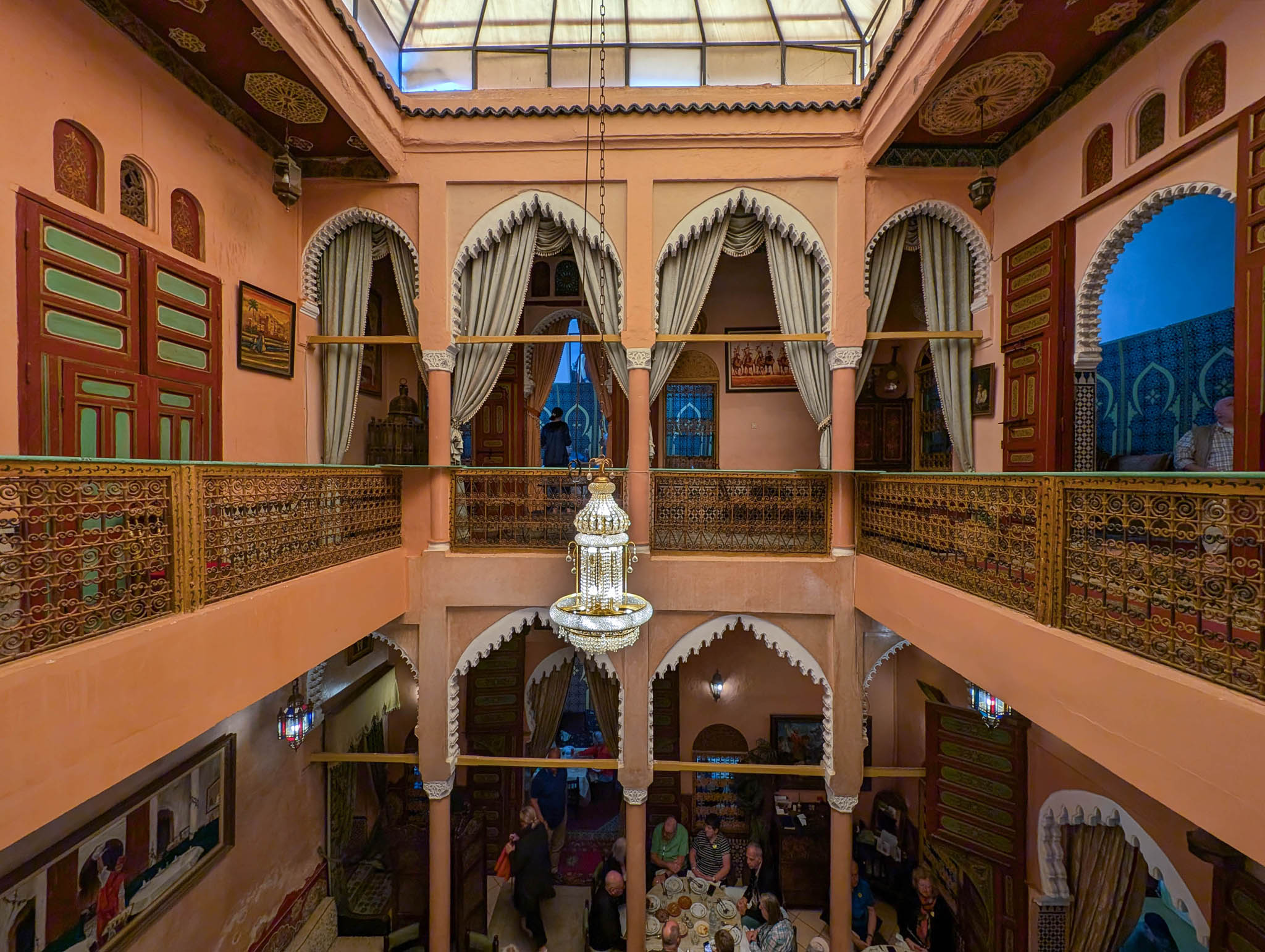
Dar Rbatia was opened as a restaurant in 1989 although the building dates to the eighteenth century. It was lovely inside; compact yet capable of seating nearly two hundred diners even though it only seemed to be hosting our tour group on this day in the main enclosed courtyard area of the ground floor.
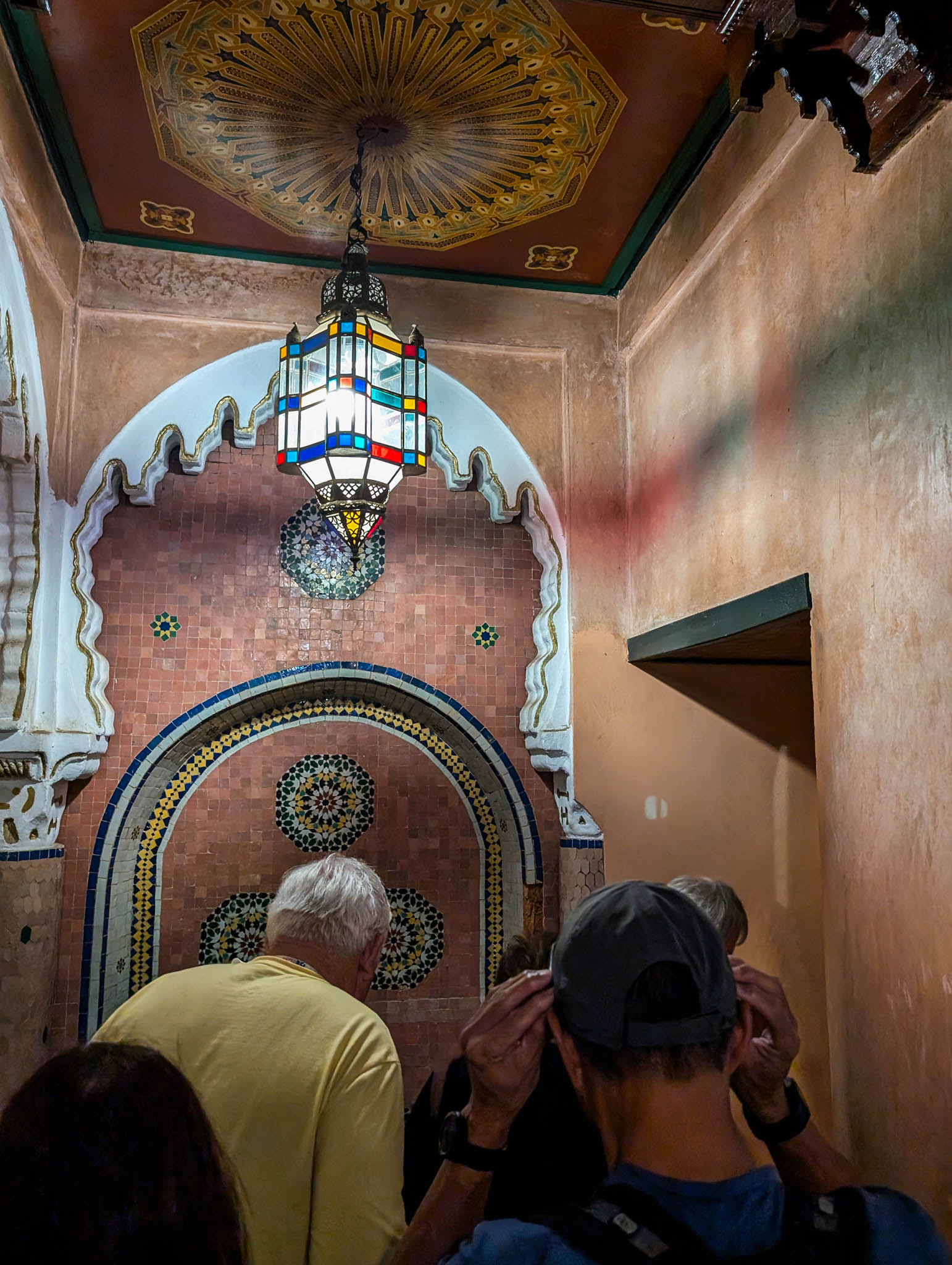
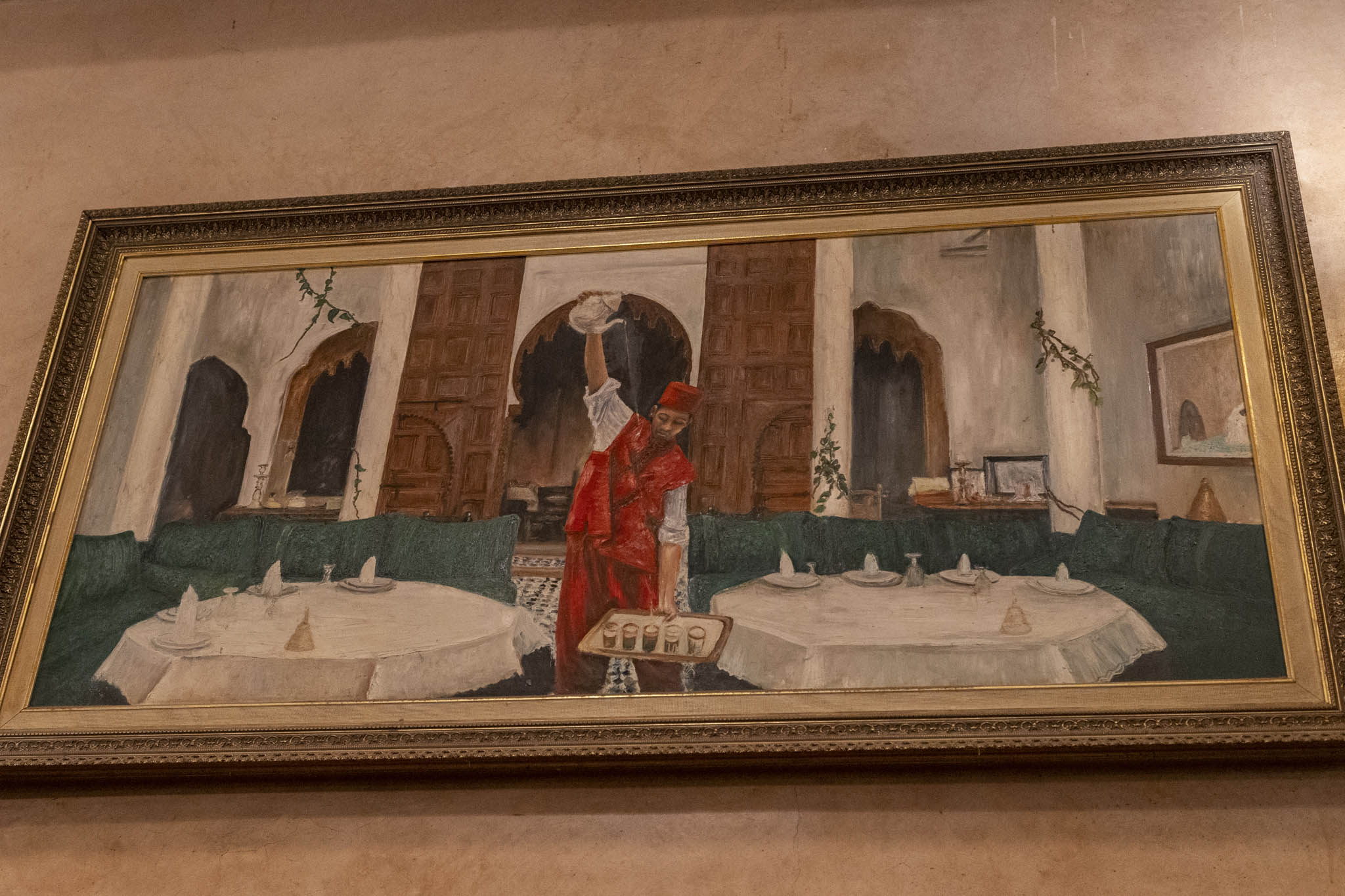
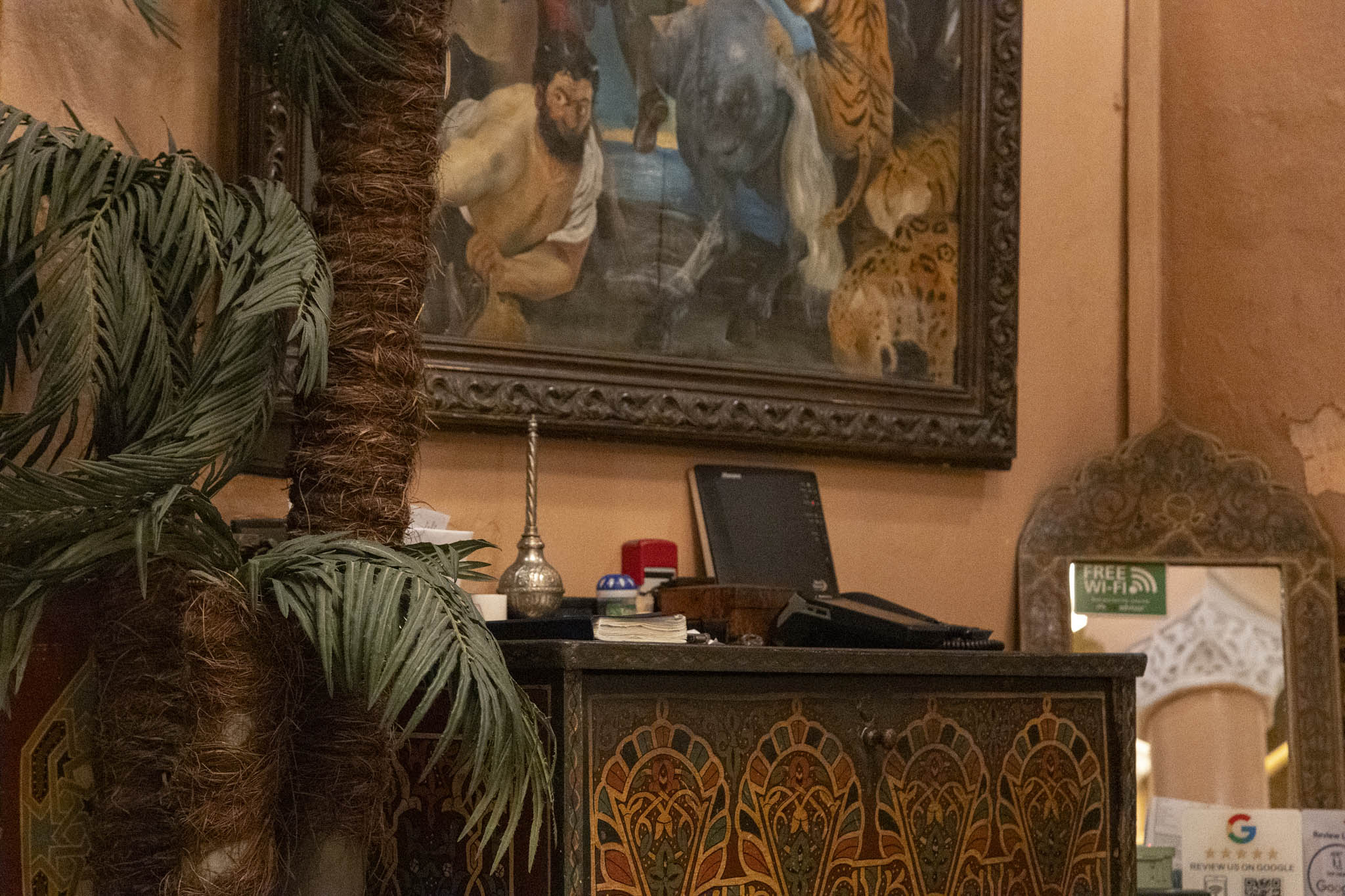
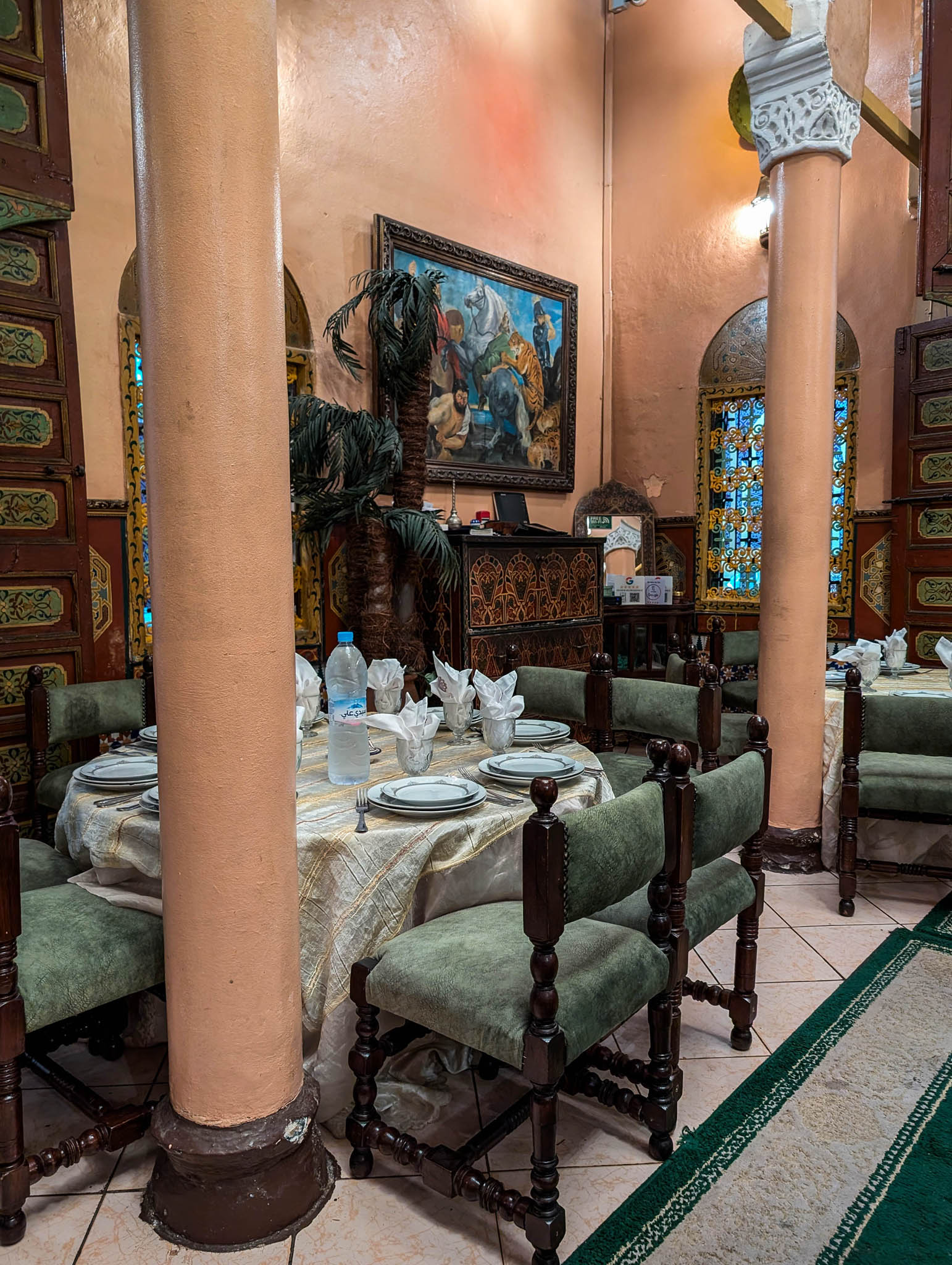
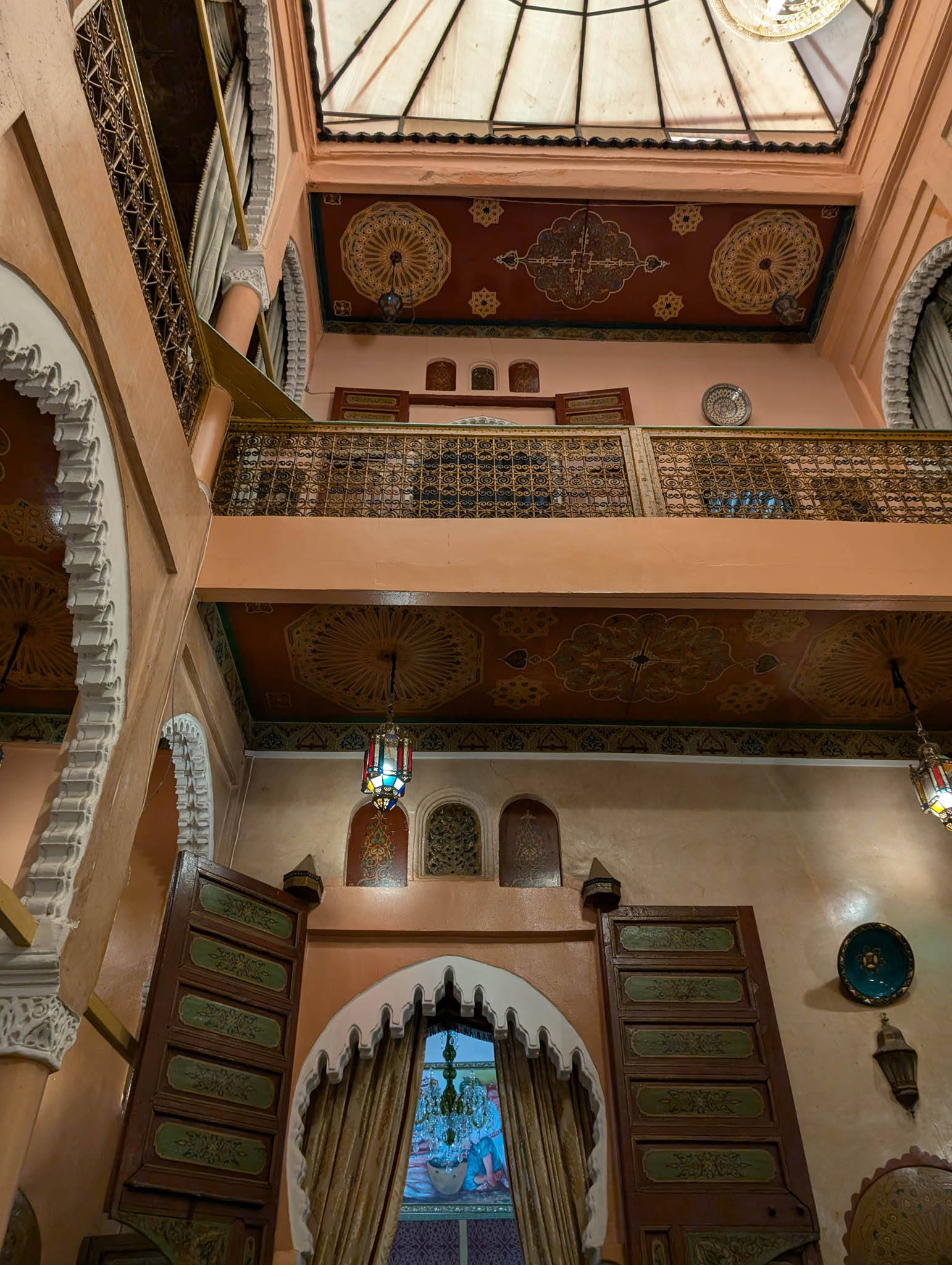
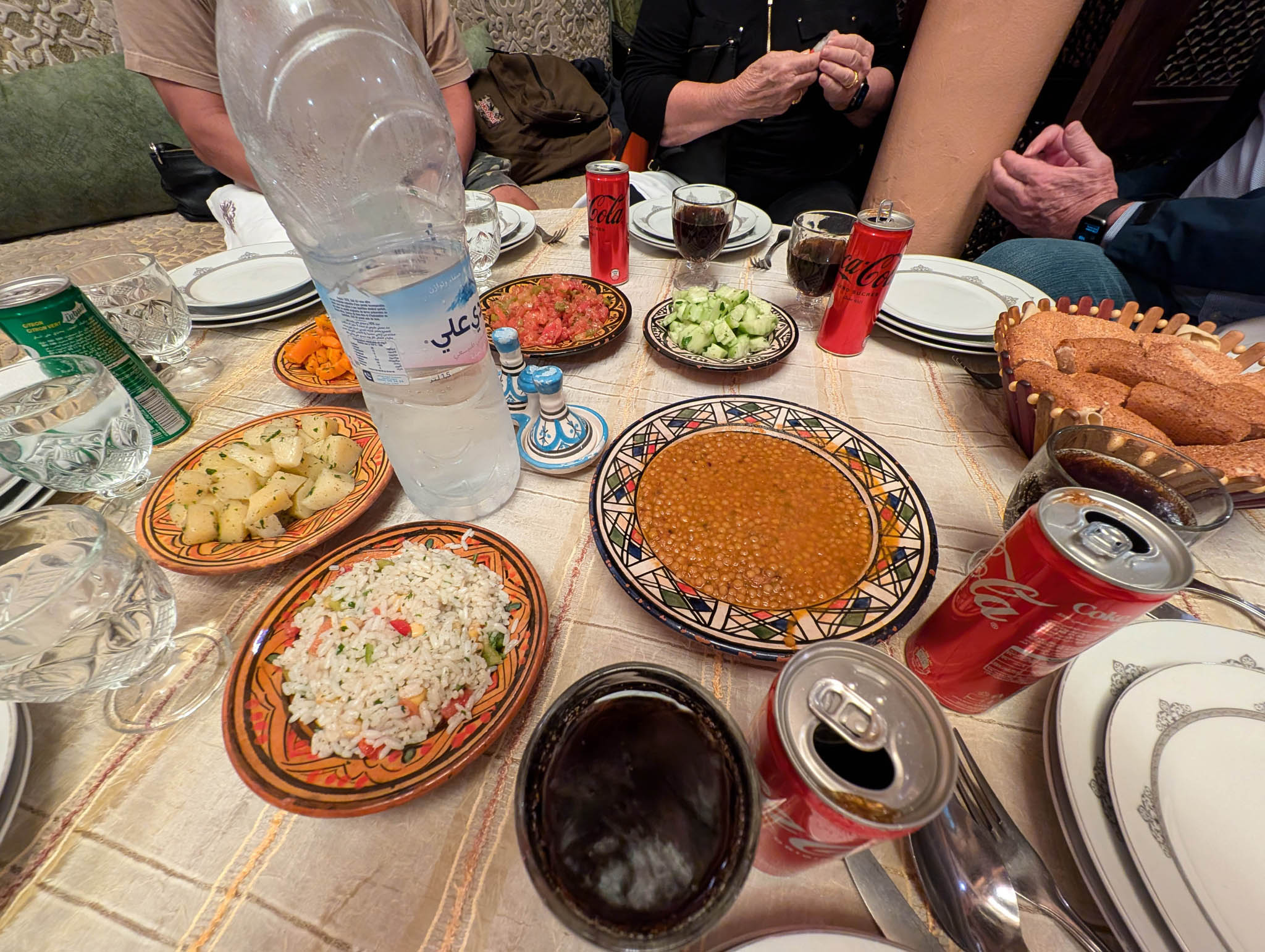
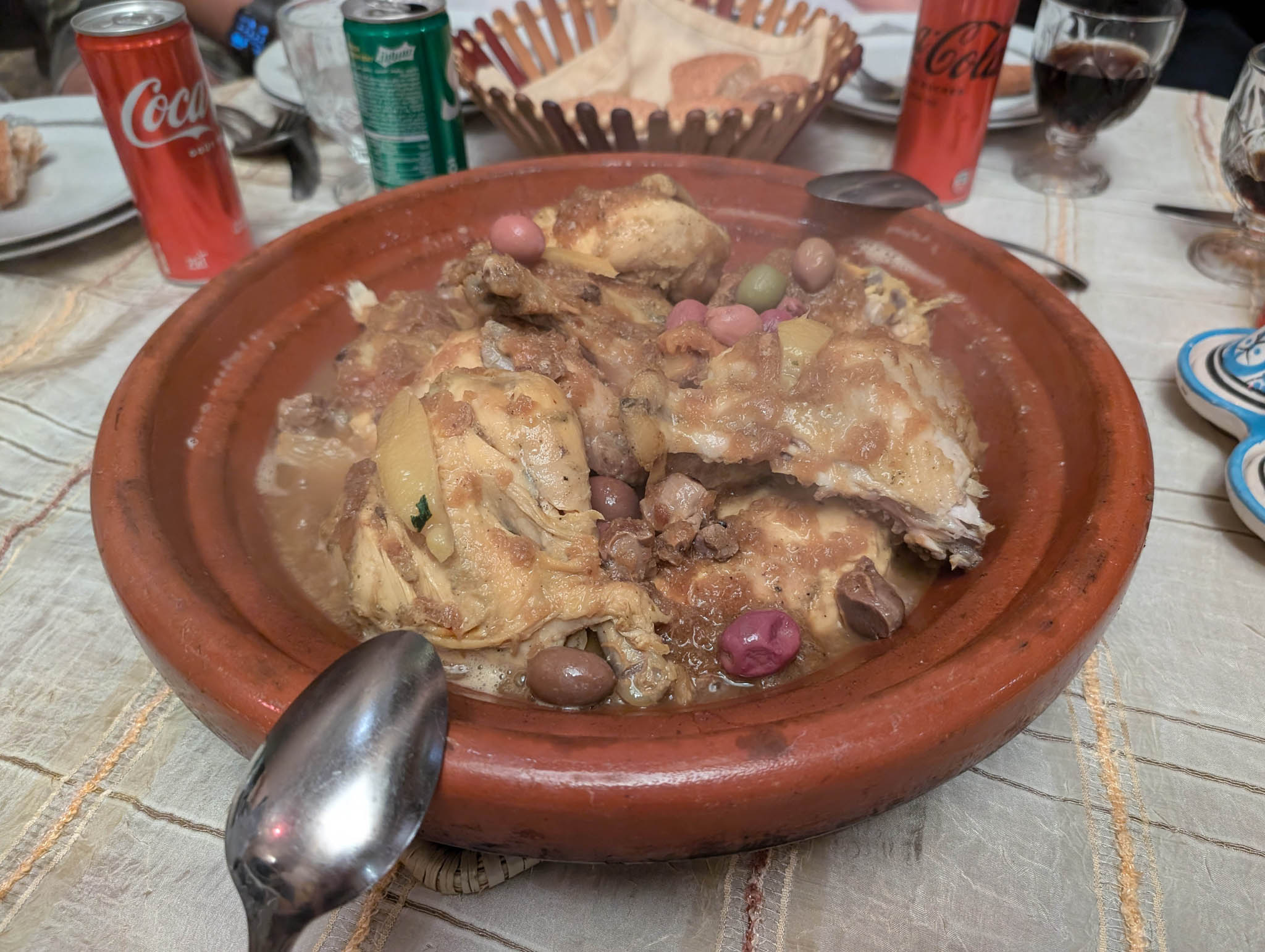
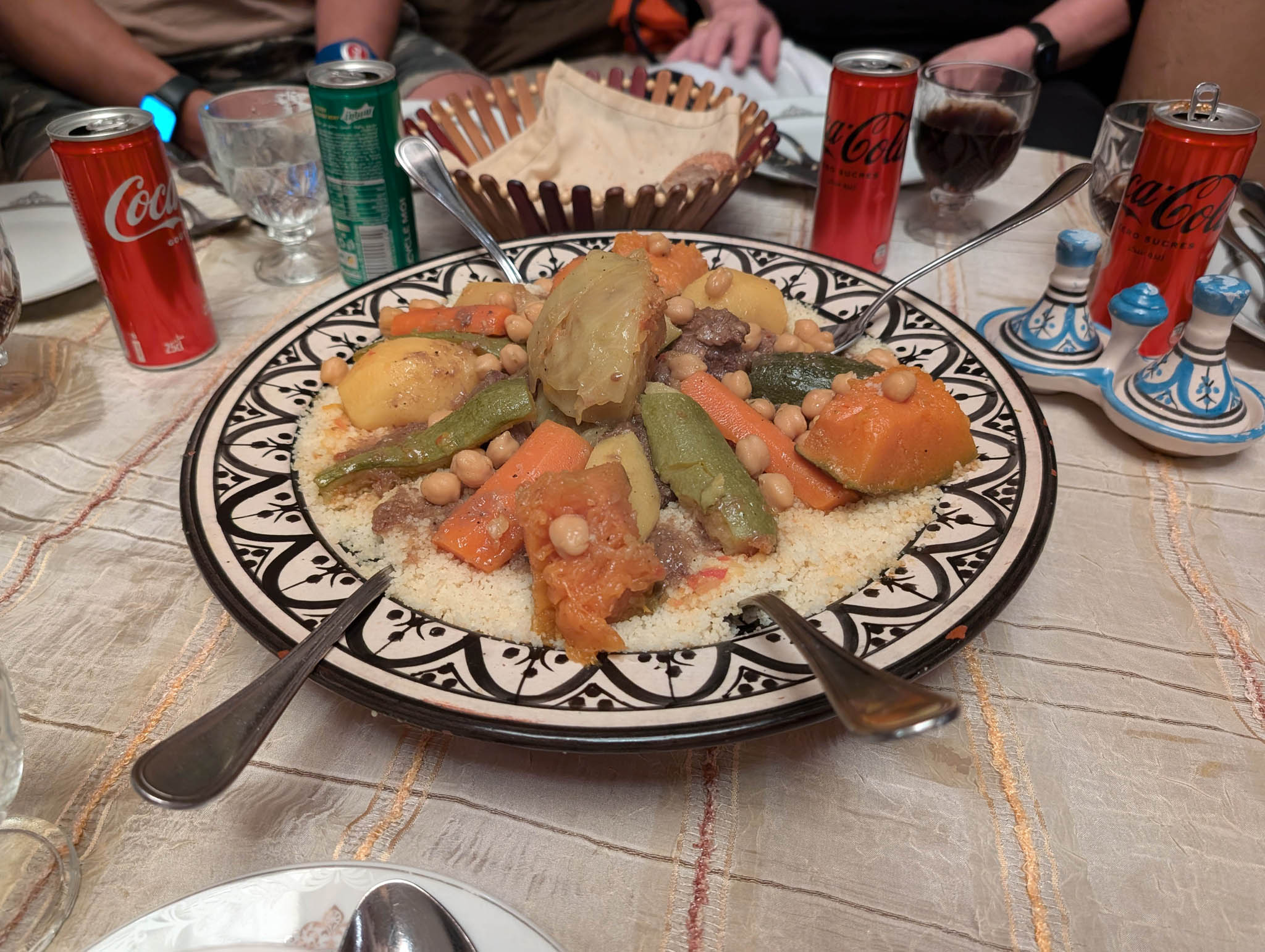
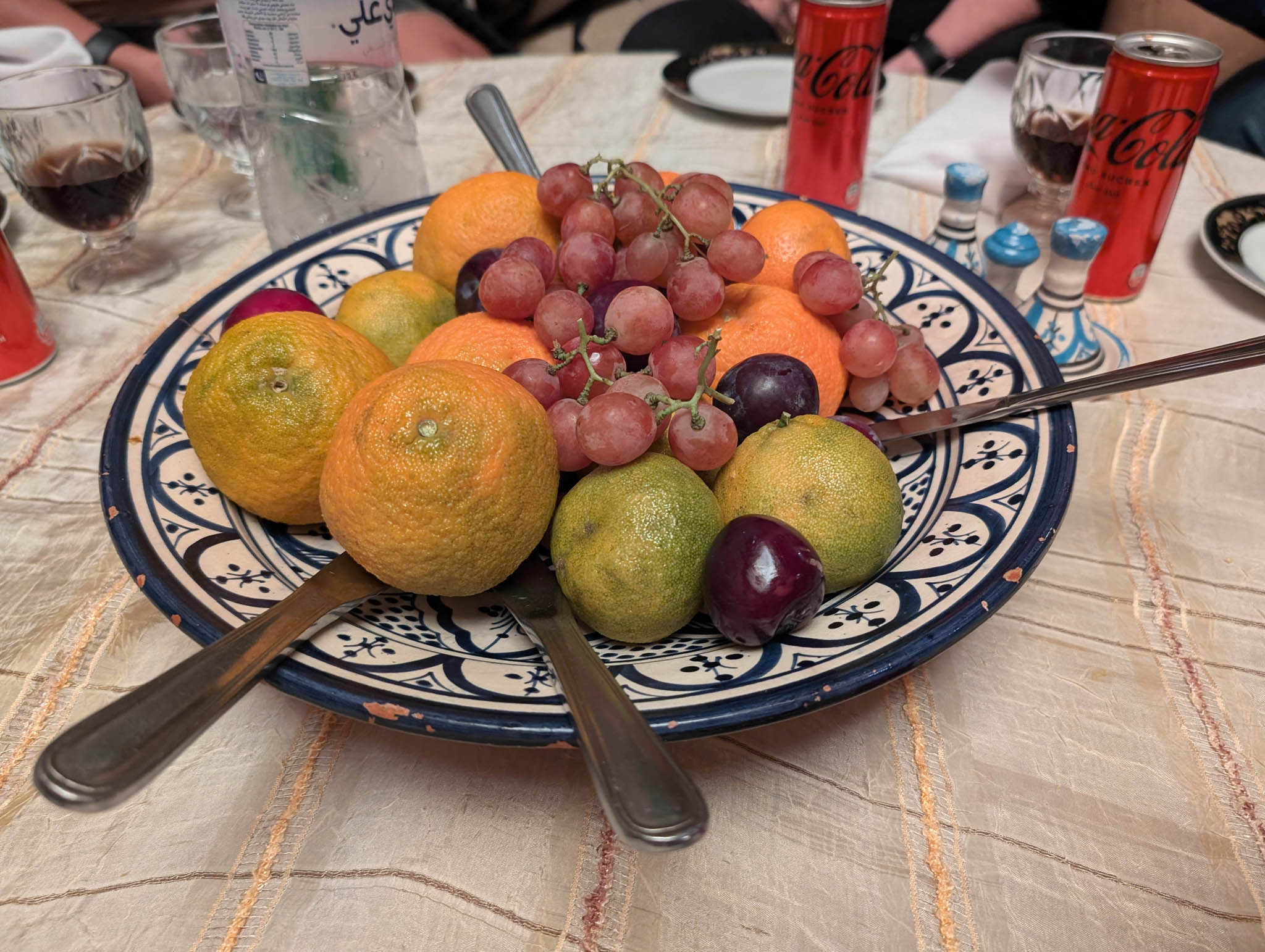
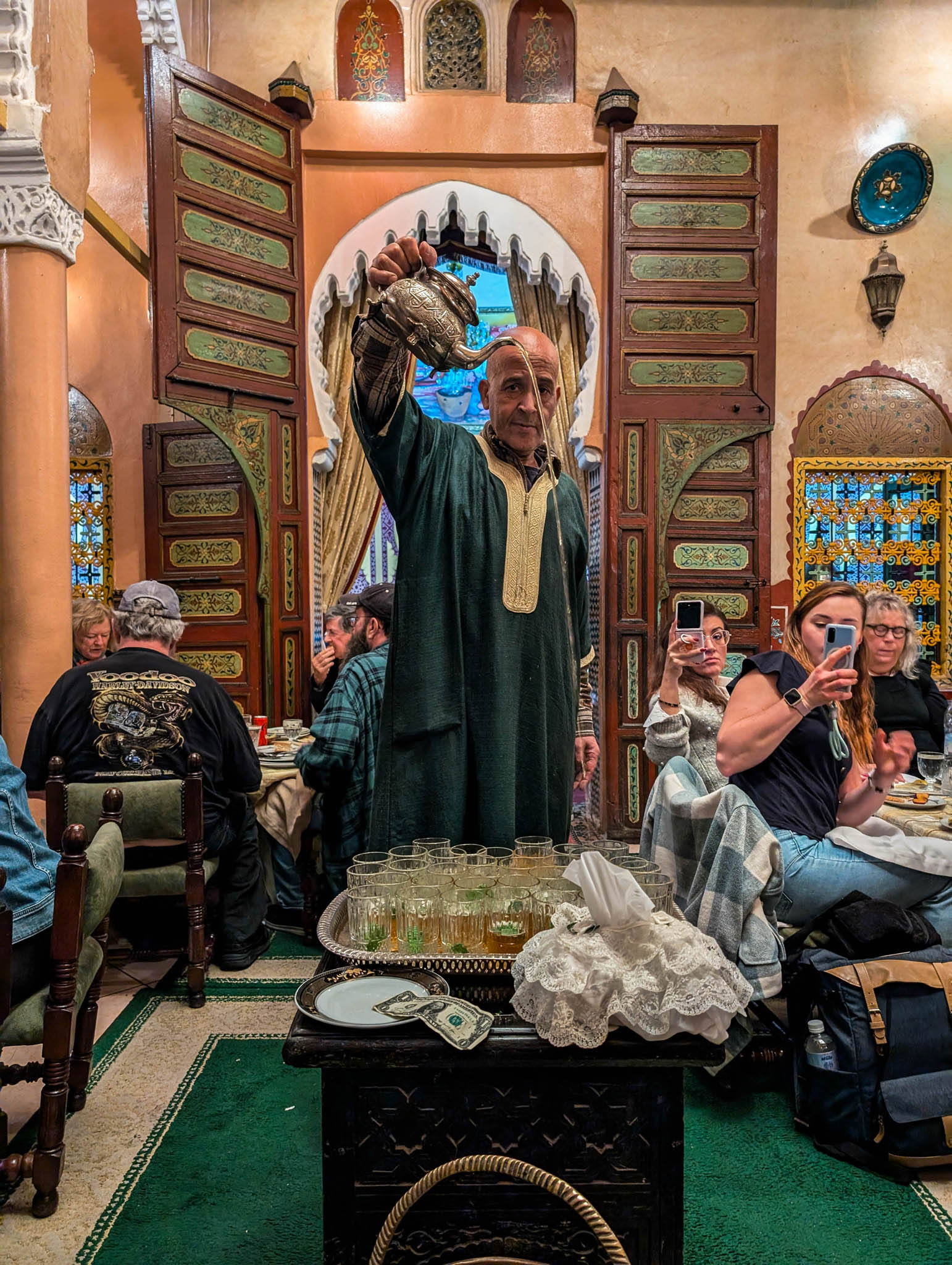
The meal in Dar Rbatia comprised several courses and soft drinks and water were provided too, all served centrally to each table for those around to take what they wanted. A salad and rolls was followed by a tagine, then cous-cous, then fruit, and finally mint tea – poured from high because… well, I don’t know – with a cookie to finish it off. It was all delicious.
In the next post in this 2024 transatlantic cruise series our tour continues with a look at some tourist highlights of Rabat.